
Breads
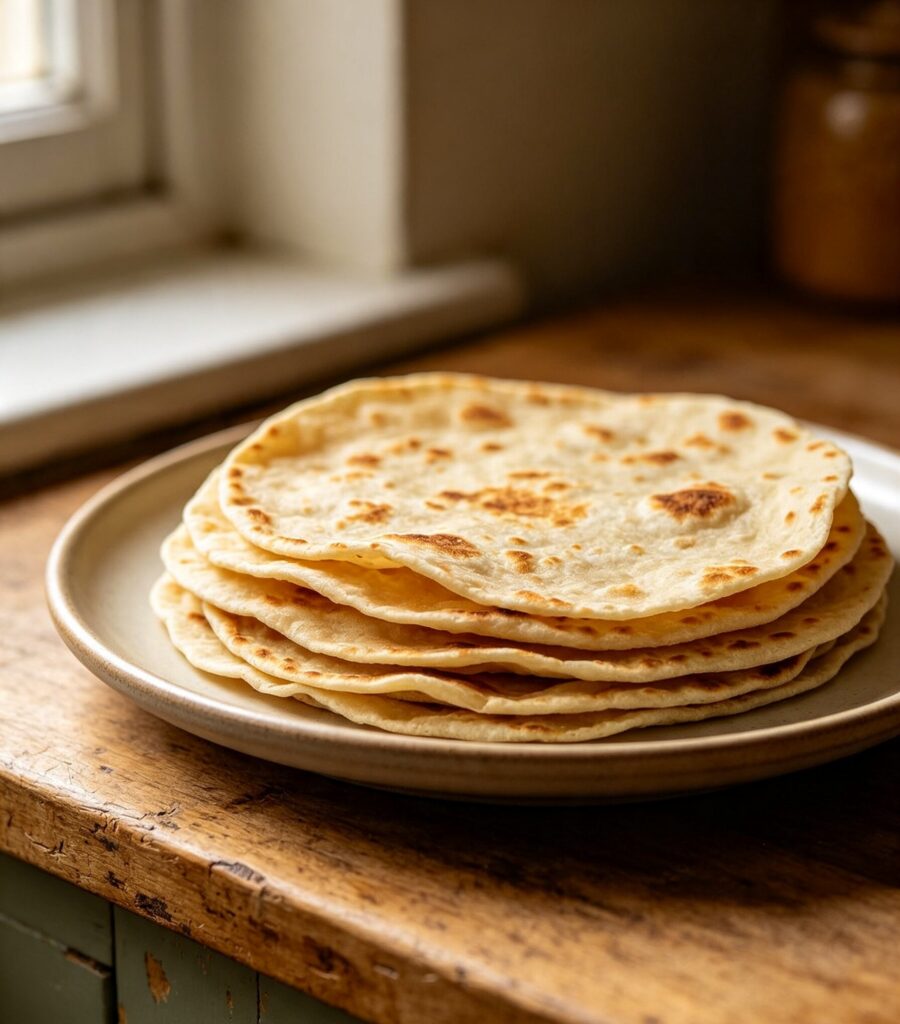
Kenyan Chapati
Ingredients
- 500 g (4 cups) plain flour, plus extra for dusting
- 1 tsp (6 g) salt
- 1 tbsp (15 g) sugar
- 3 tbsp (45 ml) vegetable oil, plus extra for cooking and layering
- 250-300 ml (1-1 1/4 cups) warm water
Method
- Combine flour, salt and sugar in a large bowl. Rub in the oil until the mixture resembles coarse crumbs.
- Gradually add warm water, mixing and then kneading for 8-10 minutes until you have a smooth, soft, elastic dough.
- Cover and rest for 20-30 minutes.
- Divide the dough into 8 equal balls. Roll each ball into a thin circle, brush lightly with oil, then roll it up into a tight spiral (like a cinnamon roll) and coil into a flat disc. Rest for another 10 minutes.
- Roll each coiled disc out again into a thin circle, about 20 cm (8 inches) across.
- Heat a griddle or heavy pan over medium heat. Cook each chapati for 1-2 minutes per side, brushing lightly with oil and pressing gently with a spatula, until golden brown spots appear and the layers puff slightly.
- Stack cooked chapatis and cover with a clean cloth to keep soft while cooking the rest.
Introduction: Chapati is one of Kenya's most cherished breads, a soft, flaky, layered flatbread brought to East Africa through Indian trade and migration and thoroughly adopted into Kenyan home cooking.
Cultural Background: Chapati is one of Kenya's most cherished breads, a soft, flaky, layered flatbread brought to East Africa through Indian trade and migration and thoroughly adopted into Kenyan home cooking. Known locally as 'chapo', it is central to celebratory meals and Sunday lunches, and is equally enjoyed for breakfast with tea or as a wrap for stews and vegetables.
Tips: The rolling, oiling and coiling step is what creates the signature flaky layers – don't skip it. Resting the dough at each stage makes it easier to roll thin without shrinking back. Cook over medium heat; too high a heat will burn the outside before the inside cooks through.
Variations: A wholemeal version substitutes some or all of the flour with whole wheat; some cooks add a little milk instead of water for extra softness. Naturally vegan and vegetarian as written.
Storage: Store in an airtight container or wrapped in foil at room temperature for up to 2 days, or refrigerate for up to 5 days.
Reheating: Warm in a dry pan over medium heat for 30-60 seconds per side, or wrap in foil and warm in a low oven.
FAQs:
Q: Why aren't my Chapatis flaky?
A: Flakiness comes from the oil-and-roll-up technique that creates layers; make sure to brush with oil generously and roll tightly before the second rolling.
Q: Can Chapati dough be made ahead?
A: Yes, the dough can be made a day ahead and refrigerated, then brought to room temperature before rolling and cooking.
Please log in to leave a comment.