
Street Food
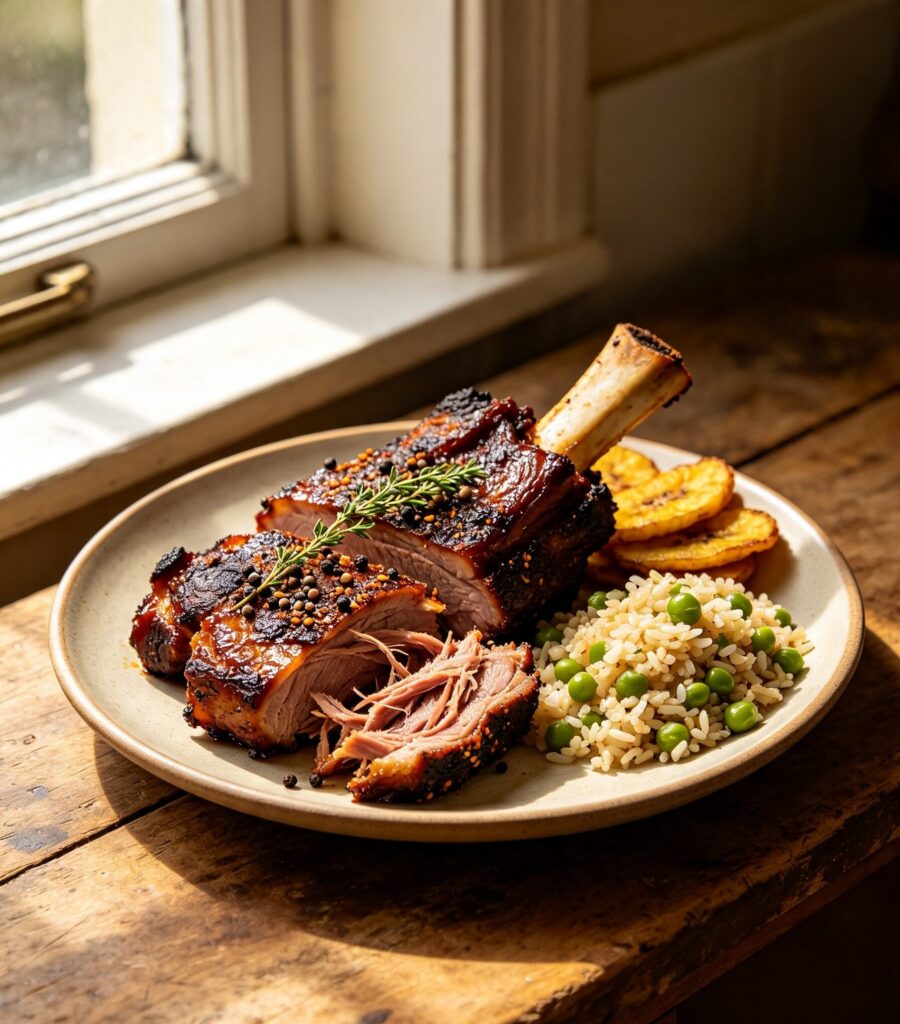
Roadside Smoked Spiced Pork (Jerk Pork)
Ingredients
- 1.5 kg (3.3 lb) pork shoulder
- 4 scallions, chopped
- 2 scotch bonnet peppers
- 1 tbsp allspice berries, ground
- 2 tsp fresh thyme
- 1 tbsp brown sugar
- 3 cloves garlic
- 1 tbsp ginger, grated
- 3 tbsp soy sauce
- 2 tbsp vegetable oil
- 2 tbsp white vinegar
- Salt, to taste
Method
- Blend scallions, scotch bonnet, allspice, thyme, sugar, garlic, ginger, soy sauce, oil and vinegar into a marinade.
- Score the pork shoulder and rub the marinade thoroughly into the meat, including the scored cuts.
- Marinate in the refrigerator overnight for the deepest flavor.
- Cook low and slow over indirect heat with wood smoke for 3-4 hours until the internal temperature reaches a safe level and the meat is very tender.
- Rest 10 minutes, then chop into pieces and serve with festival or bread.
Introduction: Pork shoulder marinated in the same fiery jerk seasoning as jerk chicken, slow-smoked over pimento wood at roadside jerk pans and chopped to order for customers.
Cultural Background: Pork shoulder marinated in the same fiery jerk seasoning as jerk chicken, slow-smoked over pimento wood at roadside jerk pans and chopped to order for customers.
Tips: Low, slow cooking with indirect heat is essential for tender, smoky results – avoid rushing with high direct heat. Let the meat rest before chopping to keep the juices in.
Variations: Serve chopped over rice and peas for a heartier plate rather than the traditional street-side chop-and-wrap.
Storage: Refrigerate cooked pork in an airtight container for up to 3 days; freezes well for up to 2 months.
Reheating: Reheat gently in a covered pan with a splash of water over low heat, or in a low oven, to avoid drying out.
FAQs:
Q: Is jerk pork spicier than jerk chicken?
A: Both use the same style of marinade; heat level depends on the amount of scotch bonnet used rather than the protein choice.
Q: What's the difference between jerk pork and jerk chicken preparation?
A: Pork shoulder generally needs a longer, slower cook than chicken to become tender, given the tougher cut and larger size typically used.
Please log in to leave a comment.