
Lunches
Panino Toscano
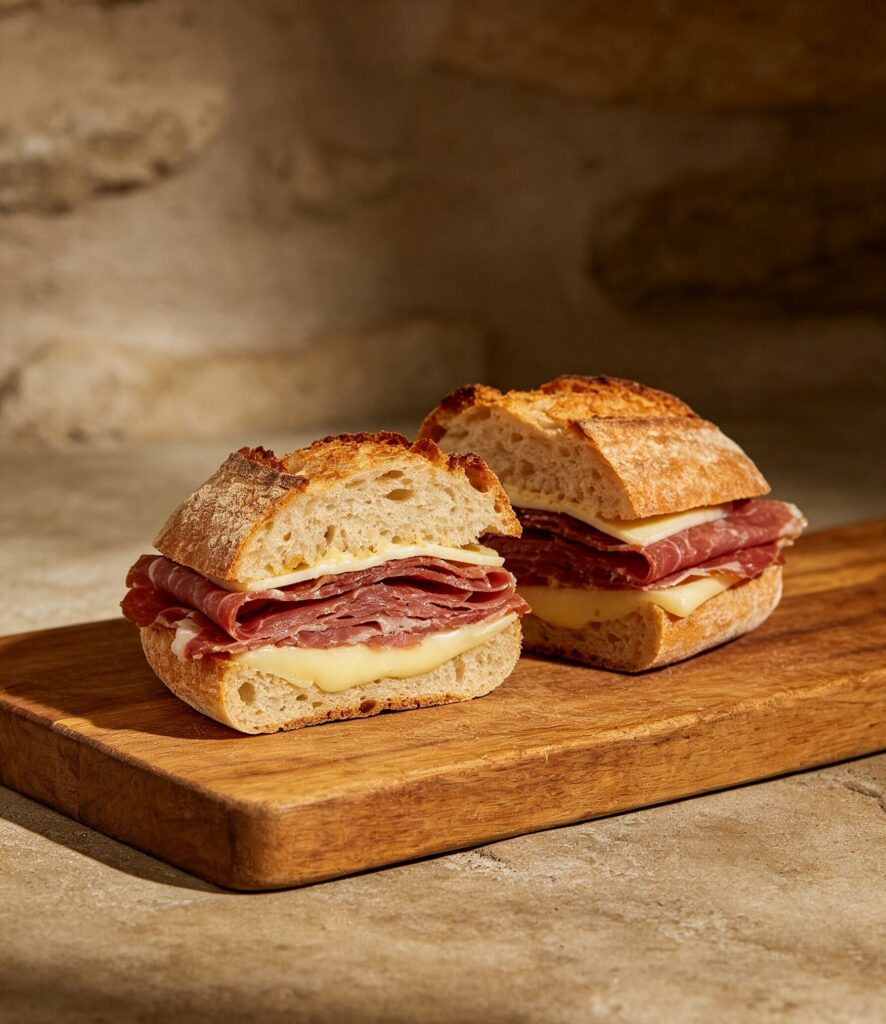
Ingredients
- 1 unsalted Tuscan bread roll, 150 g (5 oz) (or a crusty white roll)
- 60 g (2 oz) finocchiona (fennel salami), sliced
- 40 g (1.5 oz) pecorino toscano, sliced
- 20 g (0.7 oz) arugula
- 2 tbsp extra virgin olive oil
- 1 tsp red wine vinegar
- Freshly ground black pepper, to taste
Method
- Slice the roll horizontally, leaving one side attached like a hinge.
- Drizzle both cut sides with olive oil and vinegar.
- Layer the finocchiona and pecorino evenly across the base.
- Top with arugula and a generous grind of black pepper.
- Close the sandwich, press gently, and slice in half to serve.
Introduction: A Tuscan sandwich built on unsalted Tuscan bread (pane sciocco), traditionally salt-free because of a historic salt tax; the blandness of the bread is designed to balance salty cured meats and pecorino cheese.
Cultural Background: A Tuscan sandwich built on unsalted Tuscan bread (pane sciocco), traditionally salt-free because of a historic salt tax; the blandness of the bread is designed to balance salty cured meats and pecorino cheese. It's the classic grab-and-go lunch of central Italy.
Tips: Use genuinely unsalted bread if you can find it; it's the defining feature of this sandwich. Let the cheese sit at room temperature for better flavour and texture.
Variations: Swap finocchiona for prosciutto crudo for a milder version. Vegetarian version: replace meat with grilled eggplant and extra pecorino, or a plant-based cured 'salami' for vegan.
Storage: Best eaten fresh; can be wrapped and refrigerated up to 4 hours.
Reheating: Not recommended; served cold or at room temperature.
Nutrition: Per sandwich: approx. 520 kcal, 24 g protein, 28 g fat, 42 g carbohydrate, 3 g sugar.
FAQs:
Q: Why is Tuscan bread unsalted?
A: A centuries-old story attributes it to a medieval salt tax dispute with Pisa, though historians debate the exact origin.
Q: Can I use regular bread?
A: Yes, though the flavour balance will be saltier overall.
Please log in to leave a comment.