
Breads
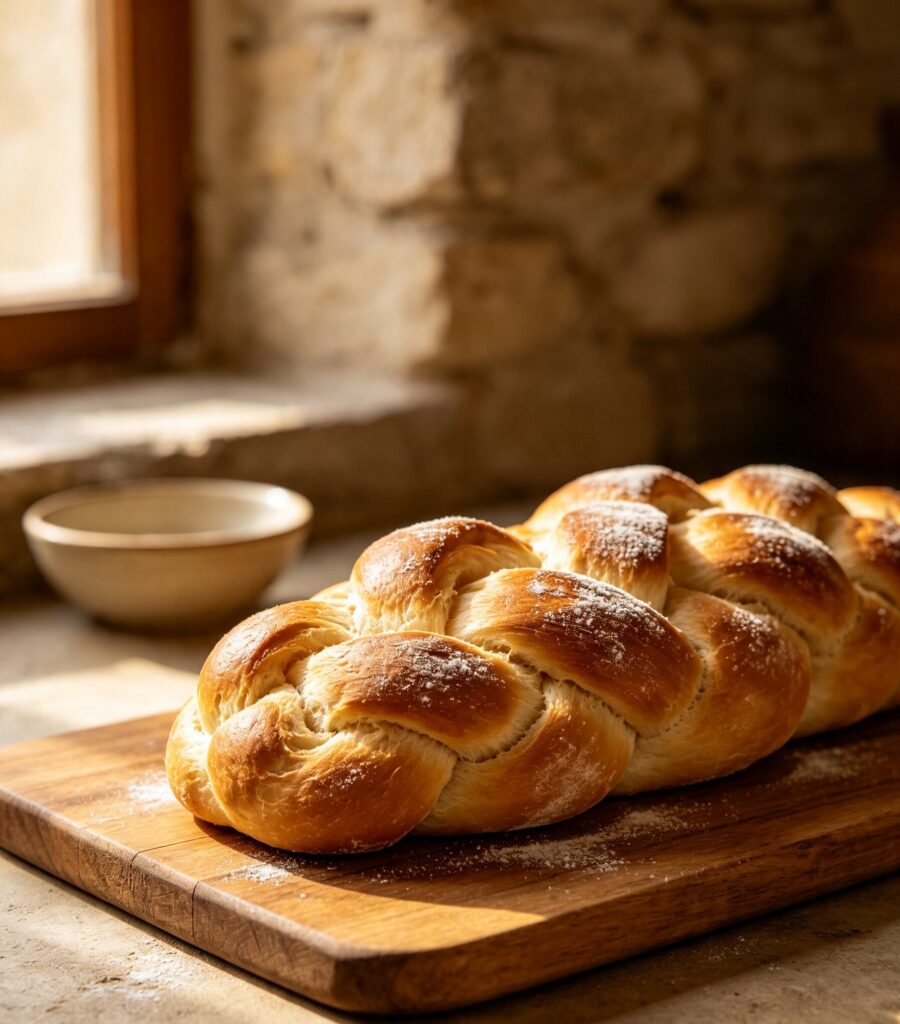
Challah (Braided Sabbath Bread)
Ingredients
- 500 g (4 cups) bread flour
- 7 g (2 1/4 tsp) instant yeast
- 70 g (1/3 cup) sugar
- 2 eggs, plus 1 for glazing
- 60 ml (1/4 cup) vegetable oil
- 250 ml (1 cup) warm water
- 1 tsp salt
- 1 tbsp sesame or poppy seeds (optional)
Method
- Dissolve yeast and a pinch of sugar in warm water and let stand for 10 minutes until foamy.
- Combine flour, remaining sugar and salt in a large bowl, then add the yeast mixture, 2 eggs and oil, kneading into a smooth, elastic dough.
- Cover and let rise in a warm place for about 1.5 hours until doubled.
- Divide the dough into strands and braid into a loaf shape.
- Place on a baking tray, cover, and let rise again for 30–40 minutes.
- Brush with beaten egg, sprinkle with seeds if using, and bake at 180°C (350°F) for 25–30 minutes until deep golden brown.
Introduction: A soft, slightly sweet braided egg bread, challah is baked fresh each week for the Sabbath and Jewish holidays, its plaited form symbolizing unity and traditionally blessed before the Friday night meal.
Cultural Background: A soft, slightly sweet braided egg bread, challah is baked fresh each week for the Sabbath and Jewish holidays, its plaited form symbolizing unity and traditionally blessed before the Friday night meal.
Tips: A double egg glaze, brushed on before and once more partway through baking, gives challah its characteristic deep shine.
Variations: A round challah studded with raisins is traditional for the Jewish New Year, symbolizing a sweet, complete year. Vegetarian as written; not authentically made vegan due to eggs.
Storage: Store wrapped at room temperature for up to 3 days.
Reheating: Warm slices briefly in a 160°C (320°F) oven, or toast.
FAQs:
Q: Can challah be made without eggs?
A: Traditional challah relies on egg for its rich flavor and texture, though eggless versions exist for those with dietary restrictions.
Q: How many strands are used to braid?
A: Three, four or six strands are all traditional, with six-strand loaves reserved for special occasions.
Please log in to leave a comment.