
Holidays & Special Occasions
Kuku Sabzi (Herb Frittata)
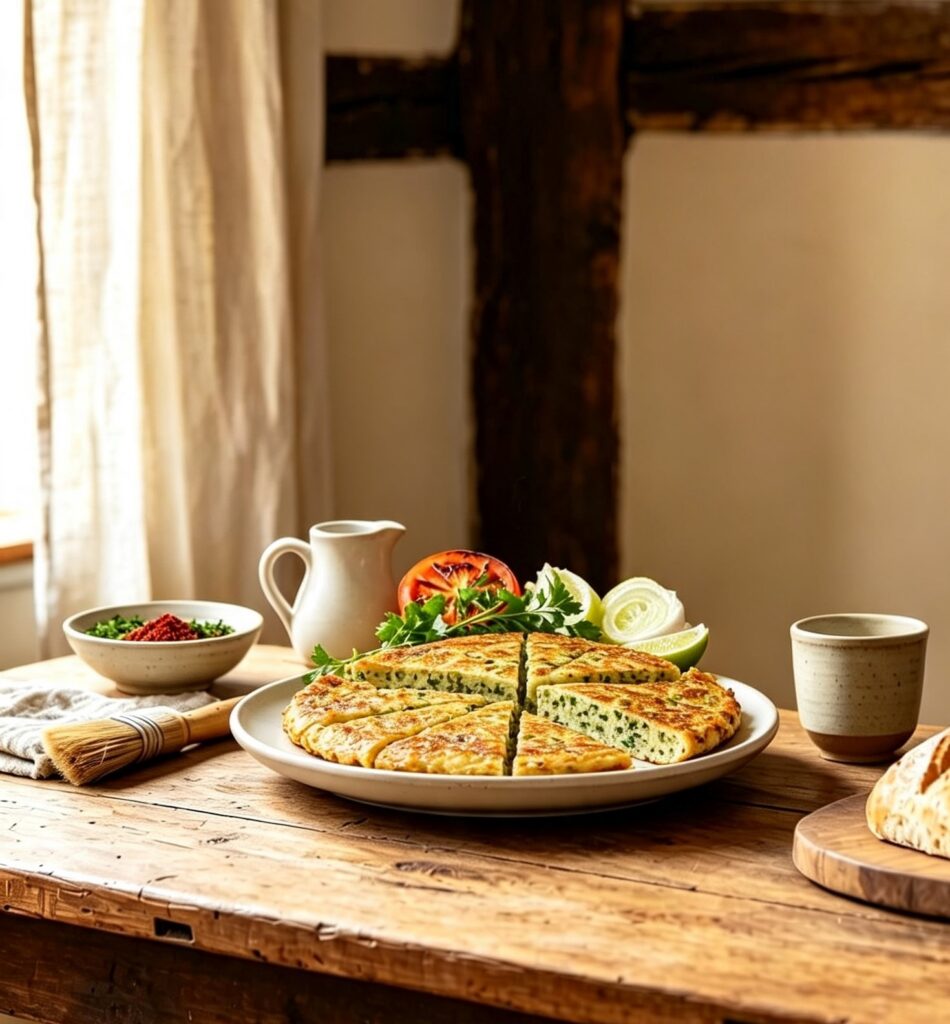
Ingredients
- 300 g (5 cups) mixed fresh herbs (parsley, cilantro, dill, chives), finely chopped
- 6 eggs
- 1 tbsp flour
- 1/2 tsp baking powder
- 30 g (1/4 cup) walnuts, chopped
- 2 tbsp dried barberries
- 60 ml (4 tbsp) oil
- Salt and pepper, to taste
Method
- Whisk the eggs in a large bowl until well combined, then stir in the flour and baking powder.
- Fold in the chopped herbs, walnuts, barberries, salt and pepper, mixing until the herbs are evenly coated in egg.
- Heat the oil in a non-stick skillet over medium heat, then pour in the mixture, spreading evenly.
- Cover and cook over low-medium heat for 12-15 minutes until the base is set and golden.
- Carefully flip the kuku using a large plate, sliding it back into the pan to cook the other side for a further 10-12 minutes until fully set and golden on both sides.
- Cut into wedges and serve warm or at room temperature.
Introduction: A dense, herb-packed frittata bound with eggs and lightly leavened, kuku sabzi is traditionally served at Nowruz, its vivid green colour and egg base symbolising growth, fertility and new life for the coming year.
Cultural Background: A dense, herb-packed frittata bound with eggs and lightly leavened, kuku sabzi is traditionally served at Nowruz, its vivid green colour and egg base symbolising growth, fertility and new life for the coming year. It is also enjoyed year-round as a light main or sandwich filling.
Tips: Pack the mixture with as much fresh herb as it will hold — the dish should be more herb than egg in proportion. Cooking low and slow with the lid on prevents the outside from burning before the centre sets.
Variations: A version without walnuts and barberries is common for a simpler everyday kuku. Some recipes bake the mixture in the oven at 180°C (350°F) for about 25-30 minutes as an alternative to stovetop cooking. Vegetarian as written; not naturally vegan due to eggs.
Storage: Refrigerate in an airtight container for up to 4 days.
Reheating: Serve cold, at room temperature, or gently reheat in a covered skillet over low heat for a few minutes.
FAQs:
Q: Can I bake kuku sabzi instead of pan-frying?
A: Yes, baking gives a more even, hands-off result and works especially well for larger batches.
Q: Why is kuku sabzi linked to Nowruz?
A: Its green colour and egg base symbolise renewal, growth and the arrival of spring.
Please log in to leave a comment.