
Breads
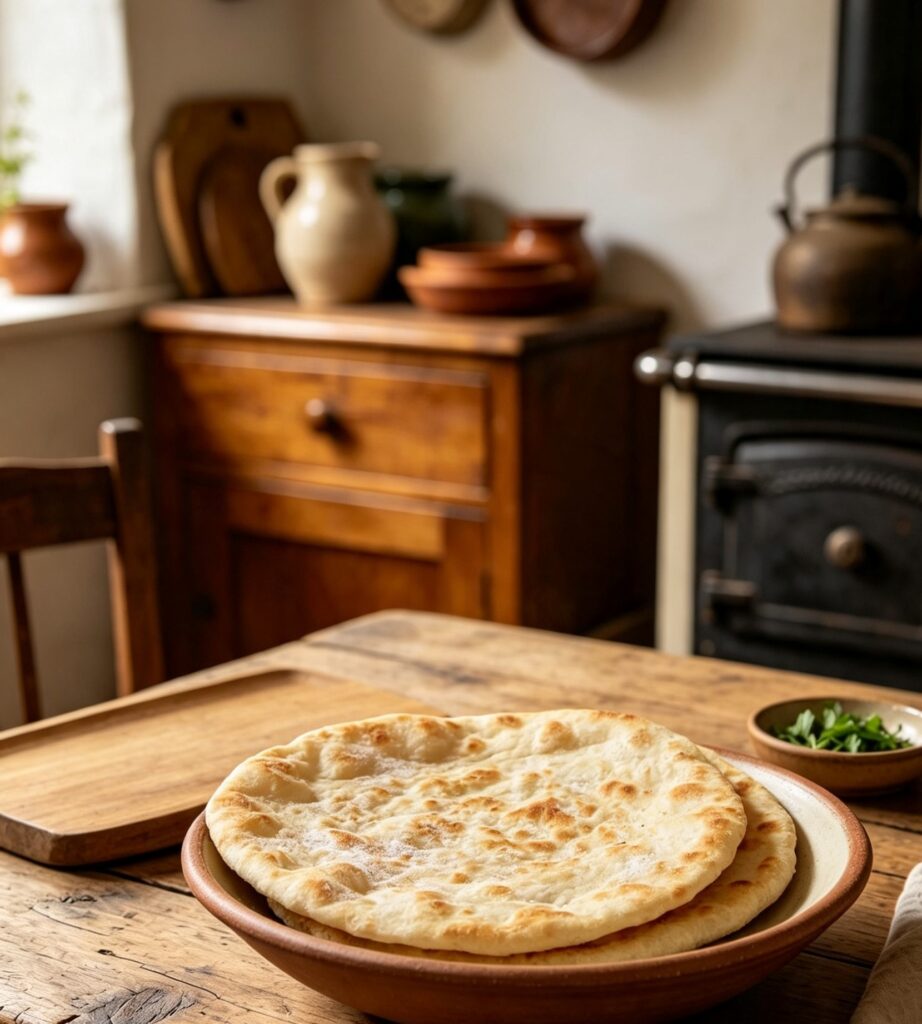
Nan-e Lavash (Thin Persian Flatbread)
Ingredients
- 400 g (3.25 cups) all-purpose flour
- 1 tsp instant yeast
- 1 tsp salt
- 250 ml (1 cup) warm water
- 1 tbsp oil
Method
- Combine the flour, yeast and salt in a bowl, then gradually add warm water and oil, mixing to form a soft dough.
- Knead for 8-10 minutes until smooth, then cover and let rest for 45-60 minutes until slightly puffed.
- Divide the dough into 8 equal portions and roll each out very thinly, almost translucent, on a lightly floured surface.
- Heat a dry skillet or griddle over medium-high heat.
- Cook each rolled piece for 30-45 seconds per side, until small bubbles form and light brown spots appear.
- Stack the cooked breads under a clean towel to keep soft while cooking the remaining pieces.
Introduction: Nan-e lavash is a soft, thin, unleavened or lightly leavened flatbread that is among the oldest breads in the region, traditionally baked quickly against the hot walls of a clay tandoor oven.
Cultural Background: Nan-e lavash is a soft, thin, unleavened or lightly leavened flatbread that is among the oldest breads in the region, traditionally baked quickly against the hot walls of a clay tandoor oven. It is used across Iran as an everyday wrap, table bread and base for sandwiches.
Tips: Roll the dough as thin as possible for an authentic lavash texture; thickness should be close to that of a tortilla. Keep the skillet hot but not smoking to avoid burning before the bread cooks through.
Variations: A version brushed lightly with oil and sprinkled with za'atar or sesame seeds before cooking adds extra flavour. Lavash can also be baked briefly under a very hot grill/broiler as an alternative to skillet cooking. Naturally vegan.
Storage: Store wrapped at room temperature for 2 days, or refrigerate for up to 5 days; freezes well for up to 2 months.
Reheating: Warm briefly in a dry skillet or wrapped in foil in a low oven for a few minutes to restore softness.
FAQs:
Q: Can lavash be made without yeast?
A: Yes, a simple flour, water and salt dough also produces a traditional unleavened lavash.
Q: What is lavash traditionally used for?
A: It is used as a table bread, wrap for kebabs, and base for sandwiches throughout Iran.
Please log in to leave a comment.