
Sides
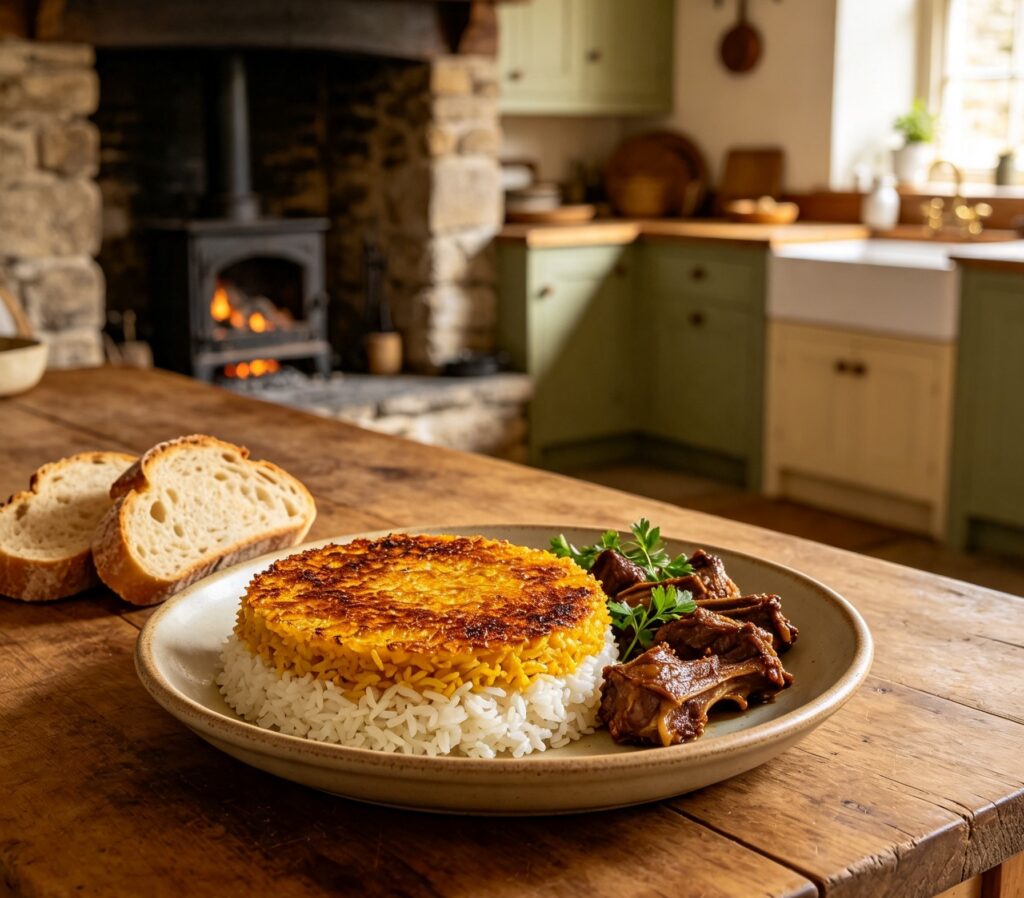
Tahdig (Crispy Saffron Rice Crust)
Ingredients
- 500 g (2.5 cups) basmati rice, soaked
- 60 ml (4 tbsp) oil
- 30 g (2 tbsp) butter
- 1/4 tsp ground saffron, bloomed in 2 tbsp hot water
- 2 tbsp yogurt
- Salt, to taste
Method
- Parboil the soaked rice in salted water for 6-7 minutes until still firm at the centre, then drain.
- Mix 2-3 spoonfuls of the parboiled rice with the yogurt and a little saffron water to form a paste.
- Heat the oil and butter in the bottom of a non-stick pot, then spread the yogurt-rice paste evenly across the base.
- Gently mound the remaining rice on top into a pyramid shape, taking care not to press it down.
- Poke a few holes through to the base with the handle of a spoon to allow steam to escape, then drizzle with the remaining saffron water.
- Cover the lid with a tea towel (to absorb condensation), place on the pot, and steam over low heat for 35-40 minutes.
- Once done, invert the pot onto a large plate to release the golden, crispy crust intact.
Introduction: Tahdig, meaning 'bottom of the pot,' is the coveted golden, crispy crust that forms at the base of Persian rice pots.
Cultural Background: Tahdig, meaning 'bottom of the pot,' is the coveted golden, crispy crust that forms at the base of Persian rice pots. Considered the prize portion of any rice dish, it is fought over at family meals and is sometimes made separately with bread or thinly sliced potato lining the pot for extra crunch.
Tips: A non-stick pot makes the crust far easier to release intact; a well-seasoned traditional pot also works with practice. Resist lifting the lid during steaming — consistent heat and steam are essential for an even crust.
Variations: Tahdig-e Nan: made with a layer of flatbread lining the pot instead of the yogurt-rice paste. Tahdig-e Sib Zamini: made with thin potato slices lining the base for a different texture. Naturally vegetarian; dairy-free version possible by omitting the yogurt paste and using oil-based tahdig instead.
Storage: Refrigerate in an airtight container for up to 3 days; best enjoyed fresh for maximum crispness.
Reheating: Reheat in a dry skillet over medium heat for a few minutes to help restore crispness; microwaving will soften the crust.
FAQs:
Q: Why did my tahdig stick to the pot?
A: Insufficient oil or too high heat can cause sticking — use a well-oiled non-stick pot and low, steady heat.
Q: Can I make tahdig with brown rice?
A: It is possible but the texture and cooking time will differ significantly from basmati.
Please log in to leave a comment.