
Soups
Sayur Asem (Sour Vegetable Soup)
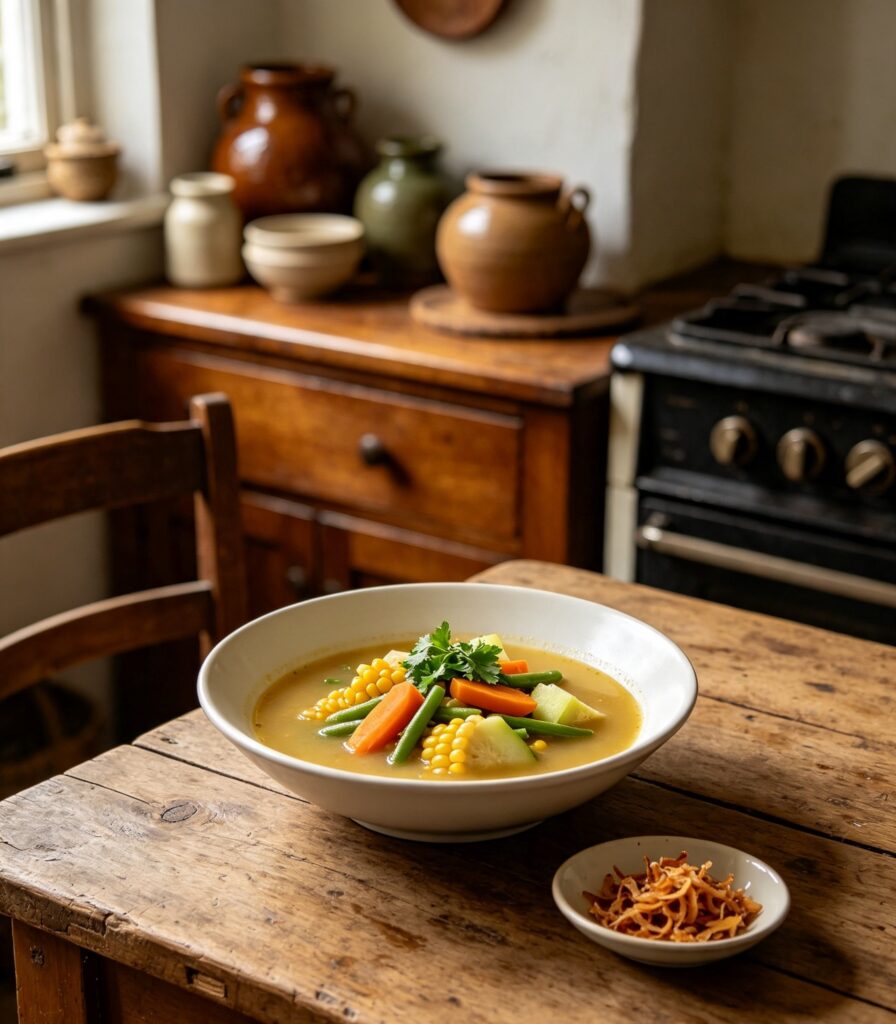
Ingredients
- 1.5 L water
- 1 corn cob, cut into rounds
- 100 g long beans, cut into pieces
- 100 g chayote, cubed
- 50 g peanuts, raw
- 2 tbsp tamarind pulp, soaked in water
- 3 shallots
- 2 cloves garlic
- 2 bay leaves
- 1 tsp palm sugar
- Salt to taste
Method
- Bring water to a boil with sliced shallots, garlic, bay leaves, and raw peanuts; simmer for 15 minutes until peanuts begin to soften.
- Add corn and chayote, and simmer for another 10 minutes.
- Strain the tamarind pulp to extract the tangy liquid, then stir it into the soup along with palm sugar and salt.
- Add long beans and simmer for a final 5-7 minutes until all vegetables are just tender.
- Taste and adjust the balance of sour, sweet, and salty before serving hot.
Introduction: Sayur asem is a light, tangy vegetable soup popular in West Java and Jakarta, soured with tamarind and packed with seasonal vegetables like corn, melinjo leaves, and long beans.
Cultural Background: Sayur asem is a light, tangy vegetable soup popular in West Java and Jakarta, soured with tamarind and packed with seasonal vegetables like corn, melinjo leaves, and long beans. It is a homely everyday dish, often paired with fried fish and sambal for a balanced, refreshing meal.
Tips: Add quicker-cooking vegetables like long beans last so they retain a slight bite. Adjust tamarind to taste; the soup should be pleasantly sour rather than overpowering.
Variations: Add melinjo leaves and young melinjo fruit for the most traditional West Javanese version. Include cubes of unripe papaya for extra body.
Storage: Refrigerate in an airtight container for up to 2 days.
Reheating: Reheat gently on the stovetop; avoid prolonged boiling to preserve the vegetables' texture.
FAQs:
Q: What does sayur asem taste like?
A: It is a light, tangy, slightly sweet vegetable soup, soured with tamarind and balanced with a touch of palm sugar.
Q: What is sayur asem traditionally served with?
A: It is commonly served alongside fried fish, rice, and a spoonful of sambal.
Please log in to leave a comment.