
Soups
Rasam
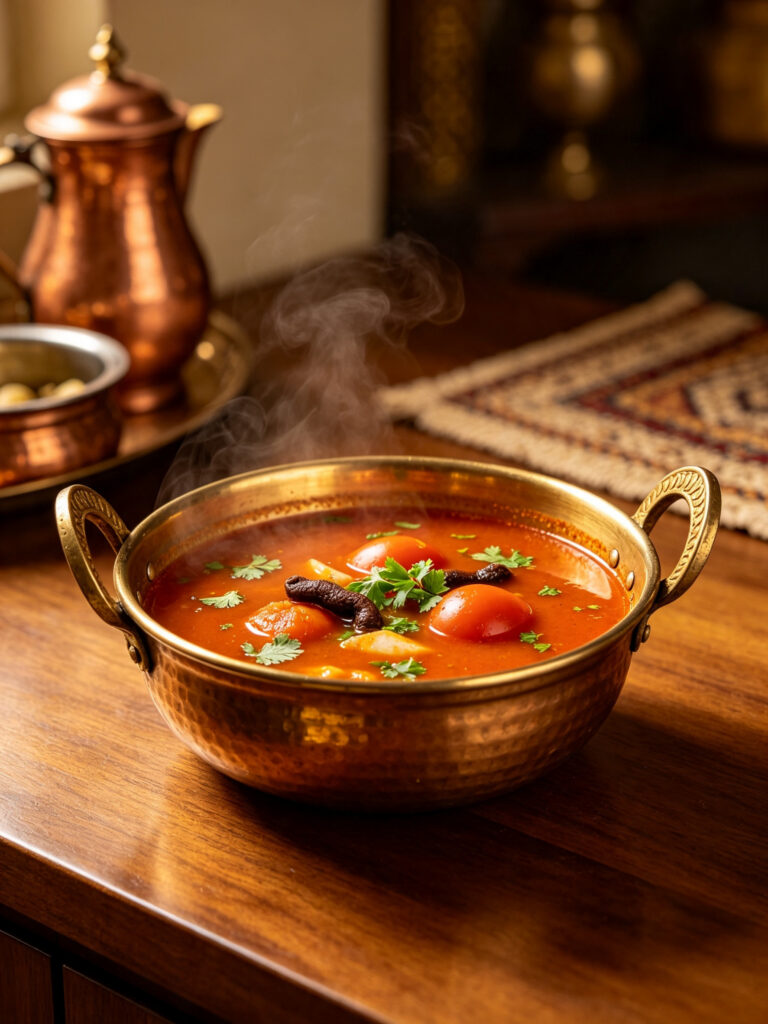
Ingredients
- Tamarind pulp: 30 g (2 tbsp)
- Tomatoes, chopped: 200 g (2 medium)
- Toor dal, cooked and mashed: 100 g (0.5 cup (cooked))
- Rasam powder: 15 g (1.5 tbsp)
- Turmeric powder: 3 g (0.5 tsp)
- Mustard seeds: 5 g (1 tsp)
- Cumin seeds: 3 g (0.5 tsp)
- Curry leaves: 8 g (1 sprig)
- Garlic cloves, crushed: 3 (3)
- Ghee: 15 ml (1 tbsp)
- Fresh coriander, chopped: 10 g (2 tbsp)
Method
- Simmer tamarind pulp with 600 ml water, tomatoes and turmeric for 10 minutes.
- Add rasam powder and mashed toor dal, simmer another 10 minutes until slightly thickened.
- In a small pan, heat ghee and temper mustard seeds, cumin seeds, garlic and curry leaves until fragrant.
- Pour the tempering over the rasam and simmer 2 more minutes.
- Garnish with fresh coriander and serve hot, either as a soup or poured over rice.
Introduction: Rasam is a thin, tangy, peppery South Indian soup made from tamarind and tomato, traditionally served after the main course or with rice, and believed in Tamil households to aid digestion.
Cultural Background: Rasam is a thin, tangy, peppery South Indian soup made from tamarind and tomato, traditionally served after the main course or with rice, and believed in Tamil households to aid digestion.
Tips: Let the rasam froth gently but never reach a full rolling boil once the tempering is added, to preserve its delicate aroma.
Variations: Lemon rasam skips tomato and tamarind, using lemon juice for tang instead; pepper rasam emphasises crushed black pepper for colds.
Storage: Refrigerate up to 3 days.
Reheating: Reheat gently over low heat; avoid vigorous boiling.
FAQs:
Q: What's the difference between rasam and sambar?
A: Rasam is thin and soup-like with minimal dal, while sambar is thicker and vegetable-laden, used more as a stew.
Please log in to leave a comment.