
Lunches
Icelandic Fish Stew
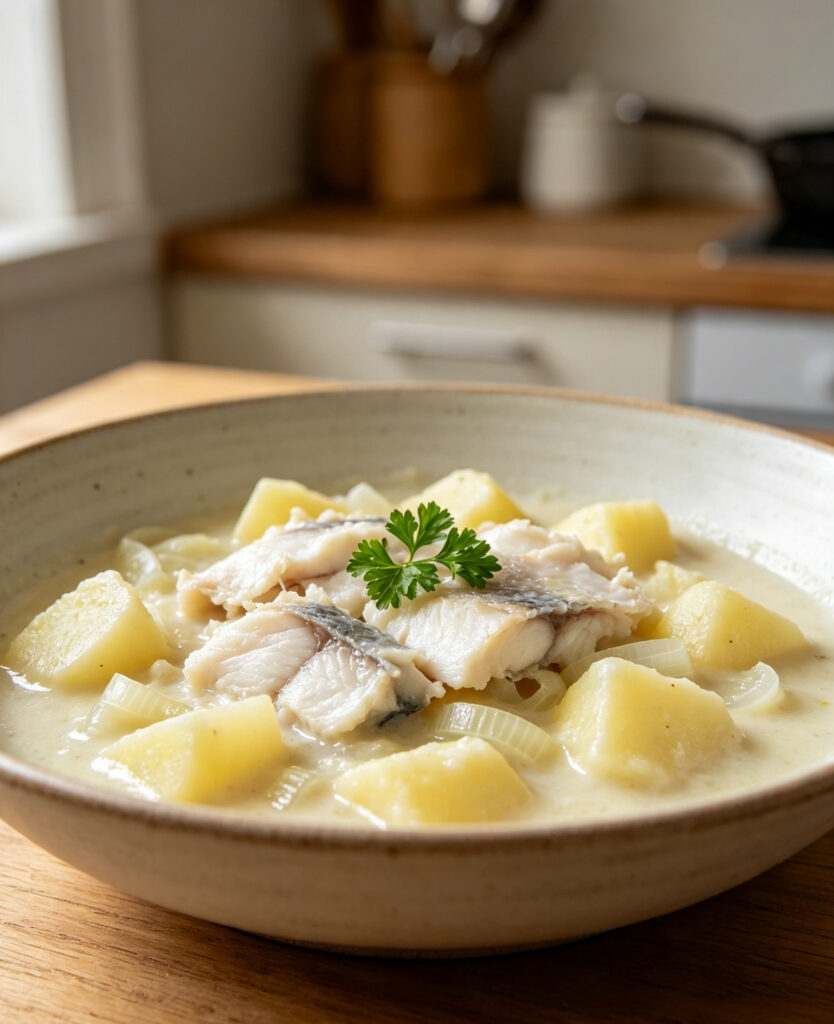
Ingredients
- 600 g (1.3 lb) cod or haddock fillets, skinless
- 500 g (1.1 lb) potatoes, peeled
- 1 onion, finely chopped
- 50 g (3.5 tbsp) butter
- 40 g (1/3 cup) flour
- 500 ml (2 cups) whole milk
- 1/2 tsp salt, plus more to taste
- 1/4 tsp white pepper
- 1 pinch ground nutmeg
- Fresh chives, chopped, to garnish
Method
- Boil the potatoes in salted water until tender, about 15 minutes; drain and roughly mash, leaving some texture.
- Meanwhile, poach the fish in barely simmering salted water for 8-10 minutes until just cooked through; drain and flake into large chunks.
- In a saucepan, melt the butter over medium heat and soften the onion for 4-5 minutes.
- Whisk in the flour and cook for 1 minute to form a roux.
- Gradually whisk in the milk, stirring until the sauce thickens and is smooth.
- Season with salt, white pepper and nutmeg.
- Fold in the mashed potatoes and flaked fish, stirring gently to combine without breaking up the fish too much.
- Warm through for 2-3 minutes and serve hot, garnished with chives.
Introduction: Plokkfiskur was born of thrift, a way to transform leftover boiled fish and potatoes into a comforting, hearty meal.
Cultural Background: Plokkfiskur was born of thrift, a way to transform leftover boiled fish and potatoes into a comforting, hearty meal. It remains one of the most beloved home-cooked lunches in Iceland, traditionally served with rúgbrauð (rye bread) and a smear of butter.
Tips: Use day-old boiled potatoes for the best texture. Do not overwork the fish once added, or it will disintegrate into the sauce.
Variations: Add grated cheddar over the top and grill until golden for a baked version. Use smoked haddock for a deeper, smokier flavour.
Storage: Refrigerate up to 2 days in an airtight container.
Reheating: Reheat gently in a saucepan over low heat with a splash of milk to loosen.
FAQs:
Q: What bread is traditionally served with plokkfiskur?
A: Rúgbrauð, Iceland's dark rye bread, with butter.
Q: Can I use frozen fish?
A: Yes, thaw fully and pat dry before poaching.
Please log in to leave a comment.