
Holidays & Special Occasions
Akwadu
The Quirky Foodster Team
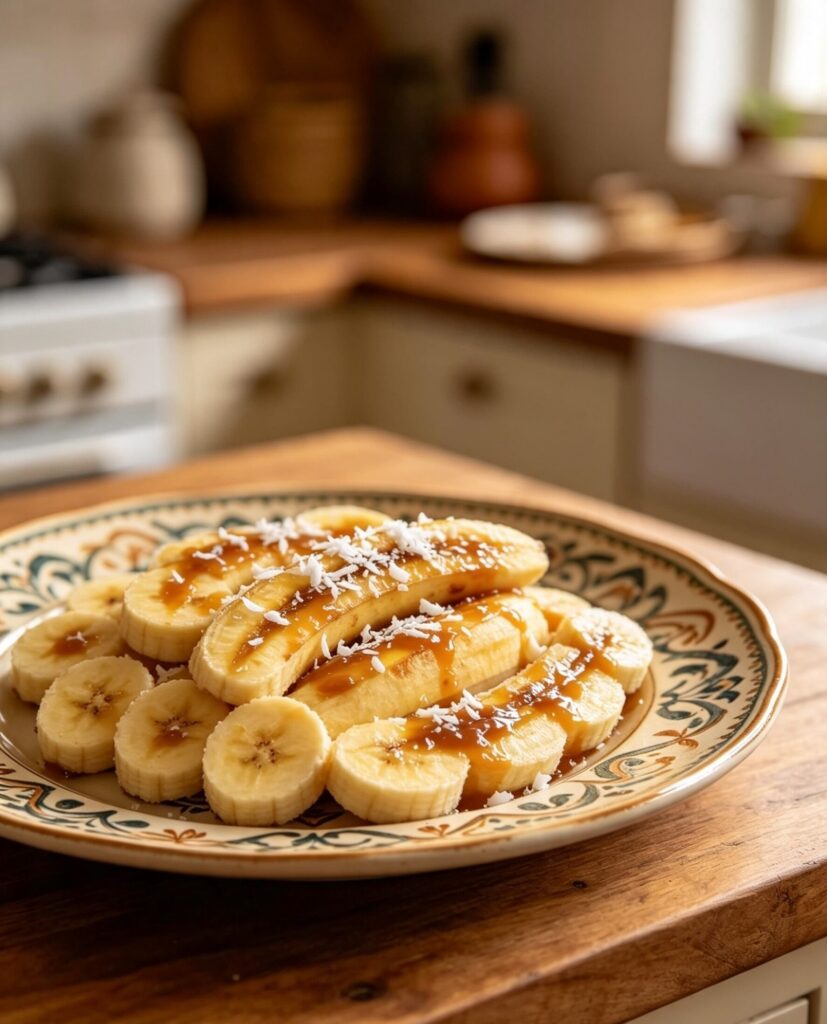
Ingredients
- 6 ripe bananas, sliced lengthwise
- Juice of 1 orange
- Juice of 1 lemon
- 60 g (4 tbsp) butter, melted
- 80 g (6 tbsp) brown sugar
- 60 g (3/4 cup) shredded coconut
- 1/2 tsp ground cinnamon
- 1 cup fresh pineapple chunks (optional)
Method
- Preheat the oven to 190°C (375°F) and grease a baking dish.
- Arrange the sliced bananas in the dish in a single layer, adding pineapple chunks if using.
- Whisk together the orange juice and lemon juice and pour evenly over the bananas.
- Brush the melted butter over the top and sprinkle evenly with brown sugar and cinnamon.
- Scatter the shredded coconut generously over everything.
- Bake for 20-25 minutes, until the bananas are tender, the edges are caramelized, and the coconut is lightly toasted.
- Serve warm, straight from the baking dish.
Introduction: Akwadu is a festive baked banana dessert shared across Gabon and neighbouring Equatorial Guinea, traditionally prepared for Christmas, New Year, and other celebrations.
Cultural Background: Akwadu is a festive baked banana dessert shared across Gabon and neighbouring Equatorial Guinea, traditionally prepared for Christmas, New Year, and other celebrations. Ripe banana slices are coated in citrus juice, then baked with butter, sugar, and coconut until caramelized and fragrant, offering a rare touch of sweetness at otherwise savoury-focused feasts.
Tips: Baste the bananas with the pan juices halfway through baking for even caramelization and a glossy finish.
Variations: A splash of dark rum can be added to the citrus juice mixture for an adult version served at New Year gatherings. Vegetarian as written; for a vegan version, substitute the butter with coconut oil.
Storage: Refrigerate leftovers in an airtight container for up to 2 days.
Reheating: Warm in the oven at 160°C (320°F) for 10 minutes to re-crisp the coconut topping.
Nutrition: Approx. 260 kcal, 2 g protein, 11 g fat, 40 g carbohydrates per serving.
FAQs:
Q: What occasions is Akwadu served at?
A: It is a classic Christmas, New Year, and celebratory dessert in both Gabon and neighbouring Equatorial Guinea.
Please log in to leave a comment.