
Sides
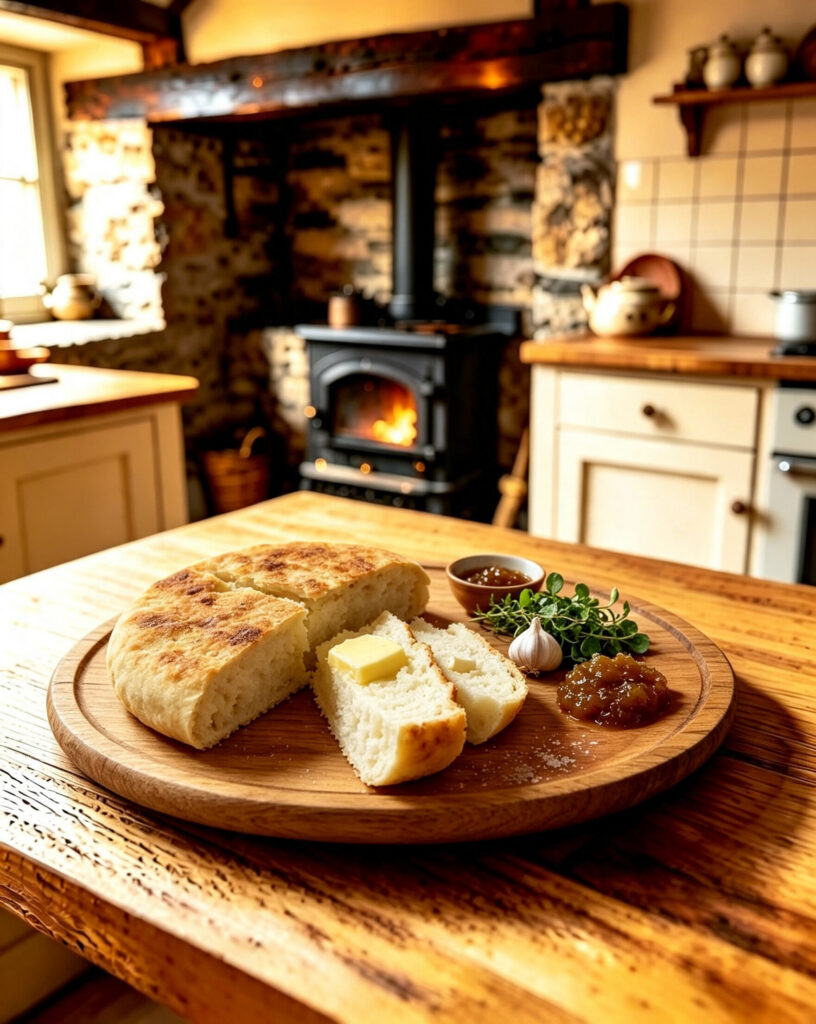
Bara Planc Savoury Side
The Quirky Foodster Team
Ingredients
- 250 g (2 cups) self-raising flour
- 1/2 tsp salt
- 40 g (3 tbsp) butter, cold and cubed
- 150 ml (2/3 cup) buttermilk or milk
- Butter, for serving
Method
- In a mixing bowl, rub the cold butter into the flour and salt until the mixture resembles fine breadcrumbs.
- Gradually stir in the buttermilk or milk to form a soft dough.
- Turn out onto a lightly floured surface and roll into a round, about 1.5 cm (2/3 inch) thick.
- Heat a lightly floured griddle or heavy frying pan over medium-low heat.
- Cook the bread for 8-10 minutes per side, until golden brown and cooked through, checking with a skewer for doneness.
- Slice and serve warm with butter, alongside a savoury main such as cawl.
Introduction: Bara planc, meaning 'plank bread', is a simple griddle-cooked bread traditionally made without an oven, often served warm and buttered alongside a main meal such as cawl.
Cultural Background: Bara planc, meaning 'plank bread', is a simple griddle-cooked bread traditionally made without an oven, often served warm and buttered alongside a main meal such as cawl. This everyday version highlights its role as a humble, versatile savoury accompaniment.
Tips: Cook over a gentle heat, as this bread needs time to cook through without burning the outside. Check doneness with a skewer inserted into the centre — it should come out clean. Serve fresh and warm, ideally with plenty of butter.
Variations: Add a handful of grated cheese to the dough for a savoury cheese version. Add fresh herbs such as chives to the dough for extra flavour. Cut into smaller individual rounds for quicker, more even cooking. Naturally vegetarian; a vegan version can use plant-based butter and a plant milk with a splash of vinegar in place of buttermilk.
Storage: Store wrapped at room temperature for up to 2 days.
Reheating: Warm briefly on a dry griddle or in a low oven for a few minutes to refresh.
Nutrition: Per serving (approx.): 230 kcal, 6 g protein, 36 g carbohydrates, 7 g fat, 1 g fibre.
FAQs:
Q: Why is it called 'plank bread'?
A: The name refers to the traditional practice of cooking it on a flat griddle or bakestone, rather than in an oven.
Q: Can I make this bread without buttermilk?
A: Yes, regular milk works well as a substitute, though buttermilk gives a slightly tangier flavour and softer crumb.
Q: What's traditionally served with bara planc?
A: It's a classic accompaniment to cawl and other hearty Welsh stews.
Please log in to leave a comment.