
Holidays & Special Occasions
Wheat Berry and Honey Pudding
The Quirky Foodster Team
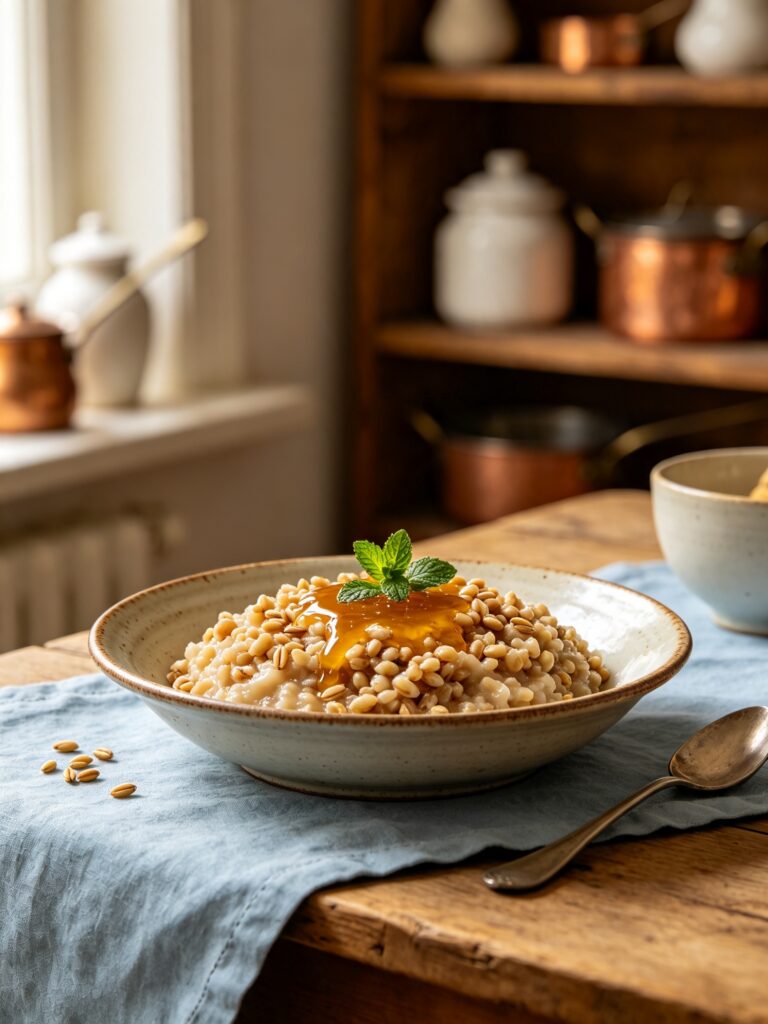
Ingredients
- 200 g (1 cup) whole wheat berries, soaked overnight
- 1L (4 cups) water, for cooking
- 100 g (2/3 cup) poppy seeds
- 80 ml (1/4 cup) honey, or to taste
- 80 g (1/2 cup) raisins
- 60 g (1/2 cup) walnuts, chopped
- 2 tbsp warm water, for grinding the poppy seeds
Method
- Drain the soaked wheat berries and place in a large saucepan with the fresh water. Bring to a boil, then reduce heat and simmer for 45-60 minutes, until tender but still slightly chewy, adding more water if needed. Drain any excess liquid.
- While the wheat cooks, place the poppy seeds in a small saucepan, cover with water, and simmer for 5 minutes to soften. Drain well.
- Grind the softened poppy seeds using a mortar and pestle or spice grinder with the warm water until they form a paste and release their milky color — this step is essential for unlocking their flavor.
- Soak the raisins in a little warm water for 10 minutes to plump them, then drain.
- In a large bowl, combine the cooked wheat berries, ground poppy seed paste, honey, raisins, and chopped walnuts.
- Stir gently to combine evenly. Taste and adjust honey to preference.
- Serve at room temperature or slightly chilled, traditionally as the very first dish of the Christmas Eve meal.
Introduction: Kutia is a ceremonial grain pudding eaten at the very center of the Christmas Eve (Sochelnik) table in Russian,
Ukrainian, and Belarusian Orthodox tradition, one of the twelve fasting dishes served that evening to represent the
twelve apostles. Made from boiled wheat berries mixed with honey, poppy seeds, and dried fruit or nuts, it carries
deep symbolism — the wheat representing hope and resurrection, the honey and poppy seeds representing
happiness and prosperity for the year to come. It is also traditionally served at memorial meals.
Cultural Background: Kutia is a ceremonial grain pudding eaten at the very center of the Christmas Eve (Sochelnik) table in Russian,
Ukrainian, and Belarusian Orthodox tradition, one of the twelve fasting dishes served that evening to represent the
twelve apostles. Made from boiled wheat berries mixed with honey, poppy seeds, and dried fruit or nuts, it carries
deep symbolism — the wheat representing hope and resurrection, the honey and poppy seeds representing
happiness and prosperity for the year to come. It is also traditionally served at memorial meals.
Tips: Grinding the poppy seeds is a crucial step often skipped by mistake — whole poppy seeds pass through undigested and contribute little flavor, while ground seeds release a rich, nutty, slightly milky taste. Kutia should be made a few hours ahead, or even the day before, to let the flavors meld together. Adjust the honey and dried fruit to taste — recipes vary considerably between families and regions.
Variations: Add dried apricots or candied orange peel alongside the raisins for extra sweetness and color. Use barley instead of wheat berries, an older, more traditional grain choice in some regions. Some families add a splash of warm water or weak tea to loosen the mixture to a looser, more spoonable consistency.
Storage: Refrigerate in an airtight container for up to 4 days.
Reheating: Traditionally served cold or at room temperature; this dish is not reheated.
Please log in to leave a comment.