
Breads
Lenten Rye Bread
The Quirky Foodster Team
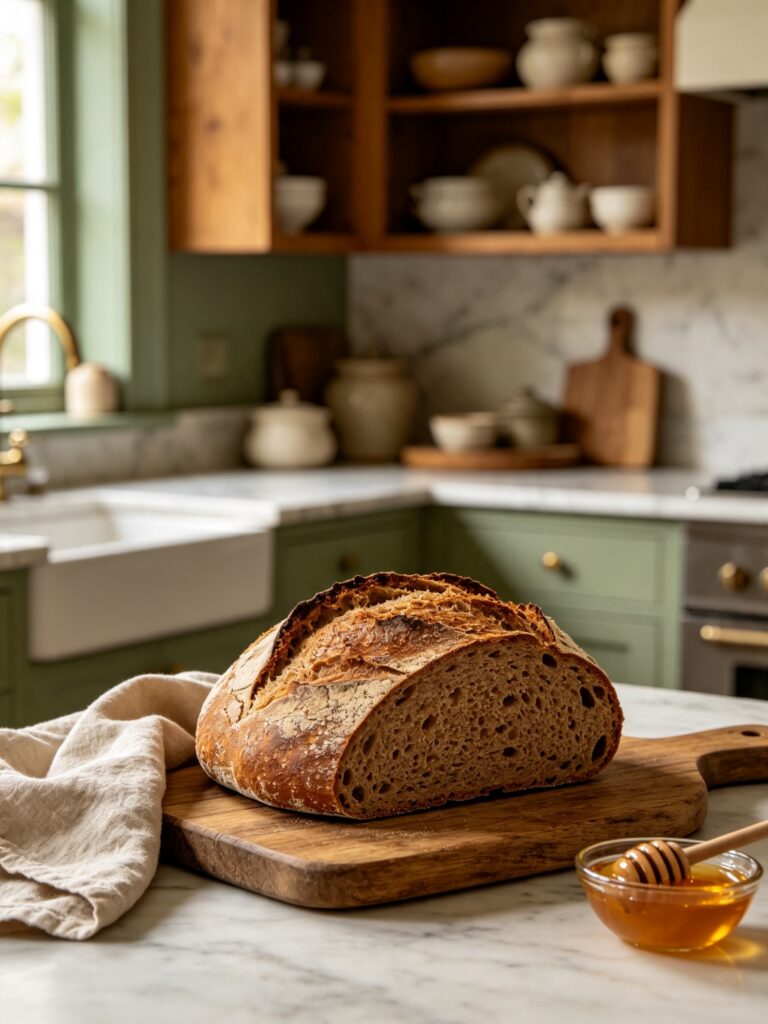
Ingredients
- 300 g (2 1/2 cups) rye flour
- 200 g (1 2/3 cups) all-purpose flour, plus extra for dusting
- 7g 1 packet (2 1/4 tsp) active dry yeast
- 1 tbsp molasses or dark honey substitute (date syrup for strict fasting)
- 1 tbsp vegetable oil
- 1 tsp salt
- 1 tbsp caraway seeds (optional)
- 350 ml (1 1/2 cups) lukewarm water
Method
- In a large bowl, dissolve the yeast and molasses in the lukewarm water and let stand for 10 minutes until foamy.
- Add the rye flour, all-purpose flour, salt, oil, and caraway seeds (if using), and mix until a shaggy dough forms.
- Turn out onto a lightly floured surface and knead for 8-10 minutes until smooth and elastic (rye dough will be somewhat sticky and denser than wheat dough — this is normal).
- Place in a lightly oiled bowl, cover with a damp cloth, and let rise in a warm place for about 1.5 hours, until roughly doubled.
- Punch down the dough, shape into a round or oval loaf, and place on a baking sheet or in a loaf tin.
- Cover and let rise again for 30-40 minutes.
- Preheat the oven to 220°C (425°F). Score the top of the loaf with a sharp knife.
- Bake for 35-40 minutes, until the crust is deep brown and the loaf sounds hollow when tapped on the base.
- Cool completely on a wire rack before slicing.
Introduction: Dark rye bread is central to the Russian table year-round, but the postny (Lenten) version, made without milk, butter,
or eggs, is what fills the bread basket throughout Great Lent and the Nativity Fast. A touch of molasses or malt gives
it its characteristic deep color and slightly sweet, earthy flavor, and it is traditionally torn and shared, sometimes
dipped in a little oil, alongside soups and simple fasting mains.
Cultural Background: Dark rye bread is central to the Russian table year-round, but the postny (Lenten) version, made without milk, butter,
or eggs, is what fills the bread basket throughout Great Lent and the Nativity Fast. A touch of molasses or malt gives
it its characteristic deep color and slightly sweet, earthy flavor, and it is traditionally torn and shared, sometimes
dipped in a little oil, alongside soups and simple fasting mains.
Tips: Rye dough is naturally stickier and denser than wheat dough — resist adding too much extra flour, which can make the loaf tough. Letting the bread cool fully before slicing prevents a gummy texture, as rye bread continues to set as it cools. A pan of water in the oven while baking helps develop a crisper crust.
Variations: Add a spoonful of instant coffee or cocoa powder to the dough for a deeper color, a technique used in some regional versions. Mix in raisins or sunflower seeds for added texture. Use a sourdough starter instead of commercial yeast for a more traditional, tangier loaf.
Storage: Store wrapped at room temperature for up to 4 days, or freeze whole or sliced for up to 3 months.
Reheating: Refresh in a 180°C (350°F) oven for 5-8 minutes, or toast individual slices.
Please log in to leave a comment.