
Holidays & Special Occasions
Modak
The Quirky Foodster Team
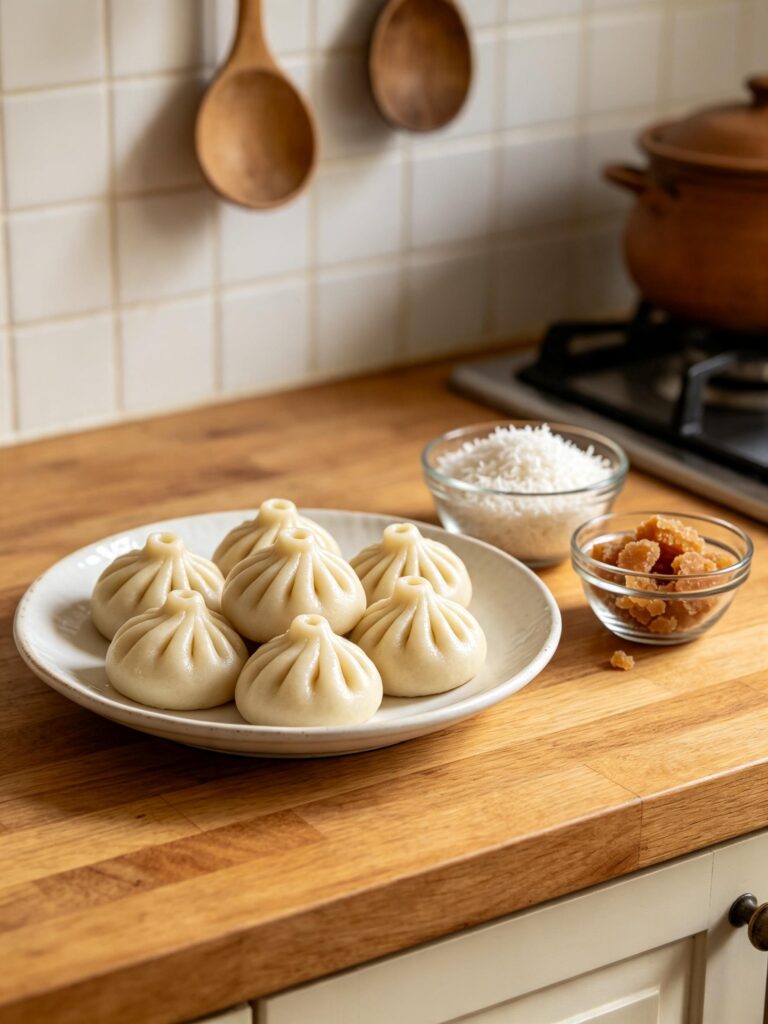
Ingredients
- For the filling:
- 150 g (2 cups) fresh grated coconut (or thawed frozen)
- 150 g (3/4 cup) jaggery, grated
- 1/2 tsp ground cardamom
- A pinch of ground nutmeg
- 1 tbsp ghee
- 1 tbsp poppy seeds, toasted (optional)
- For the dough:
- 200 g (1 1/2 cups) rice flour
- 300 ml (1 1/4 cups) water
- 1 tsp ghee
- A pinch of salt
Method
- Make the filling: heat the ghee in a pan, add the grated coconut and jaggery, and cook over low-medium heat, stirring often, for 8-10 minutes until the jaggery melts and the mixture thickens and clumps together, without turning wet.
- Stir in the cardamom, nutmeg and poppy seeds if using, then spread out on a plate to cool completely.
- For the dough, bring the water, ghee and salt to a rolling boil in a small saucepan.
- Remove from the heat, add the rice flour all at once, and stir briskly with a wooden spoon until it comes together into a shaggy mass. Cover and rest for 5 minutes.
- While still warm, knead the dough with lightly greased hands until smooth and pliable, adding a few drops of hot water if it feels dry or cracks.
- Divide the dough into 12 equal balls. Keep covered with a damp cloth as you work, to prevent drying out.
- Flatten each ball into a small disc (using a greased modak mould, or by hand into a thin circle), place a spoonful of the coconut filling in the centre, and gather the edges upward, pleating and pinching to seal into the traditional pointed shape.
- Arrange the modak in a greased steamer basket, leaving space between each, and steam over boiling water for 10-12 minutes, until glossy and slightly translucent.
- Serve warm or at room temperature, traditionally with a drizzle of ghee.
Introduction: Modak are delicate, steamed rice-flour dumplings filled with a sweet coconut and jaggery mixture, shaped
into distinctive pleated pouches. They hold deep religious significance across western India and are
commonly offered and eaten during Jain festivals such as Paryushan, as well as during Diwali and Ganesh
Chaturthi, made entirely from ingredients within Jain dietary practice.
Cultural Background: Modak are delicate, steamed rice-flour dumplings filled with a sweet coconut and jaggery mixture, shaped
into distinctive pleated pouches. They hold deep religious significance across western India and are
commonly offered and eaten during Jain festivals such as Paryushan, as well as during Diwali and Ganesh
Chaturthi, made entirely from ingredients within Jain dietary practice.
Tips: Work with the rice flour dough while it's still warm — it becomes difficult to shape once fully cooled. Keep unshaped dough balls covered at all times, as rice flour dough dries and cracks quickly.
Variations: For an easier, no-pleating version, shape the filled dough into simple round or oval dumplings instead of the traditional pointed shape. Add a few crushed cashews to the filling for extra texture.
Storage: Keeps in an airtight container in the fridge for up to 2 days.
Reheating: Steam for 3-4 minutes to soften and refresh before serving; avoid microwaving, which can toughen the rice
flour casing.
Nutrition (approximate, per serving)
Approx. 150 kcal, 2g protein, 6g fat, 24g carbohydrate, 3g fibre per serving (3 modak).
Vegetarian / Vegan
Vegetarian as written; use oil instead of ghee to make fully vegan.
FAQs:
Q: Why does my dough crack while shaping?
A: Rice flour dough dries out quickly — keep it covered with a damp cloth and work with warm dough, adding a few drops of hot water if it feels stiff.
Q: Can modak be made without a mould?
A: Yes, the traditional pleated shape is made entirely by hand; a mould simply makes the process quicker and more uniform for beginners.
Please log in to leave a comment.