
Lunches
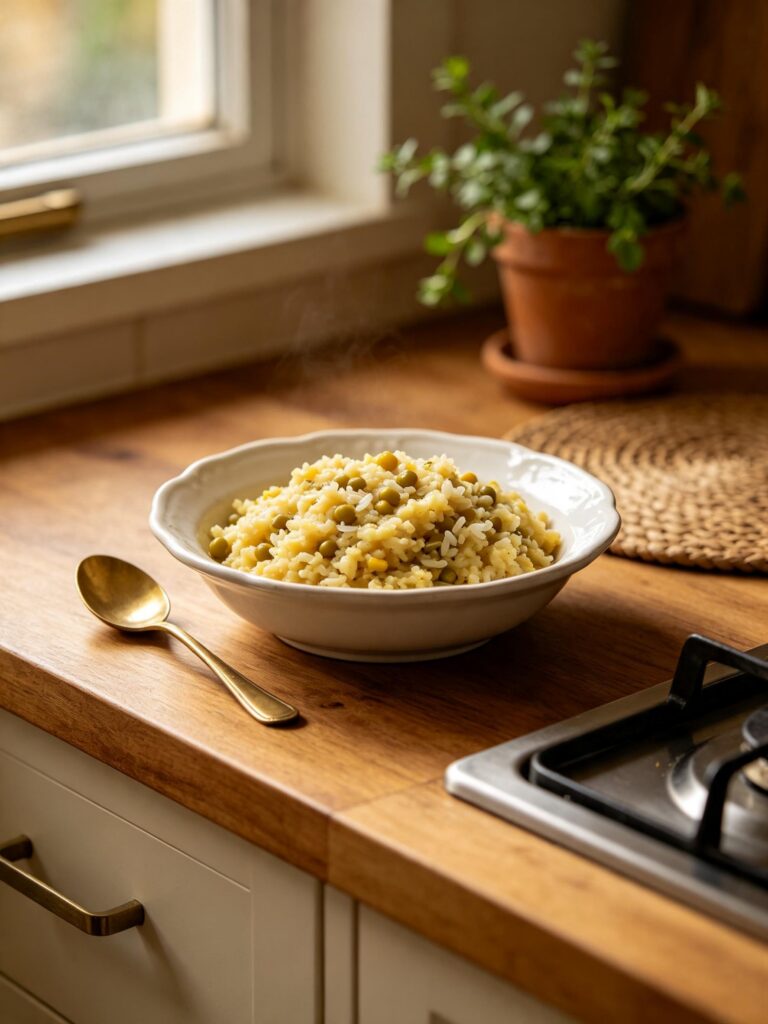
Jain Moong Dal Khichdi
The Quirky Foodster Team
Ingredients
- 200 g (1 cup) rice, rinsed
- 100 g (1/2 cup) split yellow moong dal, rinsed
- 30 g (2 tbsp) ghee
- 1 tsp cumin seeds
- 1/4 tsp asafoetida
- 1/2 tsp turmeric powder
- 1 tomato, deseeded and diced (optional, omit during fasting periods)
- 150 g (1 cup) mixed vegetables such as green beans and peas, chopped
- 1.2 litres (5 cups) water, plus more to loosen if needed
- Salt, to taste
- 1/2 tsp black pepper, coarsely crushed
Method
- Combine the rice and moong dal in a bowl, rinse together under cold water until it runs clear, and drain.
- Heat half the ghee in a pressure cooker over medium heat. Add the cumin seeds and asafoetida; once fragrant, add the turmeric, tomato (if using) and vegetables, and sauté for 2 minutes.
- Add the rinsed rice and dal, stir to coat, then pour in the water and add salt.
- Close the lid and cook for 3-4 whistles over medium heat (or about 15 minutes in an open pot at a gentle simmer, stirring occasionally, if not using a pressure cooker).
- Let the pressure release naturally, then open and stir; the khichdi should be soft and porridge-like — loosen with a splash of hot water if it's too thick.
- Warm the remaining ghee, drizzle over the top with the crushed black pepper, and serve hot.
Introduction: Khichdi, a simple one-pot rice and lentil porridge, is considered one of the most easily digestible dishes in
Indian home cooking and is often the first solid food given to children or eaten while recovering from illness.
The Jain version relies on cumin, asafoetida and ghee for warmth and depth rather than onion or garlic, and
is a comforting, everyday lunch in many Jain households, particularly on the lighter-eating days observed
around religious fasts.
Cultural Background: Khichdi, a simple one-pot rice and lentil porridge, is considered one of the most easily digestible dishes in
Indian home cooking and is often the first solid food given to children or eaten while recovering from illness.
The Jain version relies on cumin, asafoetida and ghee for warmth and depth rather than onion or garlic, and
is a comforting, everyday lunch in many Jain households, particularly on the lighter-eating days observed
around religious fasts.
Tips: For the softest texture, cook the rice and dal a little longer than usual — khichdi is meant to be mushy, not fluffy. A ladle of extra hot water stirred in just before serving keeps it pourable as it cools.
Variations: Stir in a spoonful of plain yogurt at the table for extra tang. Add a pinch of grated nutmeg with the tempering for a more festive version.
Storage: Keeps in an airtight container in the fridge for up to 2 days.
Reheating: Reheat in a pan over low heat with a splash of water, stirring often, for about 5 minutes, or microwave
covered for 2-3 minutes.
Nutrition (approximate, per serving)
Approx. 310 kcal, 11g protein, 8g fat, 50g carbohydrate, 6g fibre per serving.
Vegetarian / Vegan
Vegetarian as written; substitute plant-based oil for ghee to make fully vegan.
FAQs:
Q: Can I make this without a pressure cooker?
A: Yes — simmer covered in a heavy pot for 20-25 minutes, stirring occasionally and adding hot water as needed.
Q: Why no onion or garlic?
A: Jain cooking omits alliums; cumin, asafoetida and ghee are used instead to build savoury depth.
Please log in to leave a comment.