
Holidays & Special Occasions
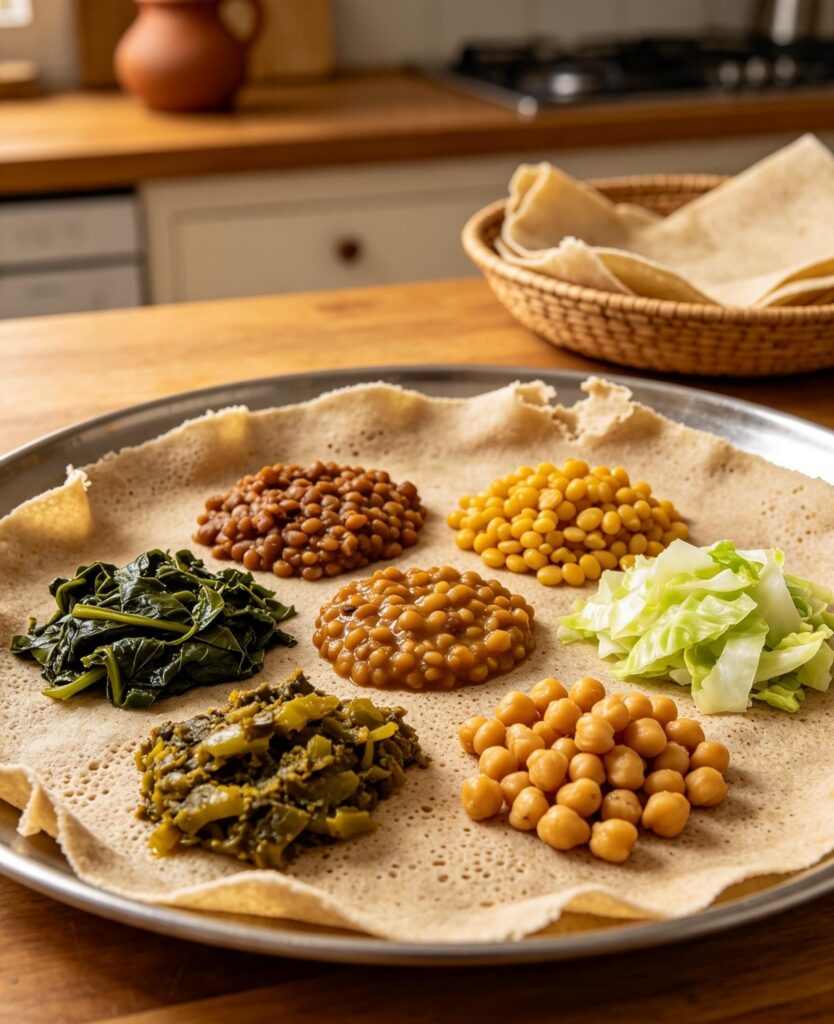
Beyaynetu (Mixed Vegetarian Fasting Platter)
The Quirky Foodster Team
Ingredients
- 1 batch Shiro Wat (see recipe ETH-003)
- 1 batch Atkilt Wat (see recipe ETH-004)
- 1 batch Azifa (see recipe ETH-009)
- 1 batch Gomen (see recipe ETH-013), made with oil instead of niter kibbeh
- 1 batch Fosolia (see recipe ETH-014)
- 4-6 pieces injera, for serving
Method
- Prepare each component dish (Shiro Wat, Atkilt Wat, Azifa, Gomen and Fosolia) according to its individual recipe, using oil rather than niter kibbeh throughout to keep the platter fully plant-based.
- Line a large serving platter or tray with one or two pieces of injera.
- Spoon each stew and salad into its own neat section around the platter, leaving space between each so the flavours do not run together too much.
- Roll or fold the remaining injera and arrange on the side or underneath the platter for scooping.
- Serve immediately while the stews are warm and the salads are chilled.
Introduction: Beyaynetu is a colourful combination platter of several vegetarian stews and salads served together atop injera, traditionally eaten on Wednesdays, Fridays and throughout the Ethiopian Orthodox fasting periods such as Lent, when animal products are avoided.
Cultural Background: Beyaynetu is a colourful combination platter of several vegetarian stews and salads served together atop injera, traditionally eaten on Wednesdays, Fridays and throughout the Ethiopian Orthodox fasting periods such as Lent, when animal products are avoided.
Tips: Prepare the components in stages, starting with those that keep well warm and finishing with the cold salads just before serving. A varied platter with contrasting colours, textures and temperatures is the hallmark of a good Beyaynetu.
Variations: Additional dishes such as Misir Wat (spiced red lentils) or Alicha (mild yellow split pea stew) are often added to extend the platter. The specific combination varies by household and region, but always remains entirely plant-based.
Storage: Store components separately in airtight containers in the fridge for up to 3 days.
Reheating: Reheat warm stews gently on the stovetop; keep salads cold and add just before serving.
FAQs:
Q: Why is Beyaynetu eaten on specific days?
A: Wednesdays and Fridays, along with extended periods like Lent, are fasting days in the Ethiopian Orthodox Church, during which followers abstain from animal products, making an all-vegetarian platter like Beyaynetu ideal.
Q: Can Beyaynetu be made with fewer dishes?
A: Yes, even three or four components make a satisfying platter; the exact number and combination varies by household.
Please log in to leave a comment.