
Holidays & Special Occasions
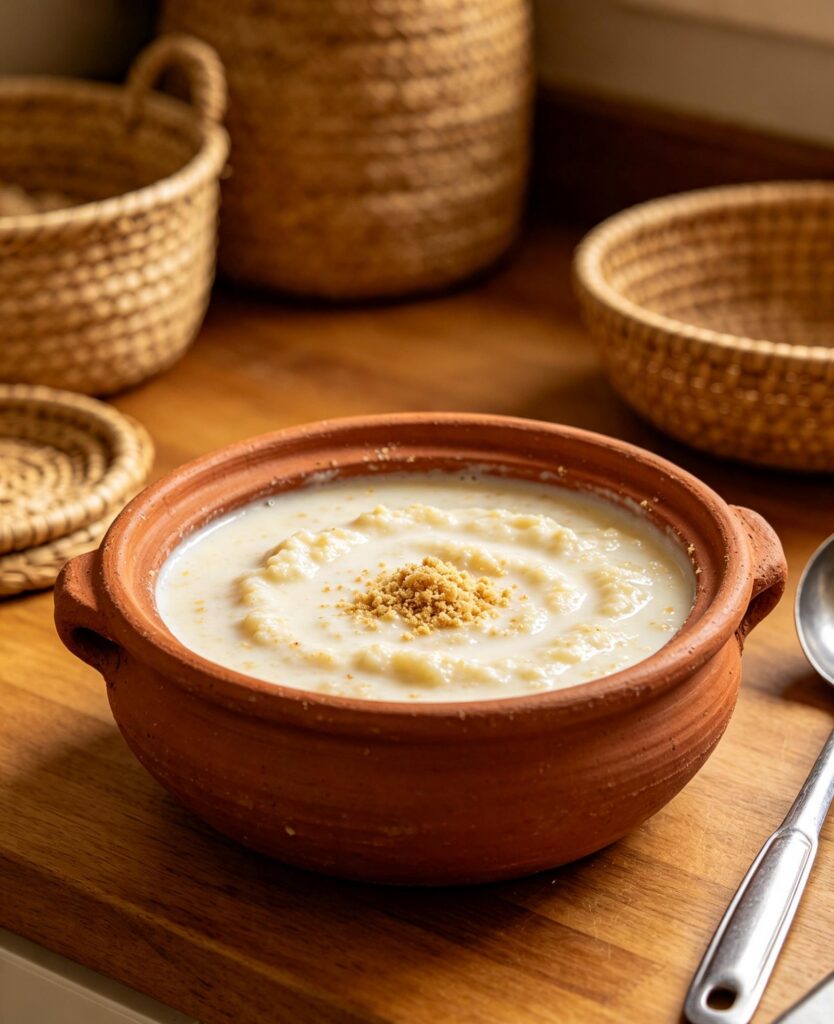
Emasi Etinkhobe Temmbila (Sour Milk with Ground Mealies)
The Quirky Foodster Team
Ingredients
- 1 litre (4 cups) raw or cultured full-cream milk
- 300 g (2 cups) coarsely ground maize (samp-style, dehulled)
- 750 ml (3 cups) water
- Pinch of salt
Method
- To make the emasi, pour the milk into a clean jar, cover loosely with cloth (not an airtight lid), and leave at room temperature for 2-3 days until it thickens and separates into curds with a tangy smell, stirring occasionally.
- Meanwhile, soak the ground maize in water for a few hours or overnight to soften.
- Drain and rinse the maize, then place in a saucepan with fresh water and a pinch of salt.
- Bring to the boil, then reduce heat, cover, and simmer for 45-60 minutes, stirring occasionally and topping up water as needed, until the maize is very soft and the mixture has thickened.
- Once the maize is soft, cool it to room temperature or lightly warm.
- Spoon the softened ground maize into serving bowls and top generously with the fermented emasi, stirring gently to combine just before eating.
Introduction: This ceremonial dish combines emasi, naturally fermented sour milk, with coarsely ground mealies, and is traditionally served at important family and community gatherings, including weddings and celebrations tied to the harvest.
Cultural Background: This ceremonial dish combines emasi, naturally fermented sour milk, with coarsely ground mealies, and is traditionally served at important family and community gatherings, including weddings and celebrations tied to the harvest. The pairing of tangy, cultured milk with soft ground maize is considered a comforting, celebratory combination rather than an everyday meal.
Tips: Fermentation time for emasi depends on ambient temperature — warmer conditions ferment faster, so check daily by smell and taste. The maize should be very soft, almost like a loose porridge, to combine well with the sour milk.
Variations: Ground sorghum can replace the maize for emasi emabele, a related traditional pairing. A drizzle of honey can be added for those who prefer a touch of sweetness alongside the tang.
Storage: Emasi keeps refrigerated for up to a week once fermented; the maize component is best used within 2 days.
Reheating: The maize can be gently warmed, but the emasi itself is always served cold or at room temperature, never heated.
FAQs:
Q: Is emasi safe to make with pasteurised milk?
A: Yes, though fermentation may take slightly longer and benefits from a small spoonful of natural yoghurt added as a starter culture.
Q: What occasions is this dish served at?
A: It's especially associated with weddings, harvest celebrations and other significant family and community gatherings.
Please log in to leave a comment.