
Lunches
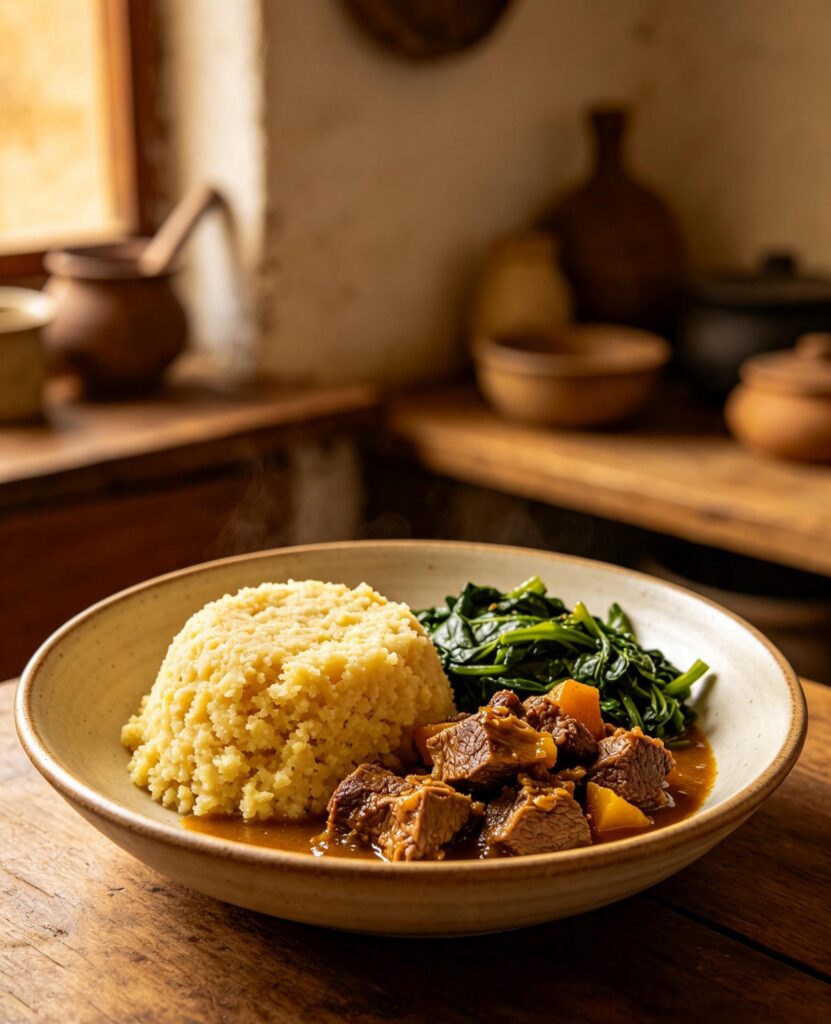
Sishwala with Meat and Greens
The Quirky Foodster Team
Ingredients
- 500 g (3 1/3 cups) coarse maize meal
- 1.5 litres (6 cups) water, divided
- 1 tsp salt
- 400 g (14 oz) stewing beef, cubed
- 1 onion, chopped
- 2 tomatoes, chopped
- 300 g (10 oz) leafy greens (spinach or pumpkin leaves), shredded
- 2 tbsp cooking oil
- Salt and pepper, to taste
Method
- Brown the beef in oil in a pot, then add the onion and cook until softened.
- Add tomatoes, 250ml (1 cup) water, salt and pepper; cover and simmer 45-60 minutes until the meat is tender, topping up water if needed.
- Stir in the shredded greens for the final 10 minutes of cooking.
- For the sishwala, mix a third of the maize meal with 250ml (1 cup) cold water to a paste.
- Bring the remaining water to the boil with salt, whisk in the paste, then gradually beat in the remaining dry maize meal over low heat, stirring constantly.
- Cover and cook on very low heat for 20-25 minutes, stirring every few minutes, until thick enough that the spoon stands upright.
- Serve the sishwala in a mound alongside the meat and greens stew.
Introduction: Sishwala, a thick maize meal porridge similar to polenta, is the anchor of the Swazi plate — served at nearly every lunch alongside a protein and vegetables.
Cultural Background: Sishwala, a thick maize meal porridge similar to polenta, is the anchor of the Swazi plate — served at nearly every lunch alongside a protein and vegetables. It's less refined and thicker than the maize porridge eaten elsewhere in the region, cooked until it holds its shape when scooped, traditionally by hand, to mop up stews and greens.
Tips: Sishwala should be firm enough to pinch off and shape with your hand — if it's runny, keep cooking and stirring. A splash of water added while stirring prevents the porridge from catching on the bottom of the pot.
Variations: Made with chicken or goat instead of beef. A vegetarian version served with beans and greens only.
Storage: Stew keeps refrigerated for 3 days; sishwala is best fresh but can be refrigerated 1-2 days and reheated with a splash of water.
Reheating: Reheat sishwala gently in a pot with a little water, stirring, until soft again; reheat stew on the stovetop until piping hot.
FAQs:
Q: What's the difference between sishwala and pap?
A: Sishwala is cooked thicker and firmer than the softer, looser pap eaten in neighbouring countries.
Q: Can I use fine maize meal instead of coarse?
A: Yes, but reduce the water slightly and cook for less time, as fine meal thickens faster.
Please log in to leave a comment.