
Sides
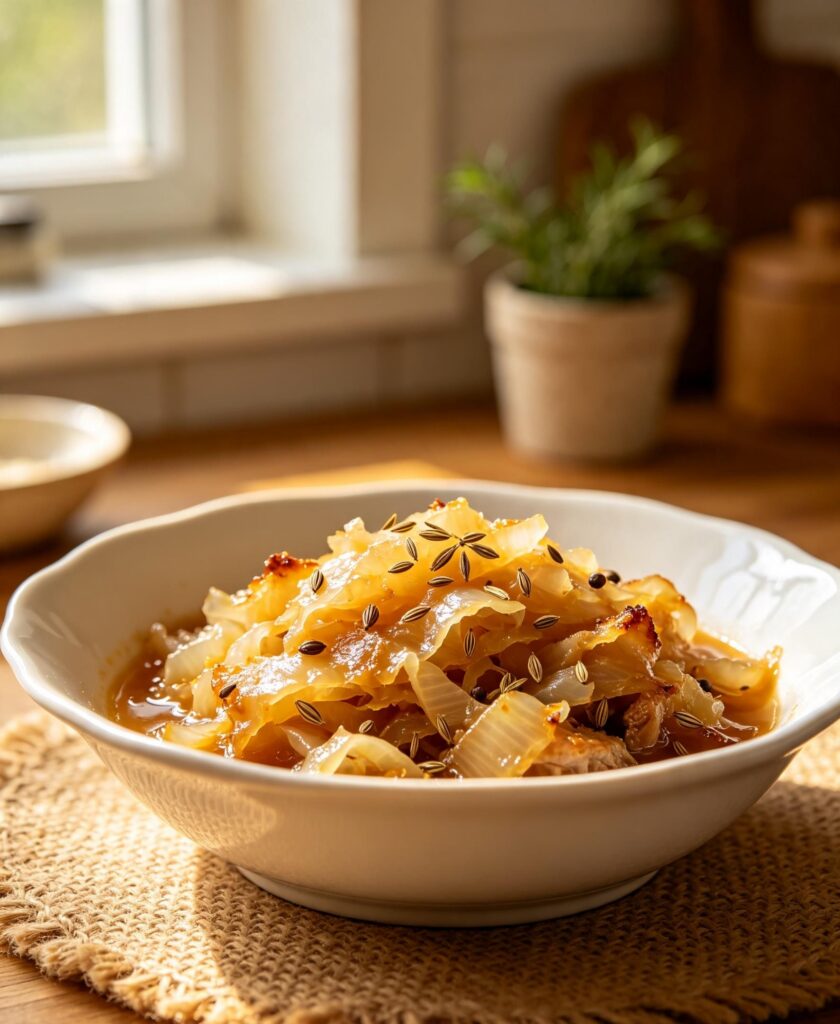
Hapukapsas (Estonian Braised Sauerkraut Side)
The Quirky Foodster Team
Ingredients
- 500 g (1 lb 2 oz) Sauerkraut
- 30 g (2 tbsp) Bacon fat or butter
- 1 small Onion, chopped
- 1 small Apple, grated
- 1 tbsp Sugar
- 1/2 tsp Caraway seeds
- 150 ml (2/3 cup) Water or stock
Method
- Melt the bacon fat or butter in a heavy-bottomed pan over medium heat.
- Add the chopped onion and cook for 3 minutes until softened.
- Stir in the sauerkraut, grated apple, sugar and caraway seeds.
- Pour in the water or stock, cover, and simmer gently for 30 to 40 minutes, stirring occasionally, until the cabbage is tender and most of the liquid has absorbed.
- Taste and adjust the sugar or seasoning as needed before serving warm.
Introduction: A simple braised sauerkraut side dish, lightly sweetened and simmered until tender, hapukapsas accompanies roasted and cured meats throughout the year, and is especially prominent at Christmas tables alongside blood sausage.
Cultural Background: A simple braised sauerkraut side dish, lightly sweetened and simmered until tender, hapukapsas accompanies roasted and cured meats throughout the year, and is especially prominent at Christmas tables alongside blood sausage.
Tips: Simmer low and slow; rushing this dish on high heat can make the sauerkraut taste harsh rather than mellow. The grated apple balances the sourness naturally, so taste before adding extra sugar.
Variations: Add a splash of white wine for extra depth. A few juniper berries can be added for a more festive, aromatic version. For a vegan version, use oil instead of bacon fat or butter. For a fully vegan version, replace the bacon fat or butter with a neutral vegetable oil; the dish remains authentic, as plant-oil versions of braised sauerkraut are common in everyday Estonian cooking.
Storage: Store covered in the refrigerator for up to 4 days.
Reheating: Reheat gently in a covered pan over low heat, stirring occasionally, adding a splash of water if it looks dry.
FAQs:
Q: Why add apple to sauerkraut?
A: Grated apple adds natural sweetness that balances the sauerkraut's sharp tang, a common pairing in Baltic and Central European cooking.
Q: What is this dish traditionally served with?
A: It is a classic accompaniment to verivorst (blood sausage) at Christmas, as well as roasted or cured pork throughout the year.
Please log in to leave a comment.