
Breads
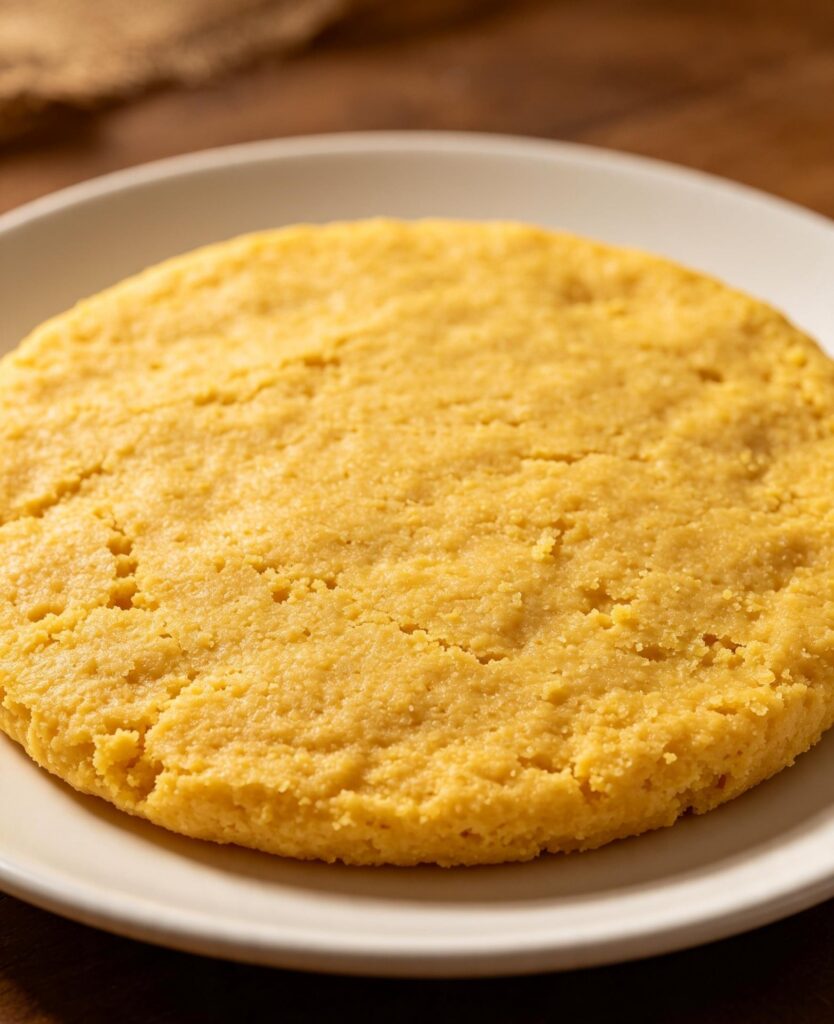
Galette de Maïs (Congolese Corn Flatbread)
The Quirky Foodster Team
Ingredients
- 250 g Fine cornmeal (1 3/4 cups)
- 50 g All-purpose flour (1/3 cup)
- 220 ml Warm water (scant 1 cup)
- 4g Salt (3/4 tsp)
- 30 ml Vegetable oil, for cooking (2 tbsp)
Method
- Combine the cornmeal, flour and salt in a mixing bowl.
- Gradually add the warm water, mixing until a soft, workable dough forms.
- Knead briefly for 2 minutes, then divide into 6 equal portions and shape into balls.
- Roll each ball out on a lightly floured surface into a flat round about 15cm (6 inches) across.
- Heat a little oil on a griddle or frying pan over medium heat.
- Cook each flatbread for 2-3 minutes per side, until lightly browned with dark spots and cooked through.
- Serve warm, stacked under a clean cloth to keep soft.
Introduction: This simple, pan-cooked corn flatbread is a quicker alternative to fermented cassava breads, made fresh in minutes and served warm alongside stews or grilled meats.
Cultural Background: This simple, pan-cooked corn flatbread is a quicker alternative to fermented cassava breads, made fresh in minutes and served warm alongside stews or grilled meats. It’s a common sight in DRC households where maize is grown alongside cassava.
Tips: Roll the dough fairly thin and cook over medium (not high) heat so the inside cooks through before the outside burns.
Variations: A tablespoon of grated onion worked into the dough adds a savoury depth enjoyed in some regional versions. Naturally vegetarian as written. Naturally vegan as written.
Storage: Store wrapped in a cloth or airtight container at room temperature for up to 1 day.
Reheating: Warm briefly on a dry griddle or in a dry frying pan for 30 seconds per side.
Nutrition: Approx. 160 kcal, 3g protein, 30g carbohydrate, 4g fat per serving.
FAQs
Q: Can I make this gluten-free?
A: Yes — replace the small quantity of all-purpose flour with a gluten-free flour blend or extra cornmeal.
Q: Why did my flatbread crack while rolling?
A: The dough may be slightly dry — work in a teaspoon more warm water at a time until it becomes pliable.
Please log in to leave a comment.