
Breads
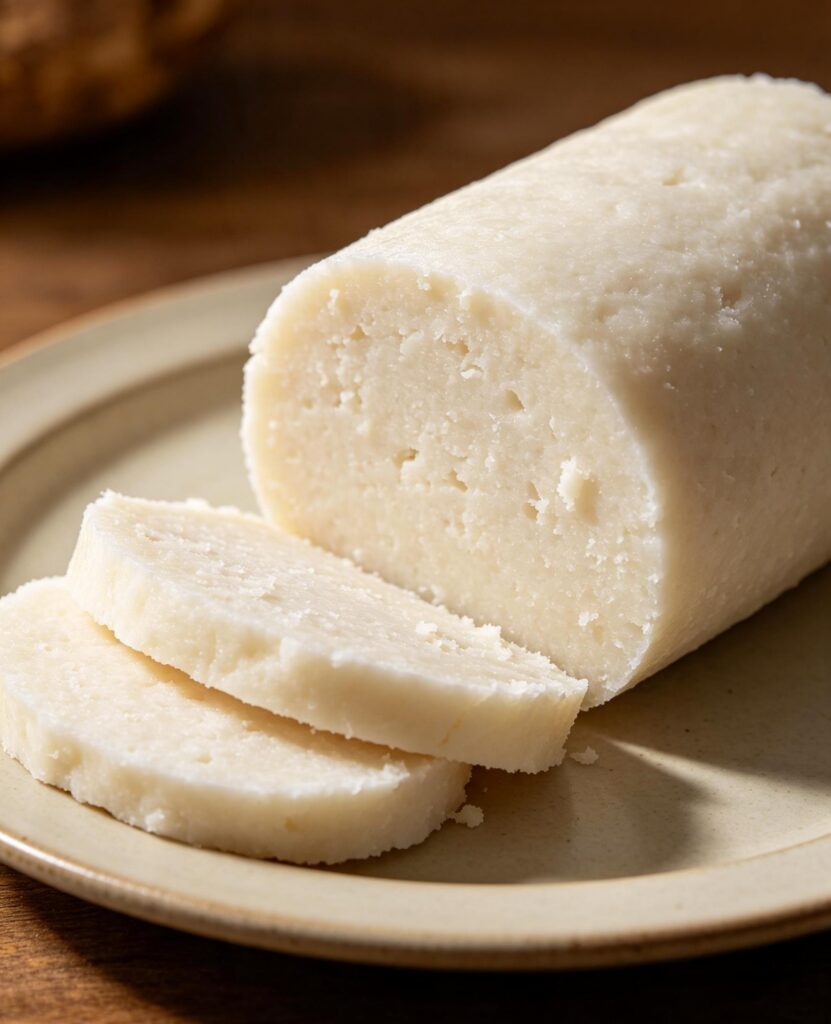
Chikwangue (Fermented Cassava Bread)
The Quirky Foodster Team
Ingredients
- 1.5 kg Fresh cassava root, peeled (3 1/3 lb)
- 2l Water, for soaking (8 cups)
- 6 Banana leaves, softened over a flame (6 large sheets)
- 5g Salt (3/4 tsp)
Method
- Soak the peeled cassava root in water for 3 days, changing the water daily, until it softens and develops a mild tang from natural fermentation.
- Drain the cassava and grate or process it into a coarse, moist paste.
- Mix in the salt and knead the paste briefly until it holds together.
- Divide the paste into portions and wrap each tightly in softened banana leaves, tying securely with kitchen string.
- Arrange the parcels in a steamer basket or large pot with a small amount of water at the base.
- Steam for 2-3 hours, topping up the water as needed, until the paste is firm and holds its shape when unwrapped.
- Cool the parcels before unwrapping, then slice and serve alongside stews.
Introduction: Chikwangue is a dense, tangy cassava bread made by fermenting cassava root before it’s wrapped in leaves and steamed for hours.
Cultural Background: Chikwangue is a dense, tangy cassava bread made by fermenting cassava root before it’s wrapped in leaves and steamed for hours. A staple across the DRC and the wider Congo Basin, it’s prized for its long shelf life without refrigeration, making it ideal for travel and markets.
Tips: The 3-day soak is essential to the dish’s characteristic tang and texture — don’t rush this step, and keep the cassava fully submerged throughout.
Variations: Some regions add a small amount of palm oil to the paste before wrapping for a richer flavour and golden hue. Naturally vegetarian as written. Naturally vegan as written.
Storage: Wrapped and unopened, chikwangue keeps at room temperature for up to a week thanks to the fermentation.
Reheating: Re-steam whole parcels for 15-20 minutes, or slice and pan-warm gently before serving.
Nutrition: Approx. 190 kcal, 1g protein, 46g carbohydrate, 0g fat per serving.
FAQs
Q: Is chikwangue supposed to taste sour?
A: Yes — a mild tang from the fermentation process is entirely authentic and expected.
Q: Can I speed up the fermentation?
A: It’s not recommended; the full soaking period is what develops the correct texture and flavour, and shortening it will result in a blander, firmer bread.
Please log in to leave a comment.