
Sides
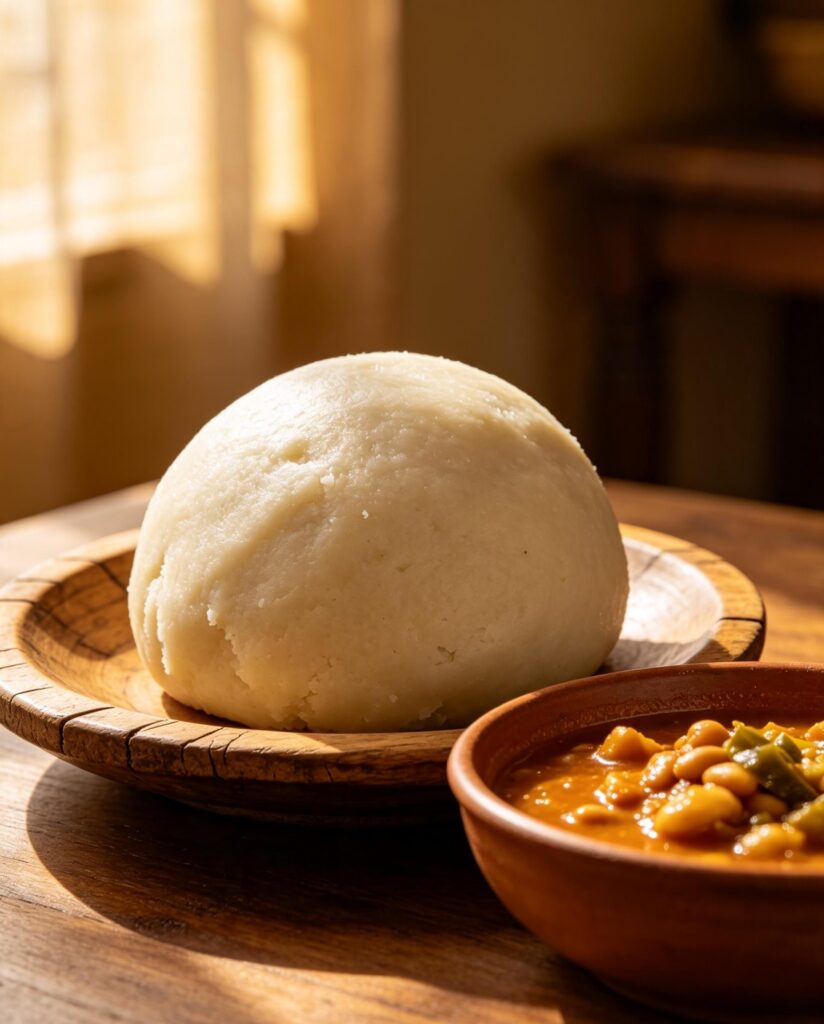
Fufu (Cassava and Plantain Dough)
The Quirky Foodster Team
Ingredients
- 300 g Cassava flour (fufu flour) (2 1/2 cups)
- 750 ml Water (3 cups)
- 2g Salt (1/4 tsp)
Method
- Bring 500ml (2 cups) of the water to a boil in the saucepan with the salt.
- Mix the cassava flour with the remaining 250ml (1 cup) cold water in a bowl to form a smooth paste.
- Pour the paste into the boiling water, stirring vigorously and constantly with the wooden spoon.
- Continue stirring and pressing the mixture against the sides of the pan over low heat for 8-10 minutes, until it becomes smooth, thick and stretchy, with no raw flour taste.
- Wet your hands or the spoon with cold water and shape the fufu into a smooth mound.
- Transfer to a serving bowl and cover until ready to serve, alongside soups or stews.
Introduction: Fufu is the quintessential Congolese starch, a smooth, stretchy dough made from cassava flour (sometimes blended with plantain or maize) and served alongside nearly every stew in the country.
Cultural Background: Fufu is the quintessential Congolese starch, a smooth, stretchy dough made from cassava flour (sometimes blended with plantain or maize) and served alongside nearly every stew in the country. Eaten by hand, small portions are pinched off and used to scoop up sauces and meat.
Tips: The vigorous stirring is what gives fufu its characteristic stretchy texture — don’t rush this step, and keep the heat low to avoid catching the base of the pan.
Variations: Blending in cooked plantain or maize flour alongside the cassava flour is common in many regional households, giving a slightly sweeter, softer fufu. Naturally vegetarian as written. Naturally vegan as written.
Storage: Best eaten fresh; leftovers can be refrigerated, tightly wrapped, for up to 1 day.
Reheating: Steam gently for 5-8 minutes, or microwave covered with a damp cloth for 2 minutes, to restore softness.
Nutrition: Approx. 210 kcal, 1g protein, 51g carbohydrate, 0g fat per serving.
FAQs
Q: Why is my fufu lumpy?
A: The flour paste was likely added too quickly or the stirring wasn’t vigorous enough — stir constantly and firmly from the moment the paste hits the boiling water.
Q: Can fufu be made in advance?
A: It’s best made just before serving, as it firms up and becomes less pliable once cooled.
Please log in to leave a comment.