
Holidays & Special Occasions
Puerco en Puya Navideño
The Quirky Foodster Team
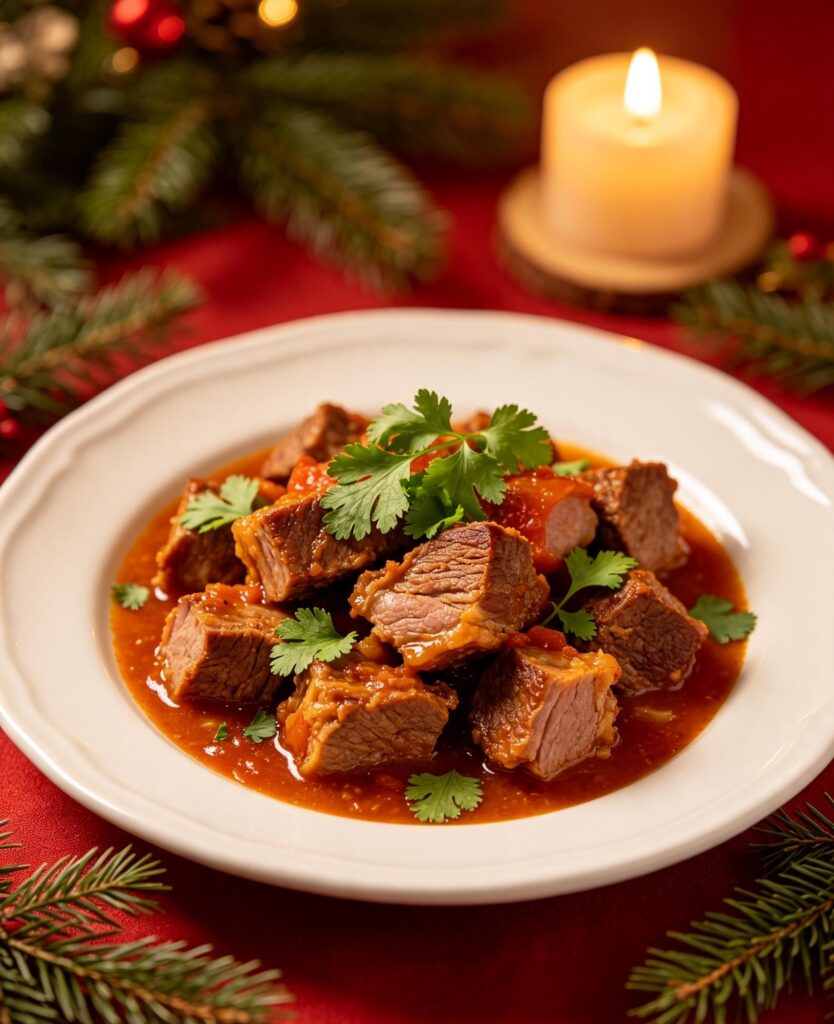
Ingredients
- 3 kg (6.6 lb) Pork shoulder or leg, bone-in
- 250 ml (1 cup) Sour orange juice
- 1 whole head Garlic, minced
- 2 tbsp Oregano
- 3 tbsp Salt
- 1 tbsp Black pepper
Method
- Pierce the pork all over with a fork to allow the marinade to penetrate deeply.
- Blend sour orange juice, garlic, oregano, salt and pepper into a marinade, then rub thoroughly over and into the pork, ideally injecting some into the thickest parts.
- Marinate overnight, refrigerated, covered.
- Roast low and slow at 150°C (300°F), about 40 minutes per kg (18 minutes per lb), until the internal temperature reaches 74°C (165°F) and the skin is deeply crisp.
- Rest the meat 20 minutes before carving and serving alongside moro de guandules and ensalada rusa.
Introduction: This garlic-and-sour-orange marinated whole roast pork is the centerpiece of Dominican Christmas Eve (Nochebuena) celebrations, traditionally slow-roasted over charcoal or wood for hours while families gather, drink and prepare the rest of the holiday feast.
Cultural Background: This garlic-and-sour-orange marinated whole roast pork is the centerpiece of Dominican Christmas Eve (Nochebuena) celebrations, traditionally slow-roasted over charcoal or wood for hours while families gather, drink and prepare the rest of the holiday feast.
Tips: The longer the marinating time, the deeper the flavor — 24 hours is ideal. For extra-crisp skin, raise the oven temperature to 220°C (425°F) for the final 20 minutes of roasting.
Variations: Traditionally cooked whole over an open charcoal pit for large family gatherings. A smaller pork loin can be used for a scaled-down version. No authentic vegetarian version exists; this dish is inherently pork-based.
Storage: Refrigerate leftovers up to 4 days in an airtight container.
Reheating: Reheat covered in a low oven (150°C / 300°F) to keep the meat moist, uncovering briefly at the end to re-crisp the skin.
Nutrition: Calories: 480 | Protein: 42g | Carbs: 2g | Fat: 33g
FAQs
Q: What does ‘en puya’ mean?
A: It refers to the pork being skewered or pierced on a spit or stake (‘puya’) for slow roasting, though home ovens now commonly replace the traditional pit method.
Please log in to leave a comment.