
Desserts
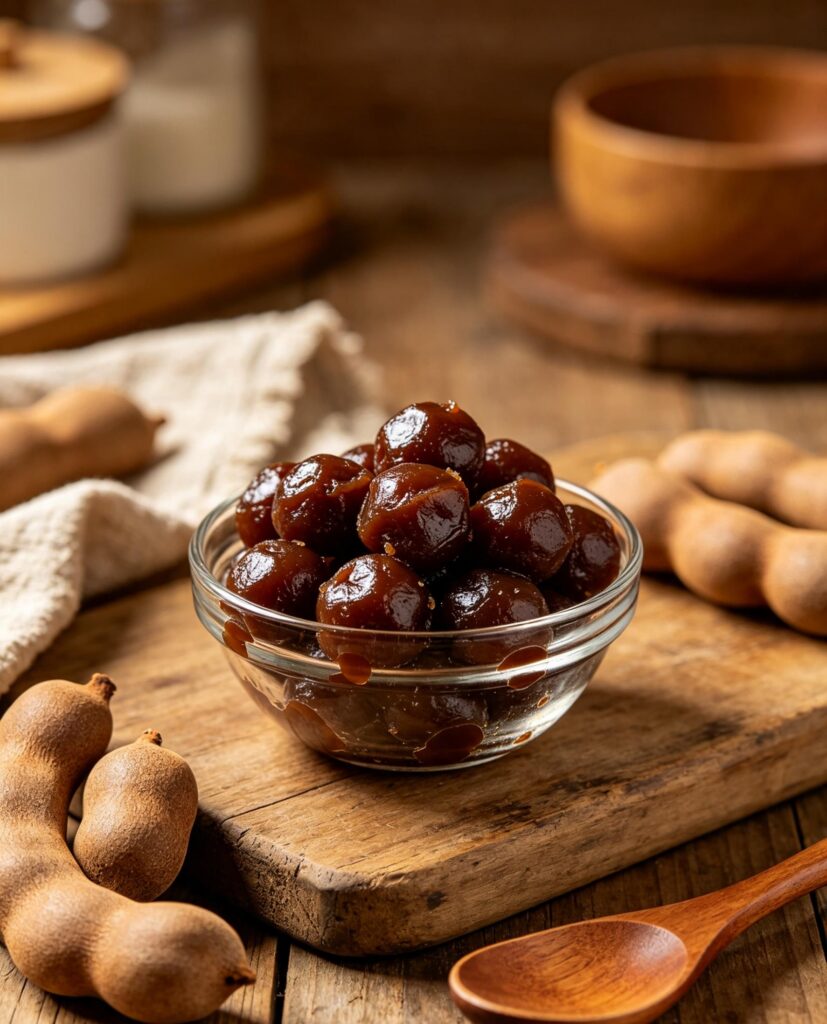
Dominica Tamarind Balls
The Quirky Foodster Team
Ingredients
- 300 g ripe tamarind pods, shelled and deveined
- 200 g granulated sugar, plus extra for rolling
- 1 pinch salt
- 1/4 tsp ground ginger (optional)
Method
- Remove the shells from the tamarind pods and peel away the fibrous strings, keeping the sticky pulp with seeds intact.
- In a bowl, knead the tamarind pulp with sugar, salt and ground ginger if using, until well combined into a firm, workable paste.
- Pull out any large seeds as you go, keeping small seed fragments in if desired for texture, or remove all seeds for a smoother ball.
- Roll the mixture into small balls, about the size of a walnut.
- Roll each ball in extra granulated sugar to coat, then place on a tray to firm up for about 1 hour before serving.
Introduction: Sweet-and-sour tamarind balls, rolled in sugar, are a favourite Dominican treat sold by roadside vendors and made at home using tamarind pods harvested from trees found across the island.
Cultural Background: Sweet-and-sour tamarind balls, rolled in sugar, are a favourite Dominican treat sold by roadside vendors and made at home using tamarind pods harvested from trees found across the island.
Tips: If the pulp feels too sticky to roll, chill it in the refrigerator for 15 minutes before shaping.
Variations: A pinch of ground cinnamon or grated nutmeg can be added for extra warmth. Some versions leave a whole seed inside each ball as a traditional touch.
Storage: Store in an airtight container at room temperature for up to 2 weeks.
Reheating: This is a no-cook confection and is not reheated.
Nutrition: Calories: 70 kcal | Protein: 0.3 g | Carbs: 18 g | Fat: 0.1 g | Fibre: 1 g
FAQs
Q: Do I have to remove all the seeds?
A: It is traditional in some households to leave a seed inside each ball, though most modern versions remove seeds for easier eating.
Q: Can I use tamarind concentrate instead of fresh pods?
A: Fresh tamarind pulp gives the most authentic texture and tartness; concentrate tends to be more processed and less textured, though it can work in a pinch with adjusted sugar.
Please log in to leave a comment.