North America
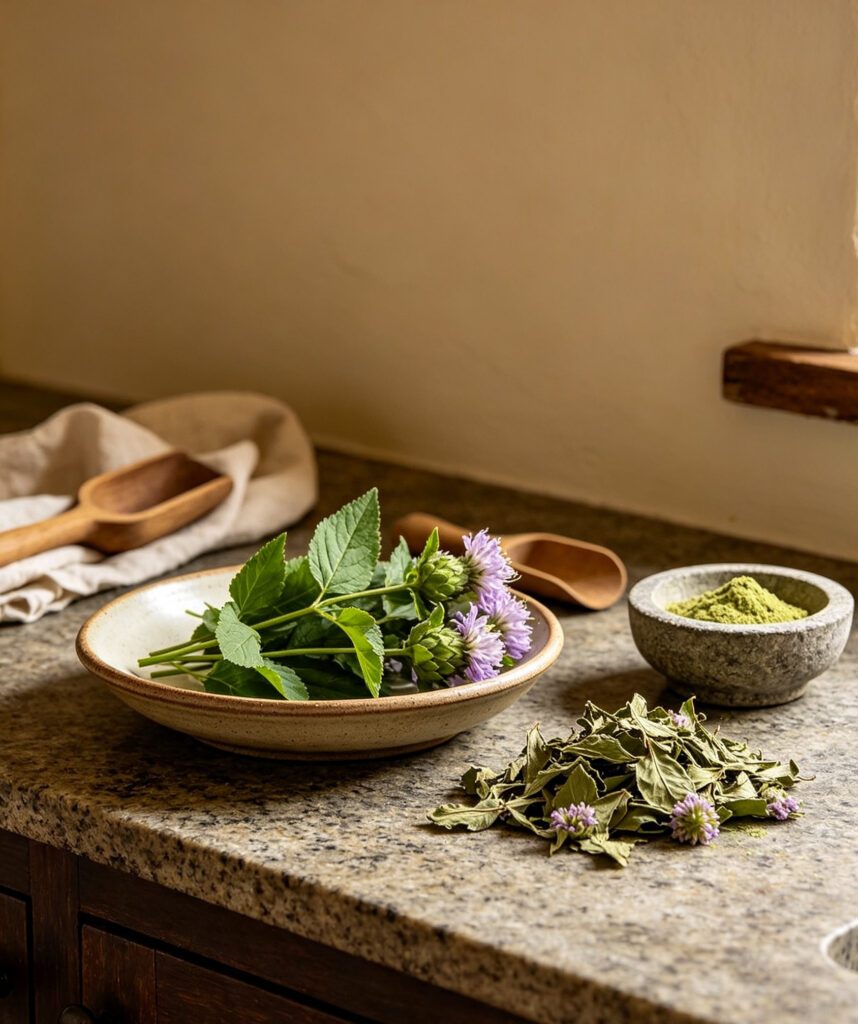
Wild Bergamot / Bee Balm
Monarda fistulosa (wild bergamot) and Monarda didyma (scarlet bee balm) – both used similarly; note this plant is entirely unrelated botanically to true bergamot orange (Citrus bergamia, the citrus that flavors Earl Grey tea), despite the shared 'bergamot' name, a significant naming hazard.
Local / Regional Names
Bee balm, Oswego tea (English – the latter name reflecting its traditional use by the Oswego Nation and its adoption by colonial New Englanders, notably as a substitute during the tea boycotts around the American Revolution).
Countries / Cuisines
United States and Canada (wide native range across much of North America).
Flavor & Aroma
Minty, oregano-thyme-adjacent, with a citrusy-floral top note that gives rise to the shared 'bergamot' name despite the lack of botanical relationship.
Culinary Uses
Traditional tea among numerous Indigenous nations and, historically, a substitute for imported black tea among colonial Americans.
Classic Dishes
Bee balm/Oswego tea; some contemporary culinary use as a fresh herb in salads and garnishes.
Pairings
Honey (for tea); tomatoes and salads (contemporary fresh-herb use).
Timing
Steep fresh or dried leaves for tea; use fresh leaves as a garnish or salad addition.
Storage
Dried leaves keep several months to a year in a dry container.
Substitutions
A combination of mint and oregano approximates the flavor direction for culinary applications.
Cultural / History Notes
THE key naming hazard for this entry: 'wild bergamot' shares its common name with true bergamot orange (the citrus fruit that flavors Earl Grey tea) purely because both have a broadly similar citrusy-floral aroma – the two plants are from entirely different families (mint family vs. citrus family) and are botanically unrelated, a case of flavor-convergence naming exactly parallel to several other hazards flagged throughout this reference.
Blend Cross-References
Not a culinary blend component; used for tea and fresh garnish.
Please log in to leave a comment.