
North America
Ramp
Allium tricoccum.
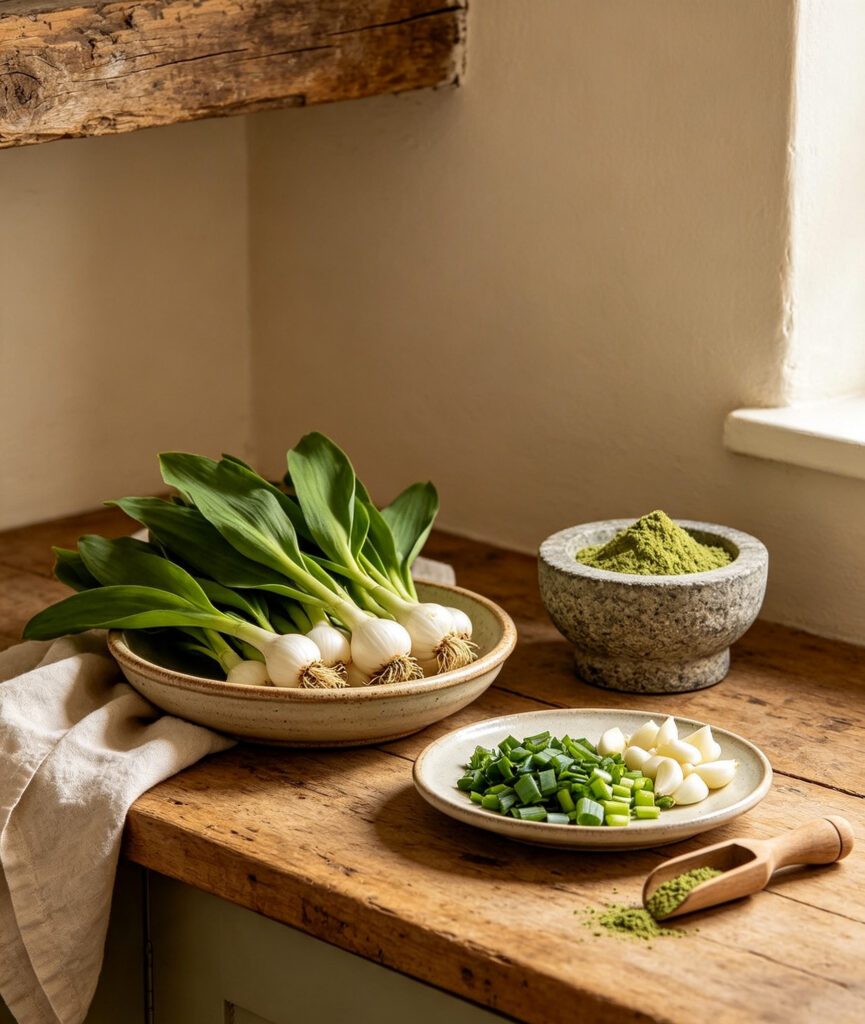
Local / Regional Names
Ramp, wild leek (English); various Indigenous names specific to individual nations – the Ojibwe word for ramps is understood to be the origin of the city name Chicago, a striking linguistic-historical connection worth noting.
Countries / Cuisines
Eastern United States and Canada (Appalachian region especially associated with ramp foraging culture).
Flavor & Aroma
Pungent, garlic-and-onion forward, with a distinctive wild, slightly sweeter edge compared with cultivated alliums.
Culinary Uses
A foundational spring foraged ingredient in Appalachian and broader eastern North American cooking, celebrated with dedicated regional festivals.
Classic Dishes
Ramp festivals across Appalachia feature the ingredient prepared many ways – pickled, sautéed, incorporated into cornbread and various spring dishes.
Pairings
Eggs, potatoes, pork, cornbread.
Timing
Use fresh, in season (a brief early-spring window), chopped and added early or late in cooking depending on the desired intensity.
Storage
Fresh keeps about a week refrigerated; also pickled for extended storage, a very common preservation method given the short foraging season.
Substitutions
A combination of scallion and garlic approximates the flavor outside ramp season.
Cultural / History Notes
IMPORTANT SUSTAINABILITY FLAG: increasing popularity and commercial foraging demand have raised real conservation concerns in some regions, as ramps grow slowly and are easily over-harvested if bulbs are pulled rather than leaves-only harvesting practiced – worth noting alongside the ingredient's celebrated regional food-festival culture, and worth mentioning the Chicago place-name etymology connection as a distinctive historical-linguistic note.
Blend Cross-References
Not a standard dry blend component; used fresh or pickled.
Please log in to leave a comment.