
Europe & Mediterranean
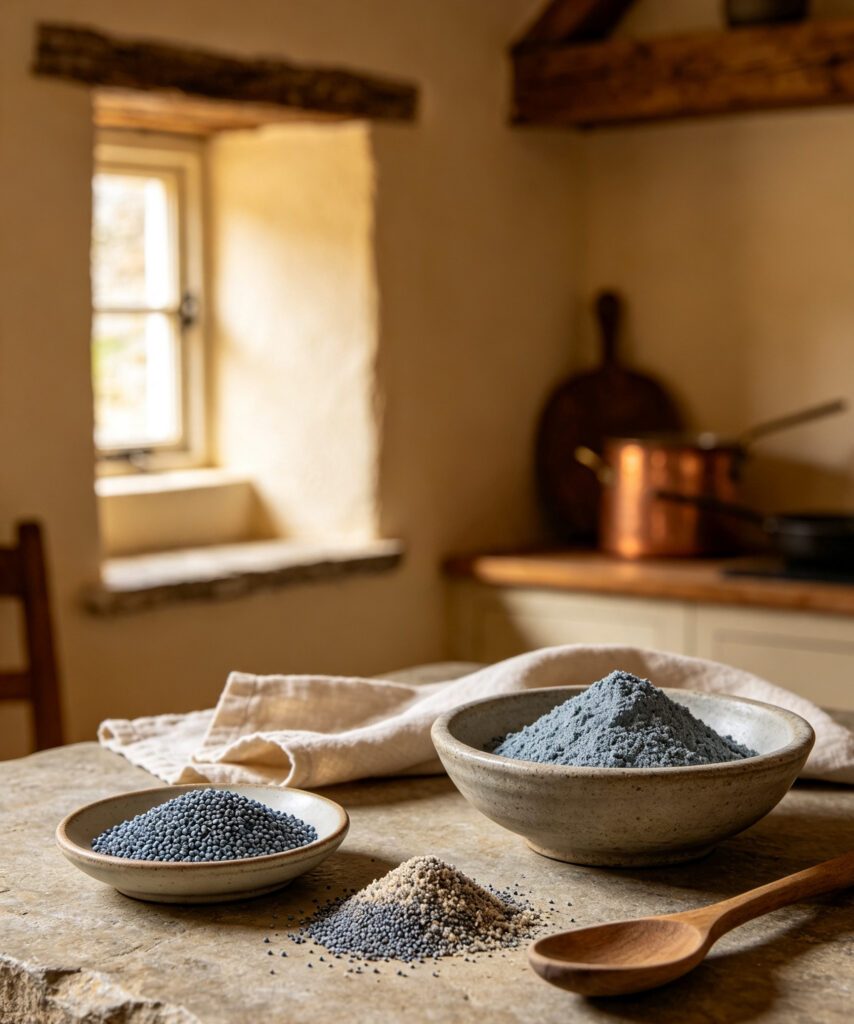
Poppy Seed
Papaver somniferum.
Local / Regional Names
Graines de pavot (French); mohn (German, reflecting its major role in Central European baking).
Countries / Cuisines
Central and Eastern Europe, particularly Germany, Austria, Poland, Czechia, Hungary.
Flavor & Aroma
Nutty, faintly sweet, with a satisfying crunch.
Culinary Uses
Foundational ingredient for Central European baking, both as a topping and as a substantial filling.
Classic Dishes
Poppy seed rolls and strudel; hungarian and Central European poppy seed cake and pastry fillings (mohnkuchen, makowiec).
Pairings
Honey, lemon, butter, yeasted dough.
Timing
Use whole as a topping before baking, or grind and cook into a sweetened paste for fillings.
Storage
Whole seed keeps about a year sealed and dark before the oils turn rancid; ground/paste form should be used promptly or refrigerated.
Substitutions
No close substitute for its specific crunch and flavor; sesame seed for texture only.
Cultural / History Notes
IMPORTANT CONSUMER-SAFETY/PRACTICAL FLAG: though the opiate content of mature culinary poppy seed is negligible, consuming poppy seed baked goods can cause a false positive on some drug screening tests for a period of time – a genuinely practical caution worth including given how often this surprises people.
Blend Cross-References
Not typically a spice blend component; used in dedicated baking preparations.
Please log in to leave a comment.