
Europe & Mediterranean
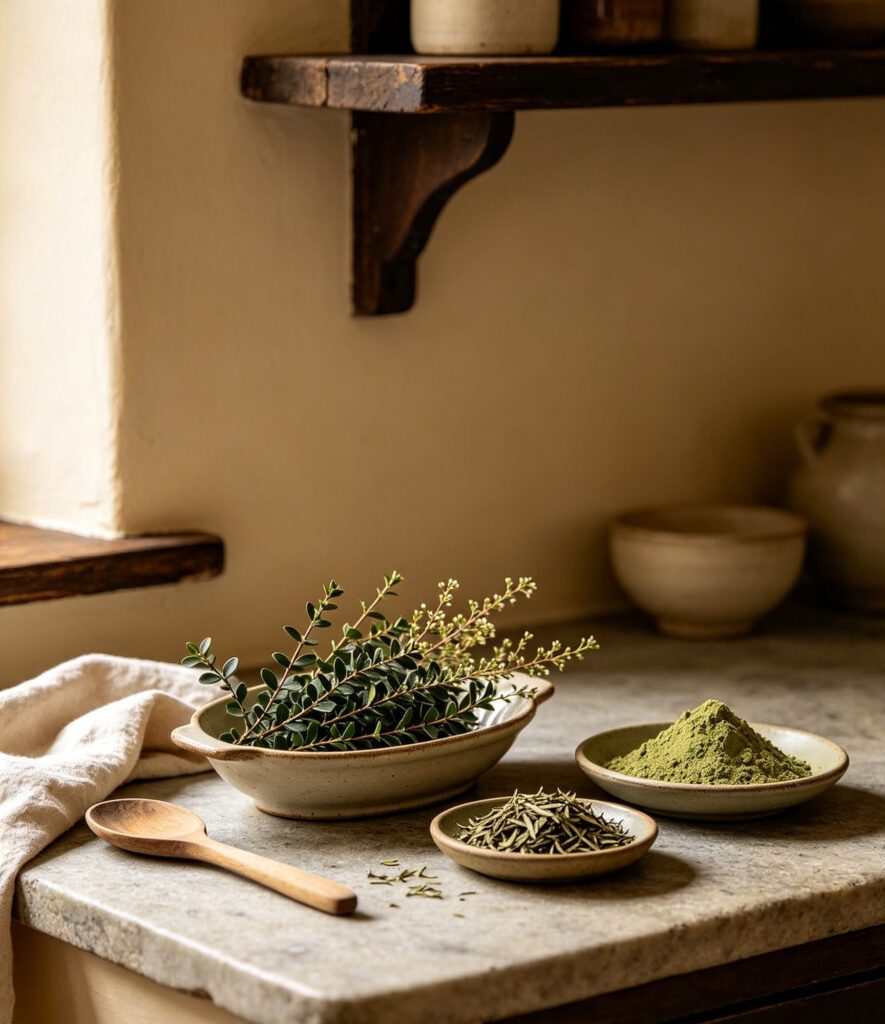
Myrtle
Myrtus communis.
Local / Regional Names
Myrte (French); mirto (Italian, especially associated with Sardinian mirto liqueur).
Countries / Cuisines
Sardinia and broader Mediterranean, particularly Italy.
Flavor & Aroma
Resinous, slightly peppery-sweet, with a juniper-adjacent aromatic quality.
Culinary Uses
Traditional wrapping leaf for roasted meats in Sardinian cooking, and the base flavoring for mirto liqueur.
Classic Dishes
Sardinian porceddu (roast suckling pig, traditionally spit-roasted over myrtle branches); mirto liqueur.
Pairings
Roast pork, game meats.
Timing
Use fresh branches as a roasting bed/wrapping, or infuse dried berries into spirits for liqueur production.
Storage
Dried berries keep well over a year sealed and dark.
Substitutions
Juniper berry as the closest aromatic relative for the berry's flavor profile, though the plants are unrelated.
Cultural / History Notes
Its role in Sardinian cuisine extends beyond a simple culinary spice into a defining regional identity marker, comparable to juniper's role in some Northern European game cookery.
Blend Cross-References
Not a standard dry spice blend component; used as a whole leaf/berry.
Please log in to leave a comment.