
Africa
Mastic
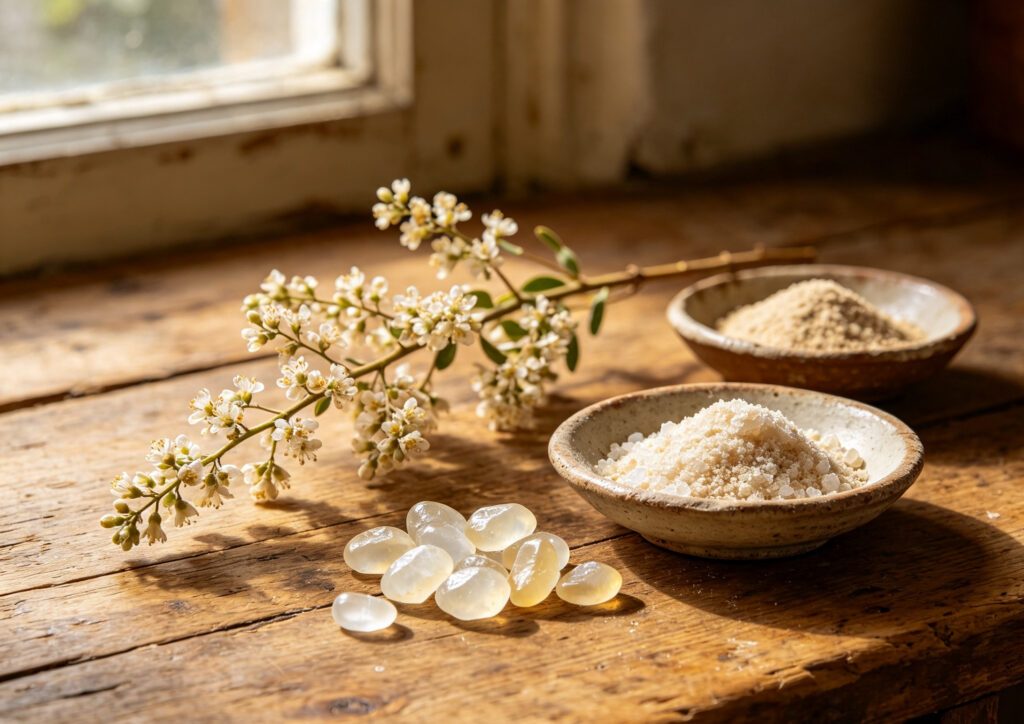
Pistacia lentiscus resin, primarily from Chios, Greece, but used across North Africa via trade.
Local / Regional Names
Miskeh / mistika (Arabic).
Countries / Cuisines
Tunisia, Libya, Morocco (via trade); its primary zone of production and use is the Middle East and Eastern Mediterranean.
Flavor & Aroma
Piney, resinous, faintly sweet with a chewy-gum aftertaste.
Culinary Uses
Thickener and flavoring for puddings, ice cream, and festive breads.
Classic Dishes
Mahalabia-style puddings; Tunisian mloukhia is sometimes finished with a trace of ground mastic in festive versions.
Pairings
Rosewater, orange blossom, cardamom.
Timing
Grind with a little sugar or salt just before use to keep it from gumming the mortar.
Storage
Whole resin tears keep indefinitely in a sealed jar away from heat.
Substitutions
No true substitute for its texturizing and resinous flavor; omission is more common than substitution.
Cultural / History Notes
Almost all true mastic comes from Chios; North African use is entirely trade-dependent, making it one of the costlier items on this list.
Blend Cross-References
Not a standard blend component.
Please log in to leave a comment.