
Middle East
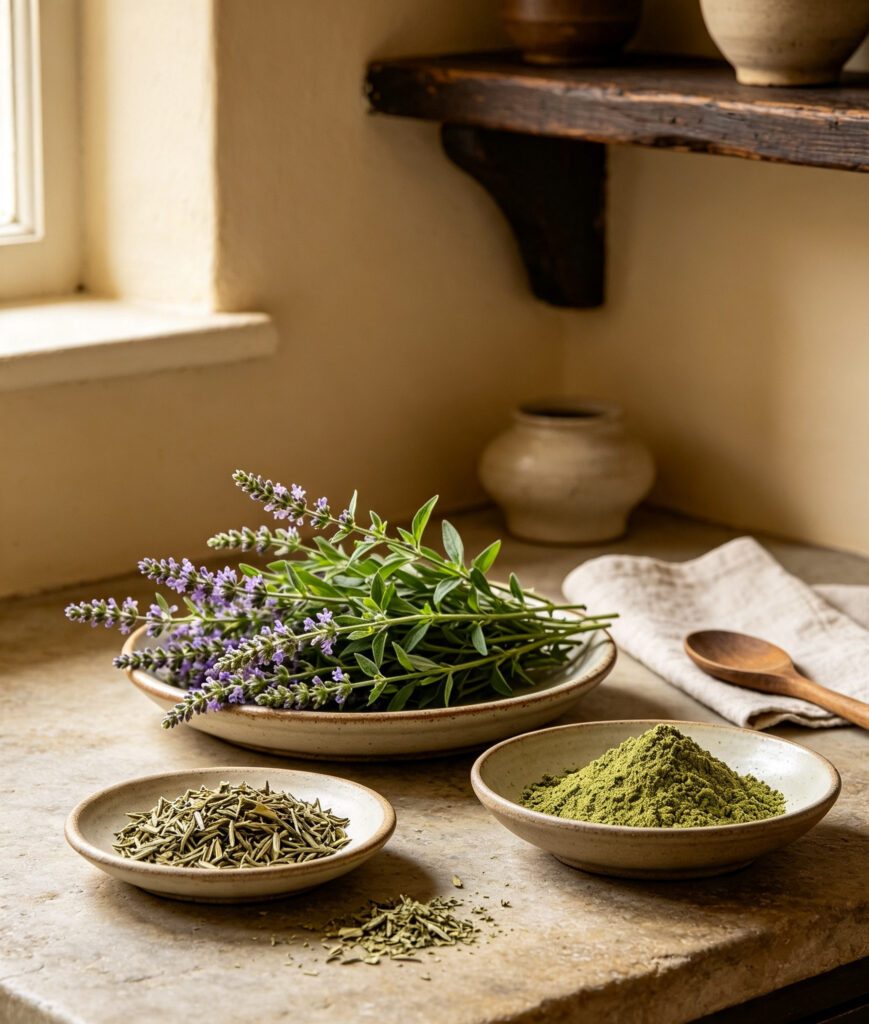
Hyssop
Hyssopus officinalis (true hyssop); note some Middle Eastern 'hyssop' commercial products are actually Origanum syriacum rebranded – another naming hazard.
Local / Regional Names
Za'atar farsi or zufa.
Countries / Cuisines
Eastern Mediterranean, though true Hyssopus officinalis is less commonly the plant intended in most commercial Middle Eastern 'hyssop' products.
Flavor & Aroma
Minty, slightly bitter, medicinal-herbal.
Culinary Uses
Minor culinary herb; more prominent in herbal tea and traditional medicine than in mainstream dishes.
Classic Dishes
Herbal teas; occasional inclusion in spice blends marketed as hyssop-based za'atar.
Pairings
Thyme, mint, lemon.
Timing
Add fresh or dried toward the end of steeping/cooking.
Storage
Dried leaf keeps several months to a year sealed.
Substitutions
Thyme or oregano.
Cultural / History Notes
A genuine editorial flag: much of what is commercially labeled 'hyssop' in Middle Eastern spice contexts is botanically Origanum syriacum, not true Hyssopus officinalis – verify species per source before finalizing this entry.
Blend Cross-References
Sometimes marketed as a za'atar variant.
Please log in to leave a comment.