
Middle East
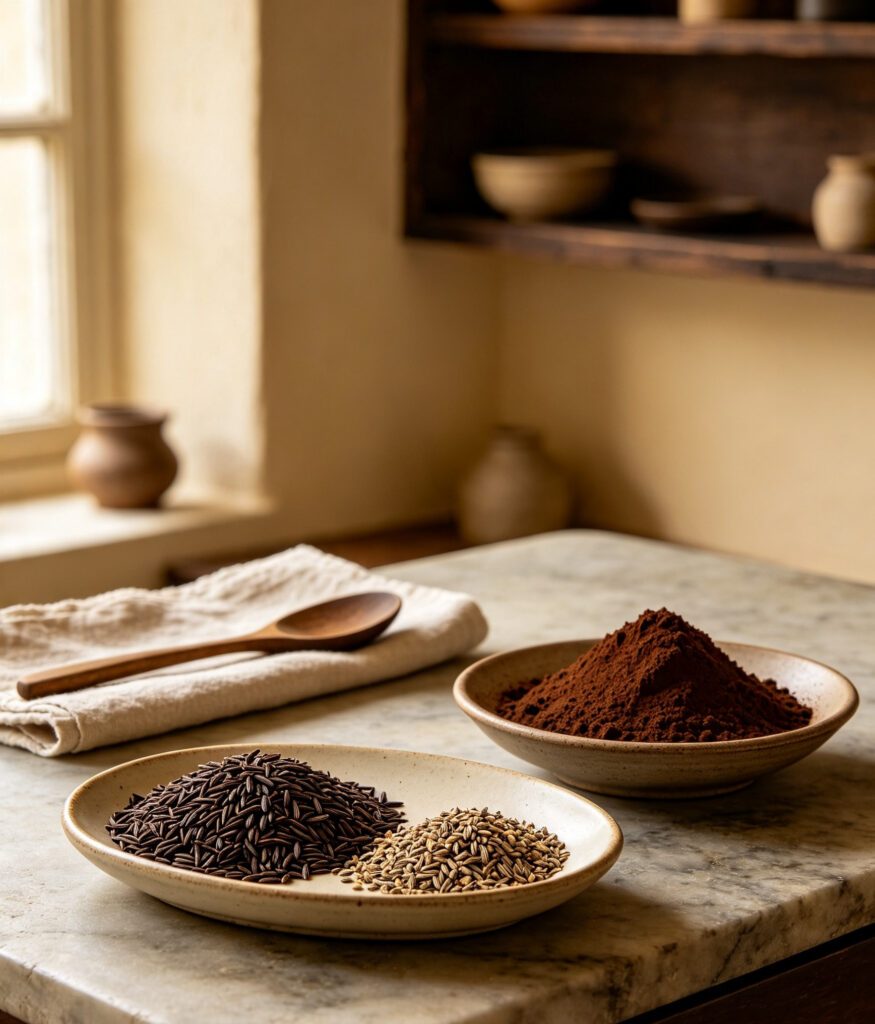
Black Cumin / Shahi Jeera
Bunium persicum (also classified as Elwendia persica) – botanically unrelated to true cumin (Cuminum cyminum) despite the shared 'cumin' name.
Local / Regional Names
Shahi jeera ('royal cumin,' Hindi/Urdu), kala zeera; siyoh dona (Tajik) – a name shared, confusingly, with Nigella sativa in some regional English usage, and distinct from ordinary cumin.
Countries / Cuisines
Iran, Afghanistan, Tajikistan, Pakistan, Kashmir/northern India.
Flavor & Aroma
Smoky, resinous, sharper and more complex than ordinary cumin, with a faint bitter-sweetness.
Culinary Uses
Premium aromatic seed for rich meat and rice dishes, preferred over ordinary cumin in Mughlai cooking.
Classic Dishes
Korma; biryani; rogan josh.
Pairings
Ghee, saffron, whole garam masala spices.
Timing
Toast briefly in ghee or oil before adding other ingredients.
Storage
Whole seed keeps 2+ years sealed and dark.
Substitutions
Toasted ordinary cumin is considered an acceptable substitute when black cumin is unavailable.
Cultural / History Notes
'
Blend Cross-References
Garam masala (some regional/premium formulations); not typically in Middle Eastern dry blends.
Please log in to leave a comment.