
Africa
African Bird’s-Eye Chile
Capsicum frutescens / Capsicum annuum small-fruited cultivars.
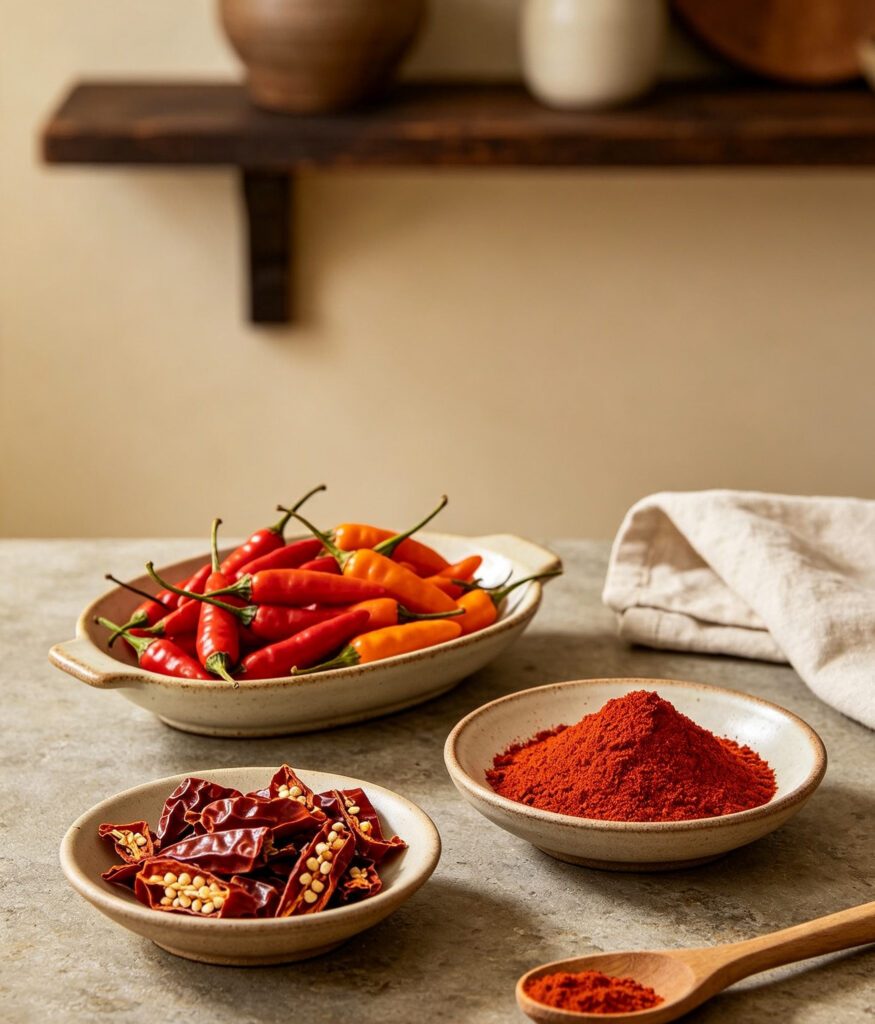
Local / Regional Names
Piri-piri or peri-peri (a name shared with the Portuguese-influenced chile and the seasoning blend made from it); pili-pili in some Central/East African usage.
Countries / Cuisines
Widespread across sub-Saharan Africa, notably Malawi, Zambia, Mozambique, and South Africa; carried and popularized globally via Portuguese colonial trade routes from South America originally.
Flavor & Aroma
Sharp, high heat, with a bright, slightly fruity bite.
Culinary Uses
Base heat ingredient for piri-piri sauce and marinades; used fresh in stews.
Classic Dishes
Piri-piri chicken; Mozambican and South African piri-piri marinades; various stews across the chile's range.
Pairings
Garlic, lemon, paprika, bay leaf.
Timing
Add early if whole for a milder infused heat, or blend fresh/dried into a paste for maximum intensity.
Storage
Fresh keeps about a week refrigerated; dried keeps a year or more sealed and dark.
Substitutions
Thai bird's-eye chile or cayenne as a heat-level match, though the specific fruitiness differs.
Cultural / History Notes
Though now iconic to African, especially Southern and East African, cooking, the chile genus Capsicum is originally South American – introduced via Portuguese trade from the 16th century onward, a history worth noting alongside its adopted regional identity.
Blend Cross-References
Peri-peri seasoning; Mozambique peri-peri blend.
Please log in to leave a comment.