
Zuppa Inglese
The Quirky Foodster Team
Ingredients
- Sponge cake or ladyfingers — 200 g (7 oz)
- Alchermes liqueur (or a mix of rum and grenadine) — 125 ml (1/2 cup)
- Milk — 500 ml (2 cups)
- Egg yolks — 4
- Sugar — 100 g (1/2 cup)
- Cornstarch — 40 g (1/3 cup)
- Vanilla extract — 1 tsp
- Dark chocolate, grated — 50 g (1.75 oz)
Method
- Whisk the egg yolks and sugar together until pale, then whisk in the cornstarch.
- Warm the milk in a saucepan until just steaming, then gradually whisk into the egg mixture.
- Return the mixture to the saucepan and cook over low heat, stirring constantly, until thickened into a custard.
- Stir in the vanilla extract and let cool slightly.
- Arrange a layer of sponge or ladyfingers in a glass dish and brush generously with the liqueur.
- Spread a layer of custard over the sponge.
- Repeat the layers, finishing with a layer of custard on top.
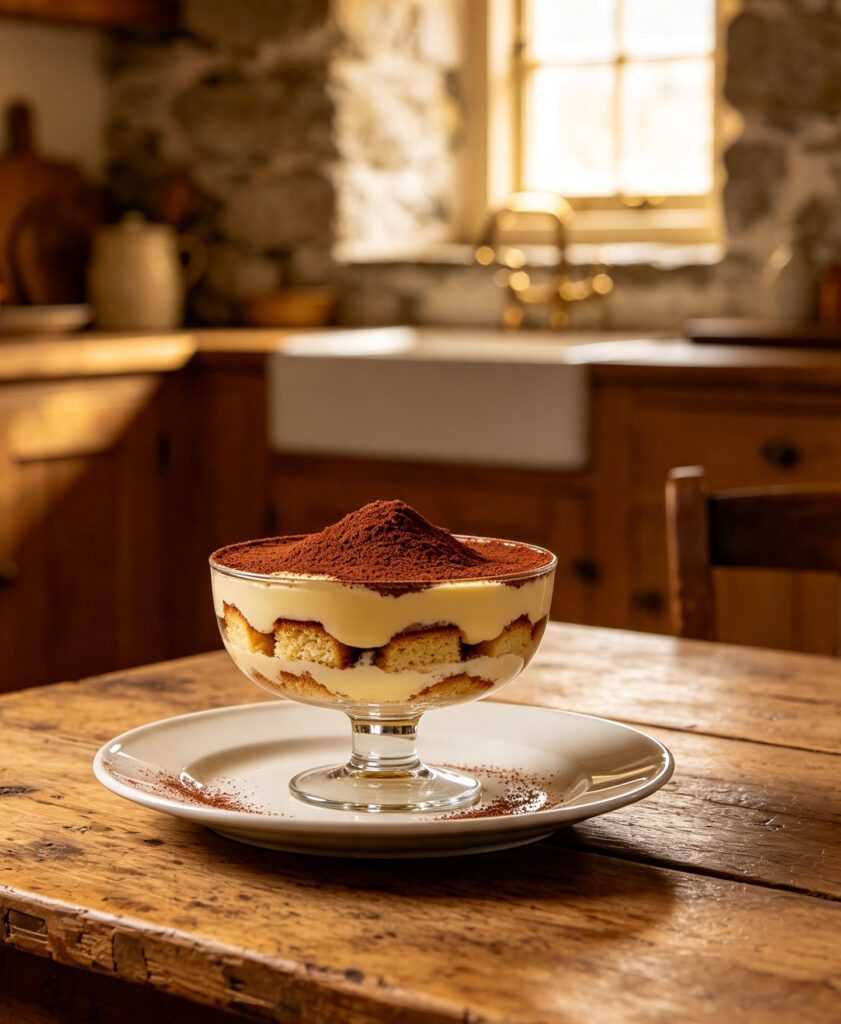
- Sprinkle with grated dark chocolate and chill for at least 2 hours before serving.
Introduction: A layered dessert of liqueur-soaked sponge and rich custard, despite its name a distinctly Italian treat.
Cultural Background: Zuppa Inglese (‘English soup’), despite the name, is a classic Italian dessert enjoyed across San Marino, its layers of soaked sponge and custard believed to be inspired by English trifle but fully adopted into local tradition.
Tips: Cook the custard over low heat, stirring constantly, to avoid curdling or lumps. Soak the sponge generously but not so much that it becomes soggy and falls apart.
Variations: Use a mix of dark and light layers with different soaking liqueurs for a more dramatic presentation; add fresh berries between layers for freshness.
Storage: Store covered in the refrigerator for up to 3 days.
Reheating: This dessert is served chilled and is not reheated.
Nutrition: Approx. 320 kcal, 6 g protein, 42 g carbohydrate, 12 g fat per serving.
FAQs:
Q: What is Alchermes?
A: A bright red Italian herbal liqueur traditionally used to soak the sponge layers, giving zuppa inglese its characteristic pink-red hue.
Q: Why is it called ‘English soup’ if it’s Italian?
A: The exact origins are debated, but it is believed to be inspired by English trifle, fully adapted into Italian dessert tradition over centuries.
- Sponge cake or ladyfingers — 200 g (7 oz)
- Alchermes liqueur (or a mix of rum and grenadine) — 125 ml (1/2 cup)
- Milk — 500 ml (2 cups)
- Egg yolks — 4
- Sugar — 100 g (1/2 cup)
- Cornstarch — 40 g (1/3 cup)
- Vanilla extract — 1 tsp
- Dark chocolate, grated — 50 g (1.75 oz)
Please log in to leave a comment.