
Yemeni Skhug
The Quirky Foodster Team
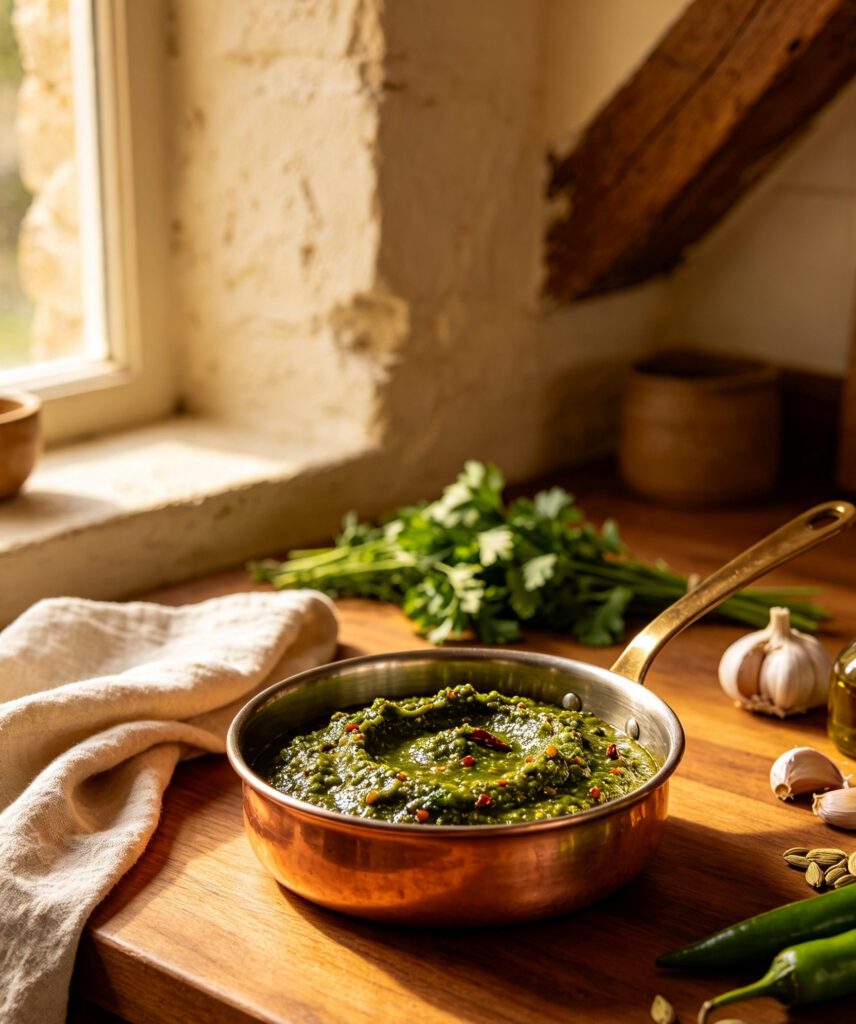
Ingredients
Method
- Roughly chop chiles (deseed for a milder version).
- Combine chiles, tomato, garlic, coriander, caraway and cumin in a food processor; pulse to a coarse paste.
- With the processor running, drizzle in olive oil.
- Season with salt to taste.
- Let rest 15 minutes before serving to let flavours develop.
Cultural Background: The red-chile counterpart to green zhoug, red skhug (or sahawiq) uses ripe red chiles and tomato for a milder, smokier profile than its green cousin, and is a staple condiment of Yemeni cuisine served with virtually every meal.
Tips: • Using ripe, flavourful tomatoes rounds out the sauce's heat with natural sweetness. • Caraway is a distinctive, essential spice in authentic Yemeni skhug — don't substitute it with something else if possible.
Variations: • Omit tomato for a more concentrated, purely chile-forward version. • Add a squeeze of lemon juice for extra brightness.
Storage: Refrigerate in an airtight container up to 1 week.
Reheating: Not applicable; served cold or at room temperature. Nutrition (per serving) Approx. 55 kcal, 0.5 g protein, 5.5 g fat, 2 g carbohydrate per 15 g serving.
FAQs: What is red skhug traditionally served with? Nearly every Yemeni meal, from soups to flatbreads to grilled meats, as an essential table condiment. How is it different from green zhoug? Red skhug uses ripe red chiles and tomato for a milder, smokier flavour, while green zhoug is sharper and more herbaceous.
- Fresh red chile peppers — 6
- Ripe tomato, chopped — 1 medium
- Garlic cloves — 4
- Fresh coriander — 30 g (1 packed cup)
- Ground caraway seed — 3 g (1 tsp)
- Ground cumin — 3 g (1 tsp)
- Extra-virgin olive oil — 60 ml (1/4 cup)
- Salt — 5 g (1 tsp)
Please log in to leave a comment.