
Wild Greens with Sesame Oil
The Quirky Foodster Team
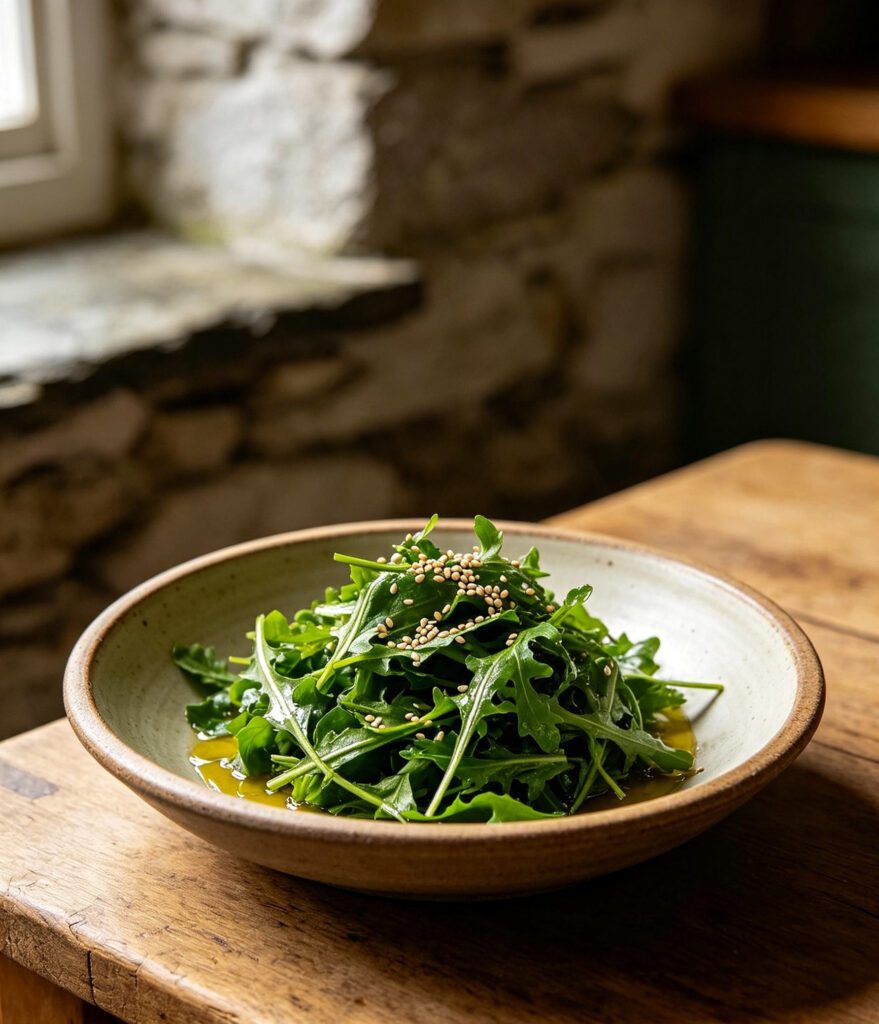
Ingredients
- Tender greens (young lettuce, purslane, or similar), rinsed — 300 g (0.7 lb)
- Sesame oil — 1 tbsp
- Salt — 1 pinch
Method
- Rinse the greens well and pat dry.
- Tear any larger leaves into smaller pieces.
- Toss with the sesame oil and salt.
- Serve immediately.
Introduction: A simple dish of tender greens dressed with sesame oil and salt, reflecting both cultivated garden produce and foraged plants supplementing the ancient Mesopotamian diet.
Cultural Background: Alongside cultivated garden vegetables, various wild and semi-wild greens supplemented the diet in ancient Mesopotamia, as in most ancient agricultural societies, and sesame oil is well attested as a significant Mesopotamian cooking fat in trade and ration texts; this specific combined dish is a plausible reconstruction from these two well-documented food categories rather than one directly named period recipe.
Tips: – Use the most tender young greens available for the best texture in this simple raw preparation. – Dress just before serving, as the greens wilt quickly once oiled.
Variations: – Naturally vegan as written. – A little crushed garlic can be added to the dressing for extra flavour, following the well-documented Mesopotamian seasoning trio of onion, garlic and leek.
Storage: Best eaten fresh; does not store well once dressed.
Reheating: Not applicable; this is a fresh, raw dish.
Nutrition: Per serving (approx.): 60 kcal, 1 g protein, 3 g carbohydrate, 5 g fat, 1 g fibre.
FAQs:
Q: What kind of greens would have been available?
A: A mix of cultivated garden lettuces and wild or semi-wild edible greens likely supplemented the Mesopotamian diet, similar to foraging patterns documented in other ancient agricultural societies of the period.
Q: Why sesame oil specifically?
A: It is the best-documented cooking oil of ancient Mesopotamia in surviving trade and ration texts, distinguishing the region’s cuisine from later Mediterranean traditions built more around olive oil.
- Tender greens (young lettuce, purslane, or similar), rinsed — 300 g (0.7 lb)
- Sesame oil — 1 tbsp
- Salt — 1 pinch
Please log in to leave a comment.