
West African Palm Nut Base (Banga)
The Quirky Foodster Team
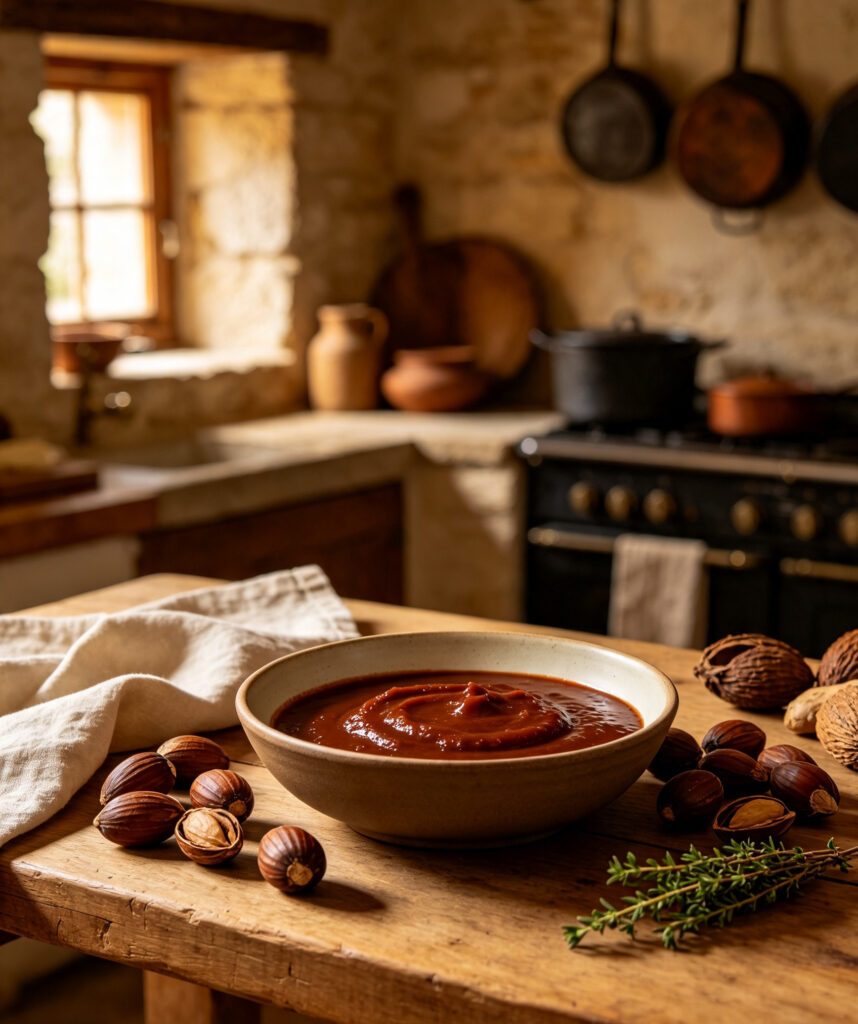
Ingredients
- Fresh palm fruit, boiled and pounded to extract the pulp
Method
- A base extracted by boiling and pounding fresh palm fruit to release its oily, orange pulp, then straining out the fibrous husk and nut to yield a rich, oily broth base. Foundational to banga soup and many West and Central African palm-based stews.
Origin: Niger Delta, Nigeria; also Ghana, Cameroon. A base extracted by boiling and pounding fresh palm fruit to release its oily, orange pulp, then straining out the fibrous husk and nut to yield a rich, oily broth base. Foundational to banga soup and many West and Central African palm-based stews.
Flavor Profile: Rich and nutty-oily, with a distinct earthy sweetness from the palm fruit itself, quite different from refined palm oil.
Culinary Uses: Base for banga soup (Niger Delta), served with garri or pounded yam; simmered with meat or fish and spices, often including scent leaf and a banga-specific spice blend.
Regional Variations: Fresh palm fruit extraction (traditional, labor-intensive) versus canned palm fruit concentrate (common outside Nigeria); Central African versions add peanut for a thicker, richer base — see Moambe Sauce Base below.
Storage: Fresh extract best used within a day; canned or concentrated versions keep unopened for months, refrigerate after opening for about a week.
Notes: Distinct from refined red palm oil, a pressed cooking fat — this base uses the whole fruit’s pulp extracted with water, not the oil alone.
- Fresh palm fruit, boiled and pounded to extract the pulp
Please log in to leave a comment.