
Venison Pasty
The Quirky Foodster Team
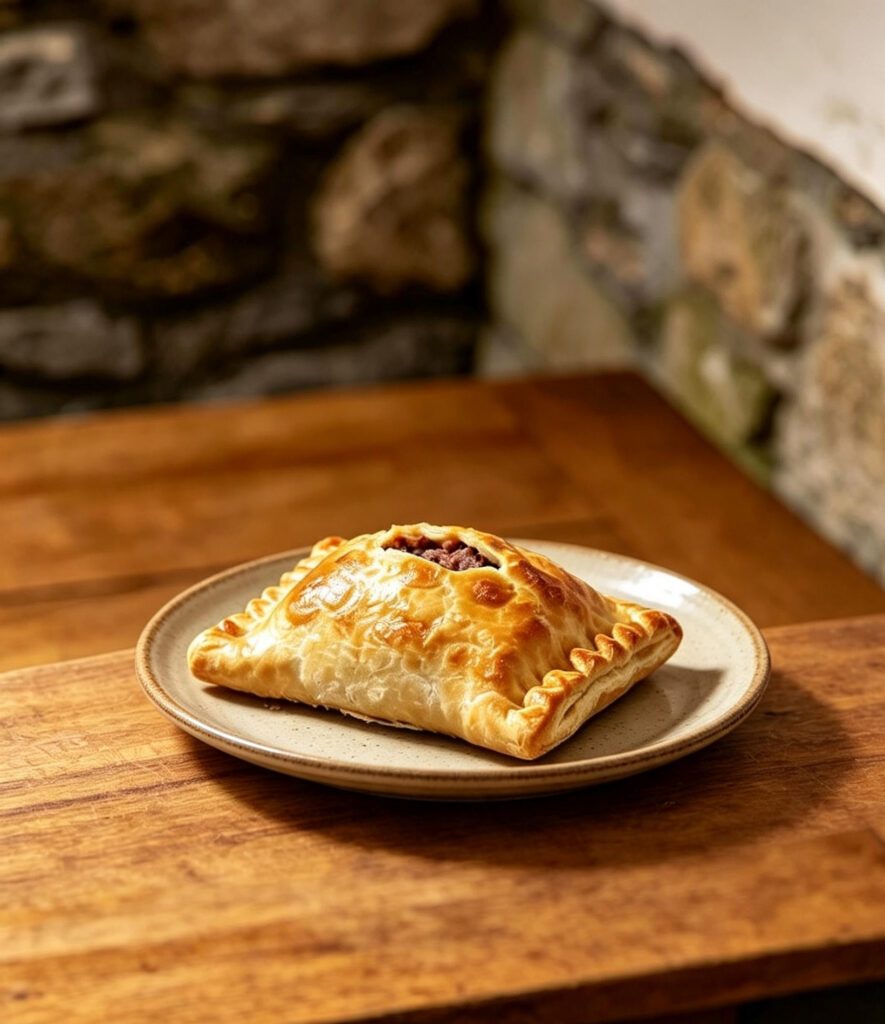
Ingredients
- Venison shoulder or haunch, diced — 600 g (1.3 lb)
- Butter — 2 tbsp
- Medium onion, finely chopped — 1
- Ground cinnamon — 1 tsp
- Ground ginger — 1/2 tsp
- Ground cloves — 1/4 tsp
- Red wine vinegar — 2 tbsp
- Sugar — 2 tbsp
- Beef or venison stock — 200 ml (3/4 cup)
- Plain flour — 500 g (4 cups)
- Cold unsalted butter, cubed — 250 g (1 cup plus 2 tbsp)
- Fine salt — 1 tsp
- Cold water — 120 ml (1/2 cup)
- Egg, beaten, for glazing — 1
Method
- Melt the 2 tbsp butter in a large frying pan over medium heat and brown the venison in batches, setting aside once coloured.
- Add the onion to the pan and cook for 5 minutes until softened, then return the venison to the pan.
- Stir in the cinnamon, ginger, cloves, vinegar and sugar, then pour in the stock.
- Simmer uncovered for 25-30 minutes, until the venison is tender and the liquid has reduced to a thick sauce. Set aside to cool completely.
- Meanwhile, make the pastry by rubbing the cold cubed butter into the flour and salt until the mixture resembles breadcrumbs.
- Add the cold water gradually, mixing until a firm dough forms. Wrap and chill for 30 minutes.
- Preheat the oven to 200°C (400°F). Roll out two-thirds of the pastry and line a pie dish, leaving an overhang.
- Fill with the cooled venison mixture, roll out the remaining pastry for a lid, and seal the edges firmly, crimping decoratively.
- Cut a small steam vent in the top, brush all over with beaten egg, and bake for 45-50 minutes until deep golden brown.
- Rest for 10 minutes before slicing and serving.
Introduction: Rich, spiced venison encased in a sturdy pastry crust, the venison pasty was a celebrated centrepiece of Tudor hunting feasts and noble tables.
Cultural Background: Venison was strictly controlled by forest law and hunting rights in Tudor England, making it a meat closely associated with the nobility and royal court. Encasing the meat in a thick pastry ‘coffin’ both preserved the venison during cooking and made an impressive presentation piece for feast-day tables, including those recorded at Hampton Court.
Tips: (cid:127) Cooling the venison filling completely before assembling the pasty prevents the pastry from becoming soggy. (cid:127) Venison shoulder benefits from the long simmer, becoming much more tender than a quick sear alone would achieve.
Variations: (cid:127) Beef or mutton can be substituted for venison for a more accessible, equally authentic alternative. (cid:127) Dried prunes or currants can be added to the filling for a sweeter, richer version recorded in some period sources.
Storage: Store in an airtight container in the refrigerator for up to 3 days.
Reheating: Reheat in an oven preheated to 180°C (350°F) for 15-20 minutes until piping hot throughout, covering loosely with foil to prevent over-browning.
Nutrition: Per serving (approx.): 620 kcal, 34 g protein, 48 g carbohydrate, 32 g fat, 3 g fibre, 520 mg sodium.
FAQs:
Q: Can I use a different cut of venison?
A: Yes, any braising cut such as shoulder, haunch or neck works well, as the long simmer tenderises tougher cuts effectively. (cid:127) Q: Can this pasty be frozen? A: Yes, freeze the baked and fully cooled pasty for up to 2 months; thaw overnight in the refrigerator and reheat in the oven until hot throughout.
- Venison shoulder or haunch, diced — 600 g (1.3 lb)
- Butter — 2 tbsp
- Medium onion, finely chopped — 1
- Ground cinnamon — 1 tsp
- Ground ginger — 1/2 tsp
- Ground cloves — 1/4 tsp
- Red wine vinegar — 2 tbsp
- Sugar — 2 tbsp
- Beef or venison stock — 200 ml (3/4 cup)
- Plain flour — 500 g (4 cups)
- Cold unsalted butter, cubed — 250 g (1 cup plus 2 tbsp)
- Fine salt — 1 tsp
- Cold water — 120 ml (1/2 cup)
- Egg, beaten, for glazing — 1
Please log in to leave a comment.