
Appetizers
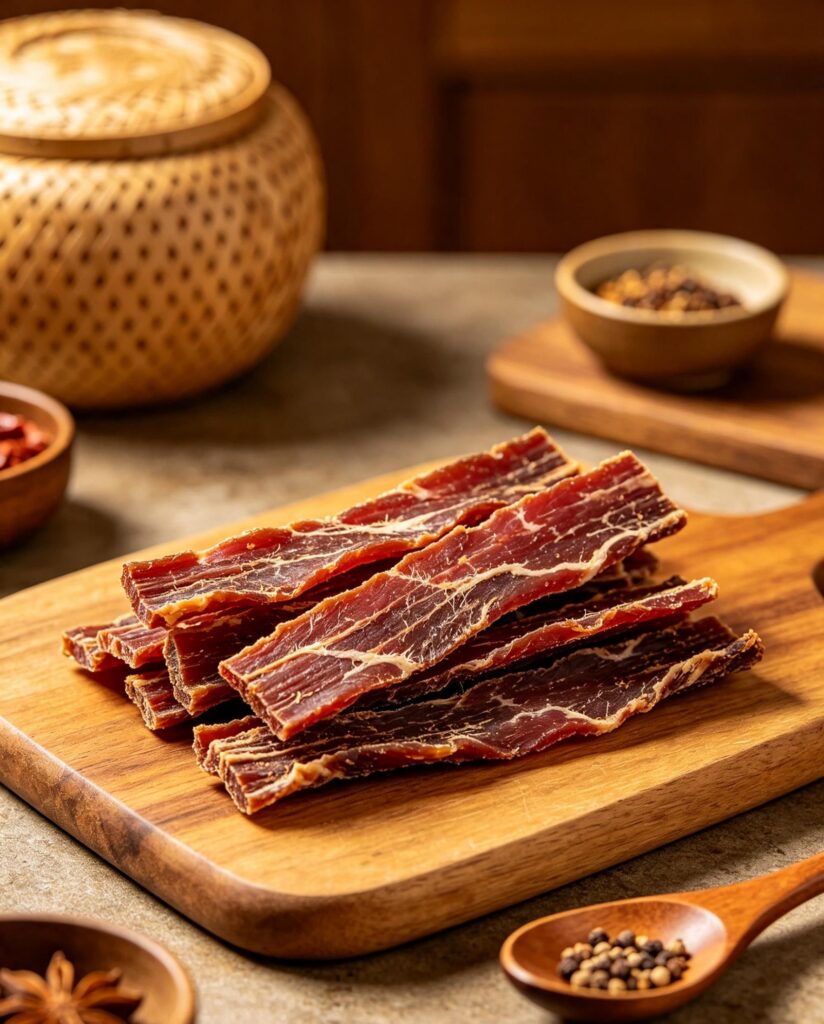
Umncweba (Swazi Dried Meat Strips)
The Quirky Foodster Team
Ingredients
- 1 kg (2.2 lb) beef silverside, cut into long 2cm-thick strips
- 3 tbsp coarse salt
- 2 tbsp coriander seeds, lightly crushed
- 1 tbsp black peppercorns, crushed
- 60 ml (1/4 cup) vinegar
Method
- Trim the beef strips of excess fat and sinew.
- Splash the strips with vinegar and rub in the salt, coriander seed and pepper thoroughly.
- Let the meat rest in the fridge for 12 hours to absorb the seasoning.
- Thread strips onto hooks or tie with twine, leaving space between pieces for air circulation.
- Hang in a cool, dry, well-ventilated spot (or a dedicated drying box) for 4-7 days, checking daily.
- The umncweba is ready when firm and dark on the outside but still slightly pliable inside; slice thinly to serve.
Introduction: Umncweba is meat cut into strips, salted and air-dried in the open Swazi air until firm and concentrated in flavour — a preservation method that predates refrigeration and remains a favourite way to start a meal or snack between them.
Cultural Background: Umncweba is meat cut into strips, salted and air-dried in the open Swazi air until firm and concentrated in flavour — a preservation method that predates refrigeration and remains a favourite way to start a meal or snack between them. Neighbours and family often share a plate of it while catching up, tearing off pieces by hand.
Tips: Humidity is the enemy of good umncweba — a dry, breezy spot dries the meat evenly and safely. Thinner strips dry faster and are easier to get right for a first attempt.
Variations: Game meat such as kudu or springbok can be used in place of beef for a more traditional bushveld version. A chilli-rubbed version adds extra heat to the crust.
Storage: Keeps in a paper bag in a cool, dry place for several weeks; refrigerate in humid climates.
Reheating: Not applicable — eaten as is, at room temperature.
FAQs:
Q: Is this the same as biltong?
A: It's closely related in method to biltong found elsewhere in Southern Africa, but umncweba is a distinct Swazi tradition with its own seasoning style and cultural role.
Q: How do I know it's dried safely?
A: It should feel firm and dry to the touch throughout, with no soft, wet patches in the centre when cut.
Please log in to leave a comment.