
Breakfast
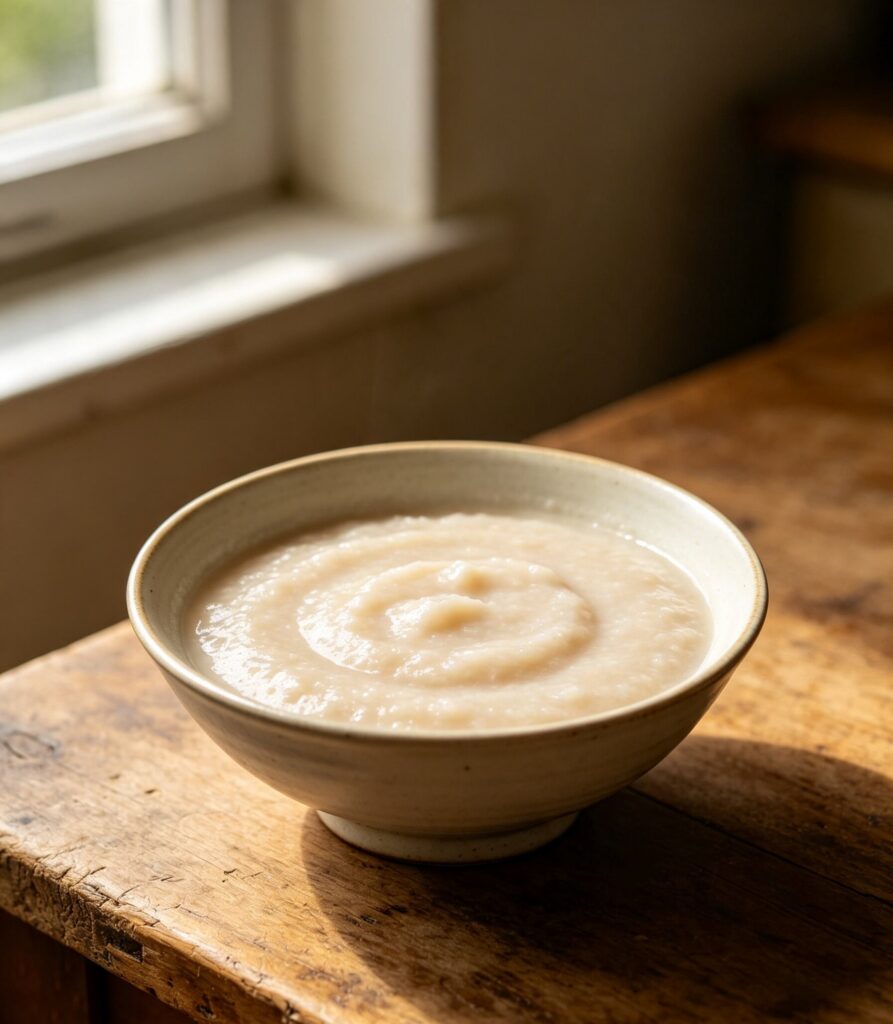
Uji
Ingredients
- 200 g (1 1/2 cups) millet or sorghum flour (or a mix with maize flour)
- 1.2 litres (5 cups) water, divided
- 1 tbsp (15 ml) plain yogurt or leftover uji as a fermentation starter (optional)
- 2 tbsp (30 g) sugar, or to taste
- 1/2 tsp (2 g) ground cinnamon (optional)
- Pinch of salt
- 250 ml (1 cup) milk, to serve (optional)
Method
- Mix the flour with 400 ml (1 2/3 cups) of the water and the yogurt or starter in a bowl. Cover and leave at room temperature for 8-24 hours to ferment lightly.
- Strain the fermented mixture through a fine sieve into a saucepan to remove husks and lumps, pressing to extract all the liquid.
- Add the remaining water and a pinch of salt. Bring to a gentle boil over medium heat, stirring constantly to prevent lumps and scorching.
- Reduce heat and simmer for 8-10 minutes, stirring often, until the porridge thickens to a smooth, pourable consistency.
- Stir in sugar and cinnamon if using. Adjust thickness with a little hot water if needed.
- Serve hot in mugs, topped with a splash of milk.
Introduction: Uji is a thin, fermented porridge made from millet, sorghum or maize flour, and is one of the oldest and most widespread breakfast foods in Kenya.
Cultural Background: Uji is a thin, fermented porridge made from millet, sorghum or maize flour, and is one of the oldest and most widespread breakfast foods in Kenya. It has been a weaning food for infants, a breakfast staple for farming and pastoral communities, and a warming drink sold by street vendors near schools and bus stops. Fermenting the flour overnight gives Uji a mild sourness and better digestibility, a technique found across East African porridges.
Tips: Keep stirring constantly once it starts to thicken to avoid lumps. For a smoother texture, blend the flour and water mixture before straining. Reduce fermentation time for a milder, less sour flavour.
Variations: Some households use a blend of maize, millet and sorghum flour for a richer flavour and more nutrition; a vegan version simply skips the milk topping or uses a plant-based milk. Naturally vegan when made with water or plant-based milk; no conversion needed.
Storage: Refrigerate leftover uji in an airtight container for up to 2 days.
Reheating: Reheat gently in a saucepan over low heat, stirring and adding a splash of water or milk to loosen the texture.
FAQs:
Q: Is Uji served hot or cold?
A: Uji is almost always served hot, especially at breakfast, though a chilled version is enjoyed in warmer coastal areas.
Q: Can I make Uji without fermenting it?
A: Yes, an unfermented version can be made by cooking the flour and water straight away, though it will lack the characteristic mild tang.
Please log in to leave a comment.