
Turp Salati (Uzbek Radish Salad)
The Quirky Foodster Team
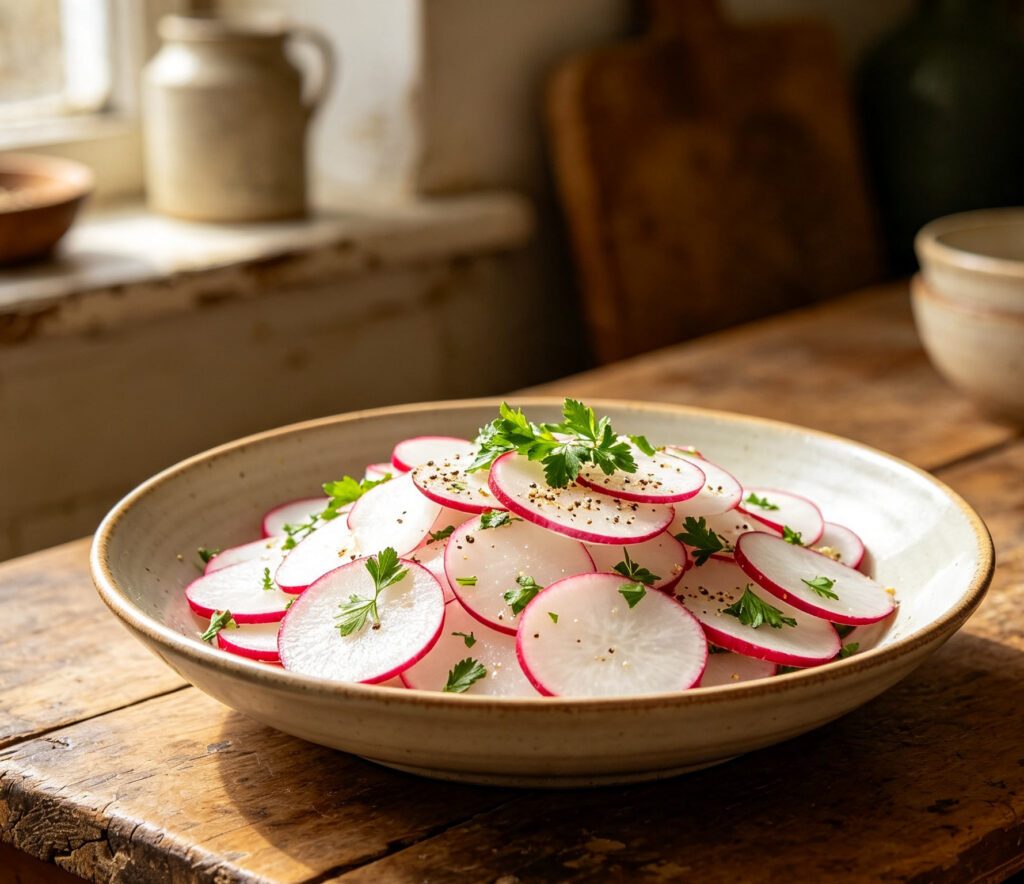
Ingredients
- Large radishes (green or daikon-style), peeled and julienned or coarsely grated — 2
- Small onion, thinly sliced — 1
- Vegetable oil — 2 tbsp
- White vinegar — 1 tbsp
- Salt, plus more to taste — 1/2 tsp
- Black pepper — 1/4 tsp
- Fresh cilantro, chopped — 1 tbsp
Method
- Peel the radishes and julienne or coarsely grate them into a large mixing bowl.
- Add the thinly sliced onion.
- Sprinkle with salt and let sit for 5 minutes to soften slightly and draw out excess moisture.
- Drain off any excess liquid, then add the oil, vinegar, and black pepper. Toss well to combine.
- Garnish with fresh cilantro and serve immediately, or chill briefly before serving.
Introduction: Turp salati is a crisp, peppery salad made from grated or julienned radish (often the large green or black Central Asian radish), dressed simply with oil, salt, and sometimes a touch of vinegar.
Cultural Background: Turp salati is a crisp, peppery salad made from grated or julienned radish (often the large green or black Central Asian radish), dressed simply with oil, salt, and sometimes a touch of vinegar. Valued for its refreshing crunch, it offers a sharp, cleansing contrast to rich, meat-heavy Uzbek dishes and is a common feature on the everyday table.
Tips: Salting the radish briefly and draining the liquid helps mellow its sharpness and prevents a watery salad. Use a mandoline for quick, even julienne strips if available. Serve promptly after dressing, as the radish can release more liquid the longer it sits.
Variations: Add grated carrot for extra color and sweetness. A pinch of sugar can balance the radish's natural sharpness for those who prefer a milder salad. This recipe is naturally vegan as written.
Storage: Store in an airtight container in the refrigerator for up to 2 days, though texture is best within the first few hours.
Reheating: This is a cold salad and is not reheated.
FAQs:
Q: What type of radish is traditionally used?
A: A large, mild Central Asian green or white radish is traditional, but daikon radish is a widely available substitute.
Q: Can I make this salad less sharp?
A: Yes, salting and draining the radish before dressing significantly reduces its natural sharpness.
Q: What can I serve turp salati with?
A: It pairs well with grilled meats, plov, or any rich main dish that benefits from a crisp, tangy side.
- Large radishes (green or daikon-style), peeled and julienned or coarsely grated — 2
- Small onion, thinly sliced — 1
- Vegetable oil — 2 tbsp
- White vinegar — 1 tbsp
- Salt, plus more to taste — 1/2 tsp
- Black pepper — 1/4 tsp
- Fresh cilantro, chopped — 1 tbsp
Please log in to leave a comment.