
Tteokbokki (Spicy Stir-Fried Rice Cakes)
The Quirky Foodster Team
Ingredients
- Cylindrical rice cakes (tteok), fresh or thawed if frozen — 500 g (1.1 lb)
- Fish cake sheets (eomuk), cut into triangles — 4
- Anchovy stock or water — 600 ml (2 1/2 cups)
- Gochujang — 3 tbsp (45 g)
- Gochugaru — 1 tbsp (15 g)
- Sugar — 2 tbsp (30 g)
- Soy sauce — 1 tbsp (15 ml)
- Garlic cloves, minced — 2
- Onion, sliced — 1/2
- Spring onions, cut into batons — 2
- Boiled eggs, halved, to serve (optional) — 2
Method
- If the rice cakes are firm or refrigerated, soak them in warm water for 10 minutes to soften before cooking.
- Combine the stock, gochujang, gochugaru, sugar, soy sauce and garlic in a wide pan and bring to a simmer, whisking until smooth.
- Add the onion and rice cakes, and simmer for 8–10 minutes, stirring occasionally, until the rice cakes are soft and chewy and the sauce has thickened and turned glossy.
- Add the fish cake pieces in the last 3–4 minutes of cooking.
- Stir in the spring onion just before serving.
- Serve hot, straight from the pan, topped with halved boiled eggs if using.
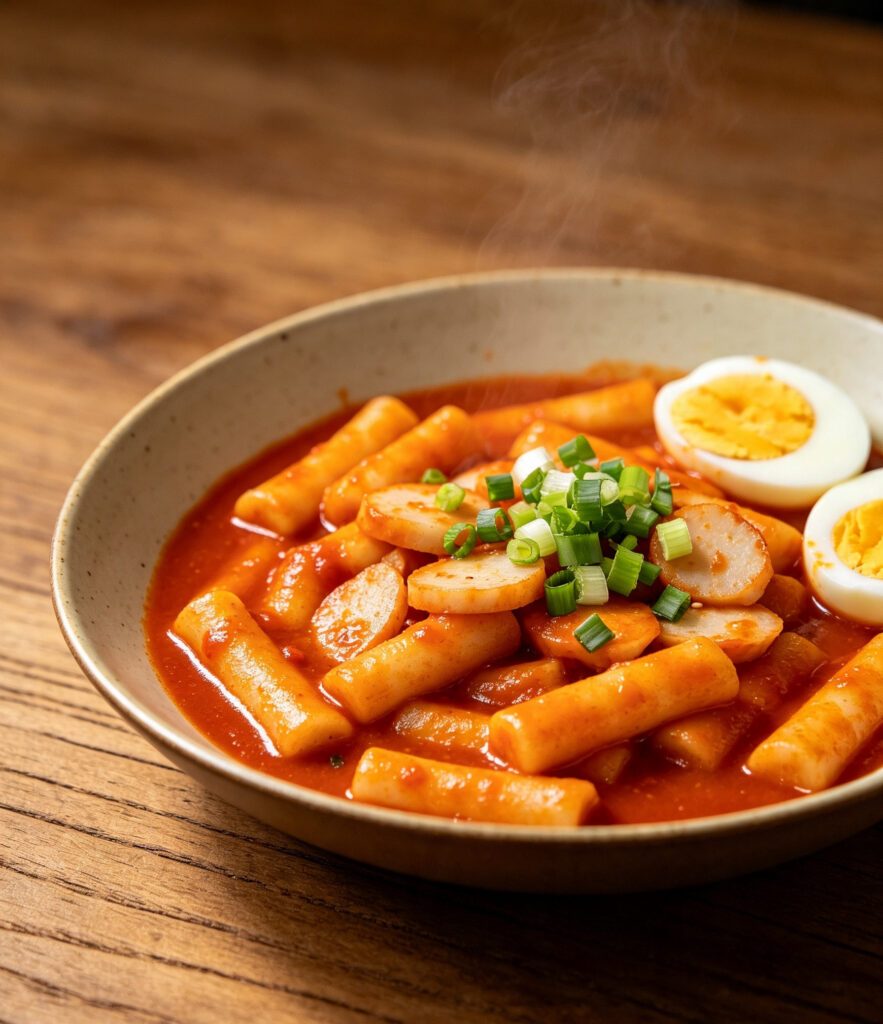
Introduction: Tteokbokki is Korea's most famous street food, chewy cylindrical rice cakes simmered in a glossy, spicy-sweet gochujang sauce.
Cultural Background: Tteokbokki is Korea's most famous street food, chewy cylindrical rice cakes simmered in a glossy, spicy-sweet gochujang sauce. Its now-iconic red, spicy version was popularised in Seoul's Sindang-dong 'tteokbokki town' in the 1950s, and the dish has since become a nationwide obsession, sold everywhere from street carts to convenience stores and sit-down restaurants.
Tips: Stir frequently as the sauce thickens — rice cakes can stick and scorch on the bottom of the pan if left unstirred. If the sauce reduces too much before the rice cakes are fully tender, add a splash more stock or water and continue simmering.
Variations: Rabokki: add cooked instant ramen noodles in the final few minutes for a popular ramen-tteokbokki hybrid. Add sliced cabbage and mandu (dumplings) for a heartier, more substantial version. Use a vegetarian fish cake substitute or omit it, and use a kelp and dried shiitake stock instead of anchovy stock.
Storage: Refrigerate leftovers in an airtight container for up to 2 days; rice cakes firm up considerably once chilled.
Reheating: Reheat in a pan over medium heat with a splash of water or stock to loosen the sauce and re-soften the rice cakes; microwave reheating works but the texture is best restored on the stovetop.
Nutrition: Calories: 330 kcal | Protein: 9 g | Carbs: 62 g | Fat: 5 g | Fibre: 3 g | Sodium: 890 mg Per serving; estimate only.
FAQs:
Q: Why are my rice cakes still hard after cooking?
A: This is usually from not soaking refrigerated or frozen rice cakes beforehand, or not simmering long enough — soak first and give them time in the simmering sauce to soften fully.
Q: Can I use frozen tteok directly from the freezer?
A: Thaw or soak frozen rice cakes in warm water for about 10 minutes first; adding them frozen straight to the sauce can cause uneven cooking.
Q: What's the difference between tteokbokki and rabokki?
A: Rabokki is tteokbokki with instant ramen noodles added, a popular modern variation that combines the two beloved Korean comfort foods.
- Cylindrical rice cakes (tteok), fresh or thawed if frozen — 500 g (1.1 lb)
- Fish cake sheets (eomuk), cut into triangles — 4
- Anchovy stock or water — 600 ml (2 1/2 cups)
- Gochujang — 3 tbsp (45 g)
- Gochugaru — 1 tbsp (15 g)
- Sugar — 2 tbsp (30 g)
- Soy sauce — 1 tbsp (15 ml)
- Garlic cloves, minced — 2
- Onion, sliced — 1/2
- Spring onions, cut into batons — 2
- Boiled eggs, halved, to serve (optional) — 2
Please log in to leave a comment.