
Bhutanese Thukpa
The Quirky Foodster Team
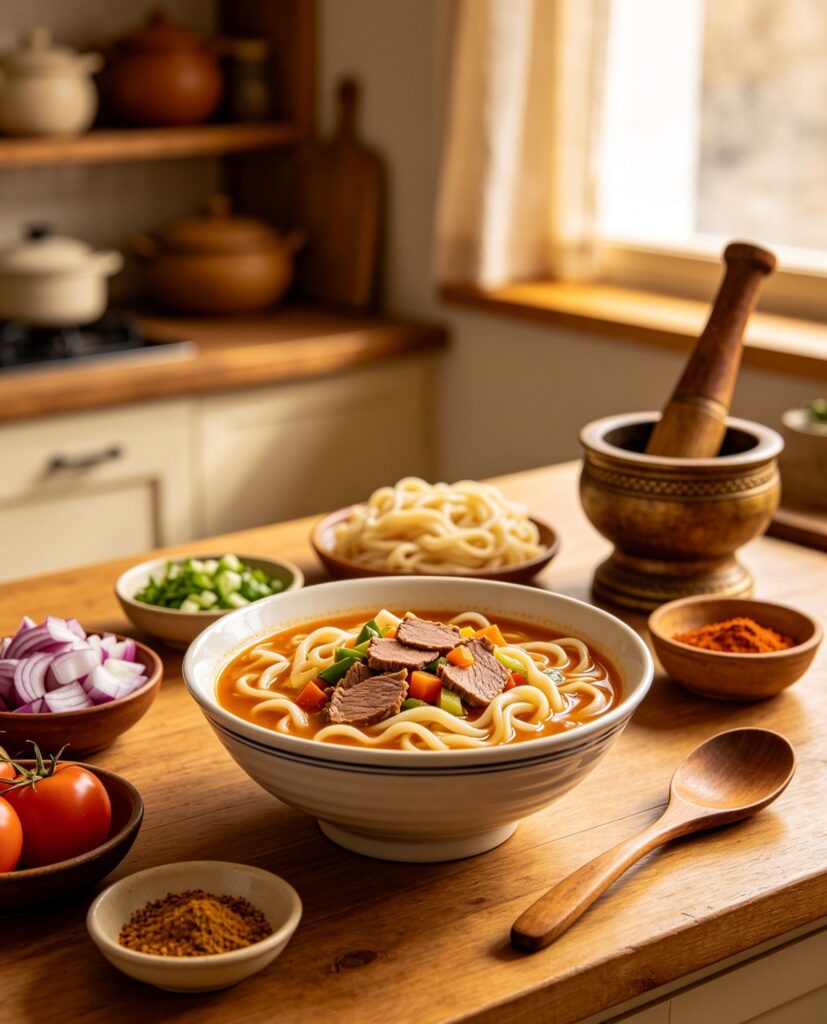
Ingredients
- Wheat flour noodles (fresh or dried) — 250 g (8.8 oz)
- Chicken or vegetable stock (4 cups) — 1 L (4 1/4 cups)
- Medium Carrot, julienned — 1
- Cabbage, shredded (1 cup) — 100 g (3.5 oz)
- Spring onion, sliced — 2 stalks
- Whole Garlic cloves, minced — 2
- Fresh ginger, grated — 1 tsp
- Soy sauce — 1 tbsp
- Salt (to taste) — 1 tsp
- Vegetable oil — 1 tbsp
Method
- Heat the oil in a pot and sauté the garlic and ginger until fragrant.
- Add the stock and bring to a boil.
- Add the carrot and cabbage, and simmer for 5 minutes.
- Cook the noodles separately according to package instructions, then drain.
- Add the cooked noodles to the pot along with the soy sauce and salt.
- Simmer for 2–3 minutes to combine flavours.
- Garnish with spring onion and serve hot.
Introduction: Thukpa is a hearty hand-pulled noodle soup shared across the Himalayan belt, adapted into Bhutanese kitchens through Tibetan influence.
Cultural Background: Thukpa is a hearty hand-pulled noodle soup shared across the Himalayan belt, adapted into Bhutanese kitchens through Tibetan influence. In Bhutan it is often made with vegetables, egg or meat, and is especially popular in the cold mountain regions as a warming, filling one-bowl meal.
Tips: Cook noodles separately and add just before serving to prevent them going soggy. Shred vegetables thinly so they cook quickly and evenly in the broth.
Variations: Add shredded cooked chicken or sliced egg for a heartier version. Use buckwheat noodles for a more rustic, regional variation.
Vegetarian/Vegan: Use vegetable stock and omit meat, adding extra vegetables or tofu.
Storage: Refrigerate broth and noodles separately for up to 2 days to prevent the noodles absorbing all the liquid.
Reheating: Reheat broth on the stovetop until simmering, then add noodles and heat through for 1–2 minutes.
FAQs:
Q: Can Thukpa be made vegetarian?
A: Yes, use vegetable stock and add extra vegetables or tofu in place of meat.
Q: What noodles work best?
A: Fresh wheat noodles are traditional, but any wheat or buckwheat noodle works well.
- Wheat flour noodles (fresh or dried) — 250 g (8.8 oz)
- Chicken or vegetable stock (4 cups) — 1 L (4 1/4 cups)
- Medium Carrot, julienned — 1
- Cabbage, shredded (1 cup) — 100 g (3.5 oz)
- Spring onion, sliced — 2 stalks
- Whole Garlic cloves, minced — 2
- Fresh ginger, grated — 1 tsp
- Soy sauce — 1 tbsp
- Salt (to taste) — 1 tsp
- Vegetable oil — 1 tbsp
Please log in to leave a comment.