
Sura (Fermented Rice or Grain Beverage)
The Quirky Foodster Team
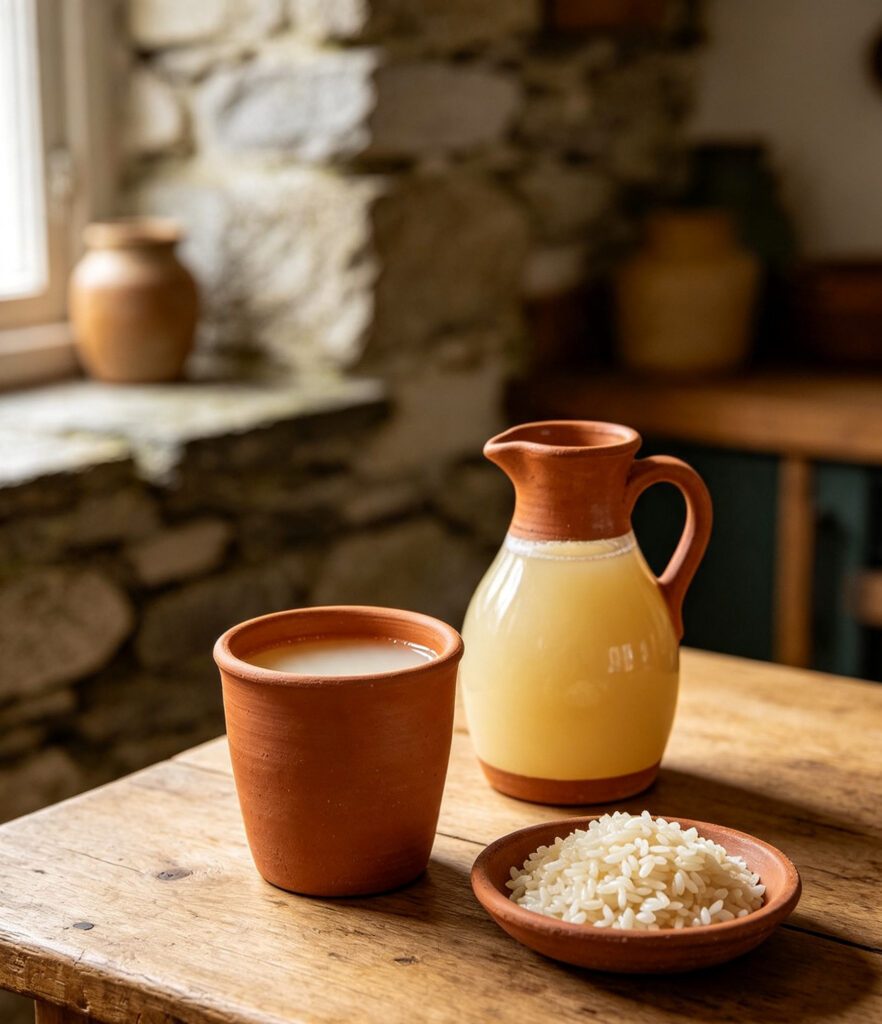
Ingredients
- Cooked rice, cooled — 500 g (2.5 cups)
- Water — 1.5 L (6 cups)
- Jaggery, grated — 100 g (0.5 cup)
- A small amount of a natural fermentation starter (such as a little unpasteurised curd or a prior batch of sura, if available)
Method
- Place the cooled cooked rice in a large, very clean glass or ceramic vessel.
- Dissolve the grated jaggery in the water, then pour this over the rice.
- Stir in a small amount of the fermentation starter, if using, to help introduce the necessary natural yeasts and bacteria.
- Cover the vessel loosely with a clean cloth, allowing some air exchange while keeping out insects and debris.
- Leave in a warm, dark place for 2-4 days, stirring once daily and tasting periodically, until the liquid develops a mildly sour, slightly effervescent, faintly alcoholic character.
- Strain through a fine sieve to remove the rice solids, pressing gently to extract the liquid.
- Serve chilled or at room temperature, consuming promptly once fermented to your preferred degree.
Introduction: A mildly alcoholic beverage fermented from rice or grain, sura was a regulated but widely consumed drink across the Mauryan Empire, described in detail by both Kautilya’s Arthashastra and the Greek ambassador Megasthenes.
Cultural Background: The Arthashastra devotes an entire section to the regulation of sura and other alcoholic beverages, describing state-licensed taverns and specific rules governing their sale, indicating how significant and widely consumed this drink was across Mauryan society. Megasthenes similarly recorded rice-based fermented drinks as a common feature of daily life during his time at the Mauryan court, distinct from the wines more familiar in his own Greek tradition.
Tips: (cid:127) Absolute cleanliness of all equipment is essential throughout the fermentation process, as unwanted bacteria can easily spoil the batch or produce an unpleasant result. (cid:127) The exact fermentation time depends considerably on ambient temperature; warmer conditions ferment more quickly, so taste frequently rather than relying solely on a fixed schedule.
Variations: (cid:127) Other grains, such as barley, can be substituted for rice, reflecting regional variation in the Mauryan Empire’s grain cultivation. (cid:127) A few crushed spices, such as long pepper or ginger, can be added during fermentation for a more complexly flavoured result, similar to variations noted in some ancient sources.
Storage: Once strained, store in a sealed bottle in the refrigerator and consume within 2-3 days, as the fermentation continues to develop even under refrigeration.
Reheating: This drink is always served cold or at room temperature and should never be heated.
Nutrition: Per serving (approx., 200 ml): 90 kcal, 1 g protein, 20 g carbohydrate, 0 g fat, 0 g fibre, 5 mg sodium.
FAQs:
Q: How alcoholic is sura?
A: As a naturally fermented grain beverage without distillation, it is generally mild in alcohol content compared to distilled spirits, though the precise strength varies depending on fermentation time and conditions. (cid:127) Q: Why was sura regulated by the Mauryan state? A: The Arthashastra describes detailed state oversight of alcohol production and sale, including licensed taverns, likely reflecting both a significant source of state revenue and an interest in managing public order around its consumption.
- Cooked rice, cooled — 500 g (2.5 cups)
- Water — 1.5 L (6 cups)
- Jaggery, grated — 100 g (0.5 cup)
- A small amount of a natural fermentation starter (such as a little unpasteurised curd or a prior batch of sura, if available)
Please log in to leave a comment.