
Sumerian Barley Beer (Hymn to Ninkasi)
The Quirky Foodster Team
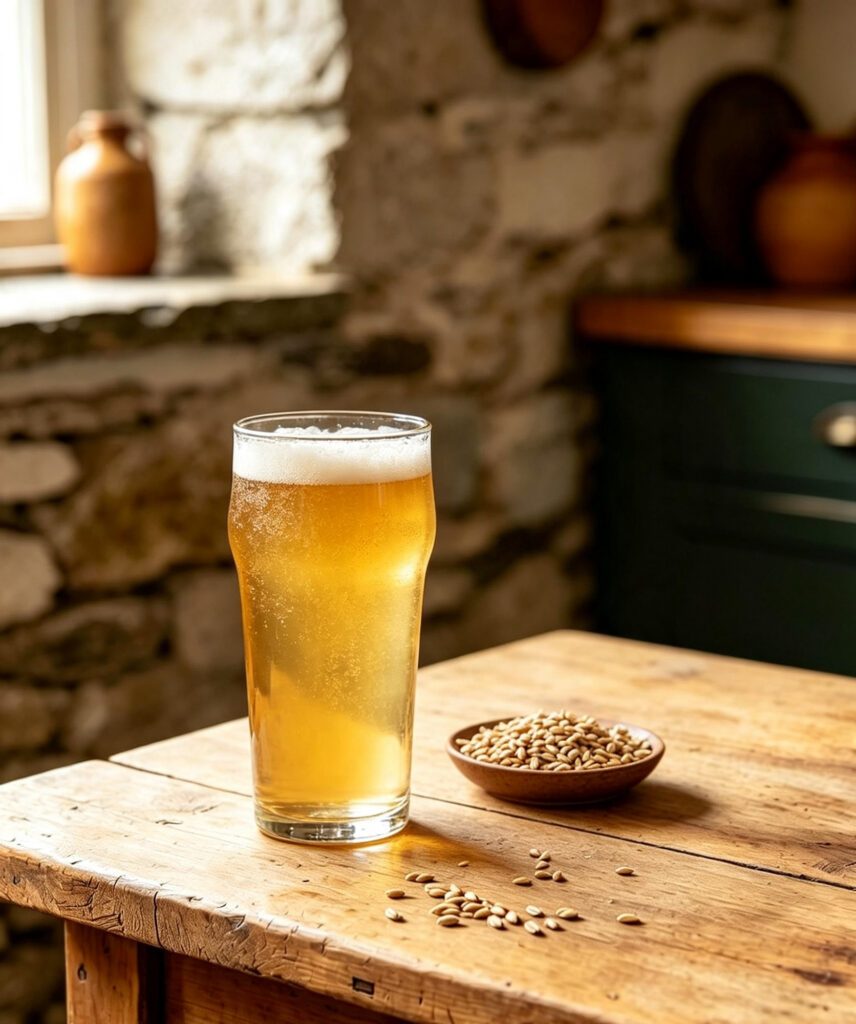
Ingredients
- Malted barley (barley that has been sprouted and dried) — 500 g (1.1 lb)
- Water — 3 L (12 cups)
- A small amount of a natural yeast or fermentation starter
- Honey, optional, as referenced in some translations of the hymn — 1 tbsp
Method
- Bring the water to a simmer in a large pot and add the malted barley.
- Simmer for 1-1.5 hours, stirring occasionally, until the liquid takes on a sweet, malty aroma, following the hymn's general description of mashing the grain.
- Strain through cloth into a clean fermentation vessel, representing the 'filtering vat' described in the hymn, pressing to extract as much liquid as possible; discard the solids.
- Cool the strained liquid to room temperature, then add the yeast or fermentation starter and the honey, if using.
- Cover loosely and leave to ferment at room temperature for 3-5 days, tasting periodically, until it reaches a mildly alcoholic, pleasantly tangy result.
- Strain again if needed and serve, echoing the hymn's description of the beer 'poured out' from the filtering vat.
Introduction: A mildly alcoholic barley beer brewed following the general process described in the Hymn to Ninkasi, a genuine Sumerian poem to the goddess of beer that doubles as one of the world’s oldest surviving brewing texts.
Cultural Background: The Hymn to Ninkasi is a real Sumerian composition, recorded in cuneiform and dated to around 1800 BCE though believed to describe much older brewing techniques; it praises Ninkasi, the Sumerian goddess of beer, while describing key stages of the brewing process, including baking a grain-based product called bappir, soaking and mashing grain, and straining the fermented liquid through a filtering vat, a method significant enough that the Anchor Brewing Company in San Francisco produced a beer based on this hymn’s description in 1989.
Tips: – Malted barley (rather than plain barley) is essential, as sprouting and drying the grain converts its starches into sugars the yeast can ferment. – Fermentation time varies with ambient temperature; taste from day 3 onward and refrigerate once the flavour suits your preference.
Variations: – Some translations of the hymn reference honey and even wine used alongside the basic barley mash, suggesting variation existed across different beer types even in antiquity. – A shorter fermentation gives a milder, less alcoholic result.
Storage: Refrigerate fermented beer in a covered container and consume within a week, as fermentation continues slowly even when chilled.
Reheating: Not applicable; this is a cold or room-temperature beverage.
Nutrition: Per serving (approx.): 100 kcal, 1 g protein, 18 g carbohydrate, 0.2 g fat. Contains a low, variable alcohol content from fermentation.
FAQs:
Q: Is the Hymn to Ninkasi a real ancient text?
A: Yes, it is a genuine Sumerian composition recorded in cuneiform, dated to around 1800 BCE, praising the goddess of beer while also describing the general stages of the brewing process, making it one of the oldest surviving texts connected to a specific food or drink preparation.
Q: Has anyone actually brewed beer from this hymn before?
A: Yes, notably the Anchor Brewing Company of San Francisco produced a beer based on the hymn’s described brewing process in 1989, demonstrating that its general method can be followed to produce an actual beer.
- Malted barley (barley that has been sprouted and dried) — 500 g (1.1 lb)
- Water — 3 L (12 cups)
- A small amount of a natural yeast or fermentation starter
- Honey, optional, as referenced in some translations of the hymn — 1 tbsp
Please log in to leave a comment.