
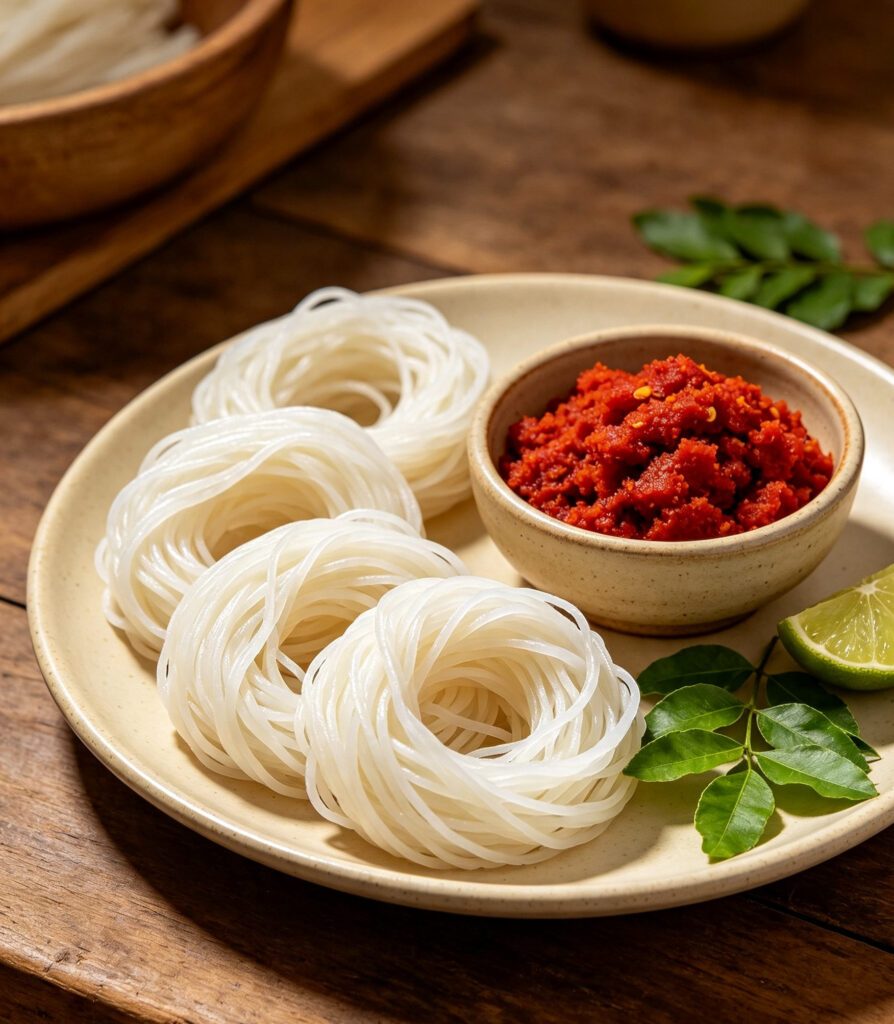
String Hoppers with Pol Sambol
The Quirky Foodster Team
Ingredients
- Red or white rice flour, roasted (2 cups) — 250 g (8.8 oz)
- Boiling water (1.5 cups), plus more as needed — 360 ml (1 1/2 cups)
- Salt (1 teaspoon) — 5 g (0.2 oz)
- Coconut oil (1 teaspoon), for the dough — 5 ml (1 tsp)
- Fresh coconut, grated (about 2 cups / 200 g), for pol sambol — 1
- Kashmiri chilli powder (2 tablespoons) — 15 g (0.5 oz)
- Small red onion, finely chopped (about 60 g) — 1
- Maldive fish flakes, optional (1 teaspoon) [omit for vegan/vegetarian] — 3 g
- Lime, juiced (about 1 tablespoon / 15 ml) — 1/2
- Salt — to taste
Method
- For the pol sambol, pound or pulse the grated coconut with chilli powder, onion, Maldive fish flakes (if using) and a pinch of salt until it forms a coarse, slightly moist relish. Stir in lime juice and set aside.
- For the string hoppers, mix the roasted rice flour with salt in a bowl. Slowly pour in boiling water while stirring with a spoon, then knead in the coconut oil once cool enough to handle, until you have a smooth, pliable dough that holds together but is not sticky.
- Rest the dough, covered, for 10 minutes.
- Fill the string hopper press with dough and pipe spiral discs, about 8 cm (3 inches) across, directly onto small woven trivets or squares of muslin cloth.
- Set up a steamer with plenty of water at a rolling boil. Stack the trivets and steam for 8-10 minutes, until the noodles look translucent and hold together when lifted.
- Serve warm with pol sambol and a curry of your choice.
Introduction: String hoppers are delicate steamed rice-flour noodles pressed into lacy discs, a dish that reflects the Sri Lankan love of rice reworked into countless forms.
Cultural Background: String hoppers are delicate steamed rice-flour noodles pressed into lacy discs, a dish that reflects the Sri Lankan love of rice reworked into countless forms. Traditionally made with a special string hopper press (idi appa mola) and stacked in small woven trivets to steam, they are humble to look at but require real skill to get right – too wet a dough and the strands melt together, too dry and the press won't extrude. They are eaten for breakfast or dinner with coconut sambol and a curry, soaking up gravy like a soft noodle bed.
Tips: The water for the dough must be freshly boiled and added while very hot – this is what gelatinises the rice flour and makes it extrudable. Work in batches and keep the dough covered with a damp cloth so it doesn't dry out while you press the rest. If you don't have a press, a piping bag fitted with a multi-hole nozzle or even a garlic press (in batches) can work.
Variations: Red rice flour string hoppers have a nuttier flavour and are considered more traditional in the south. String hopper biriyani: leftover string hoppers are chopped and stir-fried with egg, vegetables and spices for a quick one-pan meal. Omit the Maldive fish flakes in the pol sambol to make both elements fully vegan.
Storage: Store steamed string hoppers in an airtight container in the fridge for up to 2 days. Pol sambol keeps for 2 days refrigerated.
Reheating: Resteam string hoppers for 2-3 minutes to soften; do not microwave as they turn rubbery.
Nutrition: Approx. 260 kcal, 5 g protein, 9 g fat, 40 g carbohydrates, 3 g fibre per serving (5 string hoppers with sambol)
FAQs:
Q: Can I use plain rice flour instead of roasted?
A: You can, but roasted rice flour is traditional and gives a better texture; you can dry-roast plain rice flour in a pan over low heat for 5 minutes, stirring constantly, until fragrant.
Q: What can I use if I don't own a string hopper press?
A: A sturdy piping bag with a multi-holed nozzle, or a purpose-made metal string hopper mould available in South
Q: Can I freeze string hoppers?
A: Yes, freeze in a single layer then transfer to a bag; steam from frozen for 4-5 minutes to reheat.
- Red or white rice flour, roasted (2 cups) — 250 g (8.8 oz)
- Boiling water (1.5 cups), plus more as needed — 360 ml (1 1/2 cups)
- Salt (1 teaspoon) — 5 g (0.2 oz)
- Coconut oil (1 teaspoon), for the dough — 5 ml (1 tsp)
- Fresh coconut, grated (about 2 cups / 200 g), for pol sambol — 1
- Kashmiri chilli powder (2 tablespoons) — 15 g (0.5 oz)
- Small red onion, finely chopped (about 60 g) — 1
- Maldive fish flakes, optional (1 teaspoon) [omit for vegan/vegetarian] — 3 g
- Lime, juiced (about 1 tablespoon / 15 ml) — 1/2
- Salt — to taste
Please log in to leave a comment.