
Appetizers
Stewed Fava Beans with Garlic and Cumin
The Quirky Foodster Team
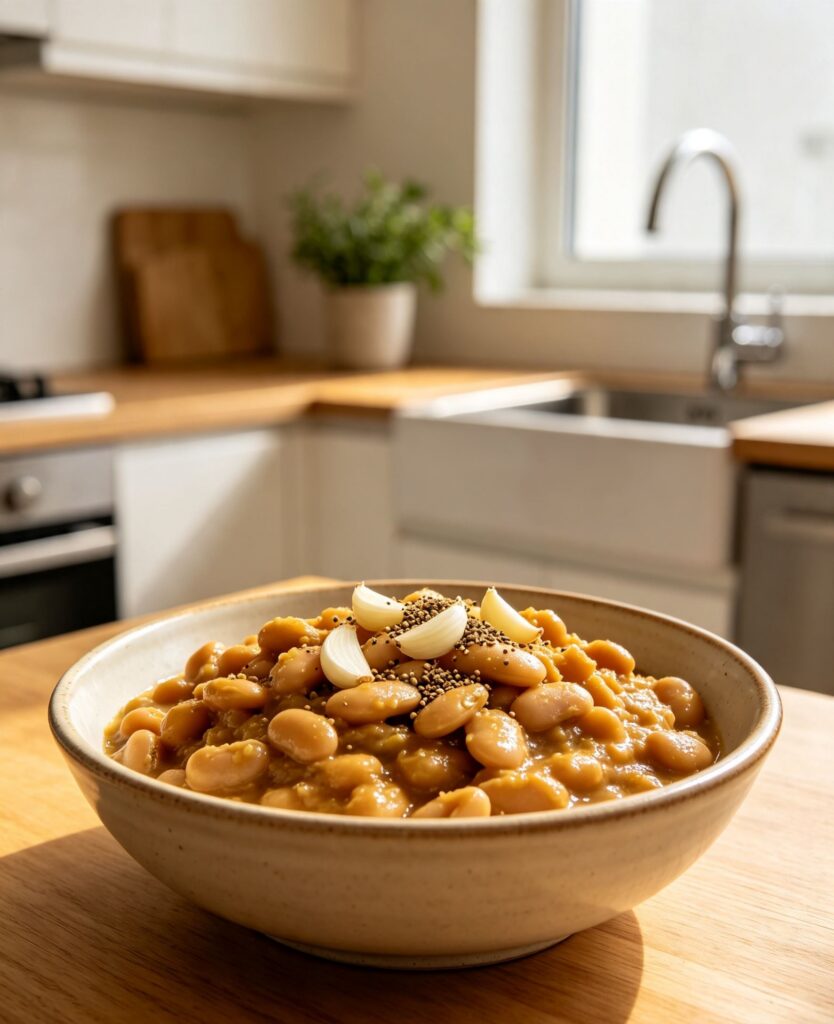
Ingredients
- 300g (1 1/2 cups) Dried whole fava beans, soaked overnight
- 1.2 liters (5 cups) water
- 4 garlic cloves, crushed
- 2 tablespoons sesame oil
- 1 1/2 teaspoons ground cumin
- Salt, to taste
- Chopped fresh parsley, to serve
Method
- Drain the soaked fava beans and add to a large pot with the water.
- Bring to a boil, skim any foam, then reduce heat, cover, and simmer for 50 minutes to 1 hour until very tender.
- Drain, reserving a little of the cooking liquid, and return the beans to the pot.
- Mash roughly with a spoon, stir in the garlic, oil, and cumin, and add a splash of reserved liquid to loosen if needed.
- Season with salt, warm through for 2 minutes, and serve topped with chopped parsley.
Native/Reconstructed Name: Iwryt (fava beans)
Cultural Background: Fava beans (Vicia faba) have been cultivated in Egypt since the Predynastic period and remain the base of ful
medames, one of Egypt's most enduring national dishes. Archaeobotanical remains confirm favas were stored
in large quantities in ancient granaries, and their slow-stewed preparation with garlic and cumin traces a direct,
unbroken culinary line to the modern dish still eaten across Egypt today.
Tips:
– Do not skip the overnight soak — it cuts cooking time roughly in half and improves texture.
– A pressure cooker reduces the simmering time to about 25 minutes.
Variations:
– Leave the beans whole rather than mashed for a chunkier, more rustic texture.
– Stir through a spoonful of tahini for a richer modern-leaning finish.
Storage: Refrigerate for up to 4 days.
Reheating: Reheat gently on the stovetop with a splash of water, stirring often.
Nutrition: Approx. 195 kcal, 11 g protein, 28 g carbohydrate, 5 g fat, 8 g fiber per serving.
FAQs:
Q: Can I use canned fava beans instead?
A: Yes — use 2 cans, drained, and simmer for just 15 minutes to blend the flavors.
Q: Is this the same as modern ful medames?
A: This is its direct ancestor — modern ful medames adds tomato and lemon, both unavailable in ancient Egypt.
Please log in to leave a comment.