
Drinks
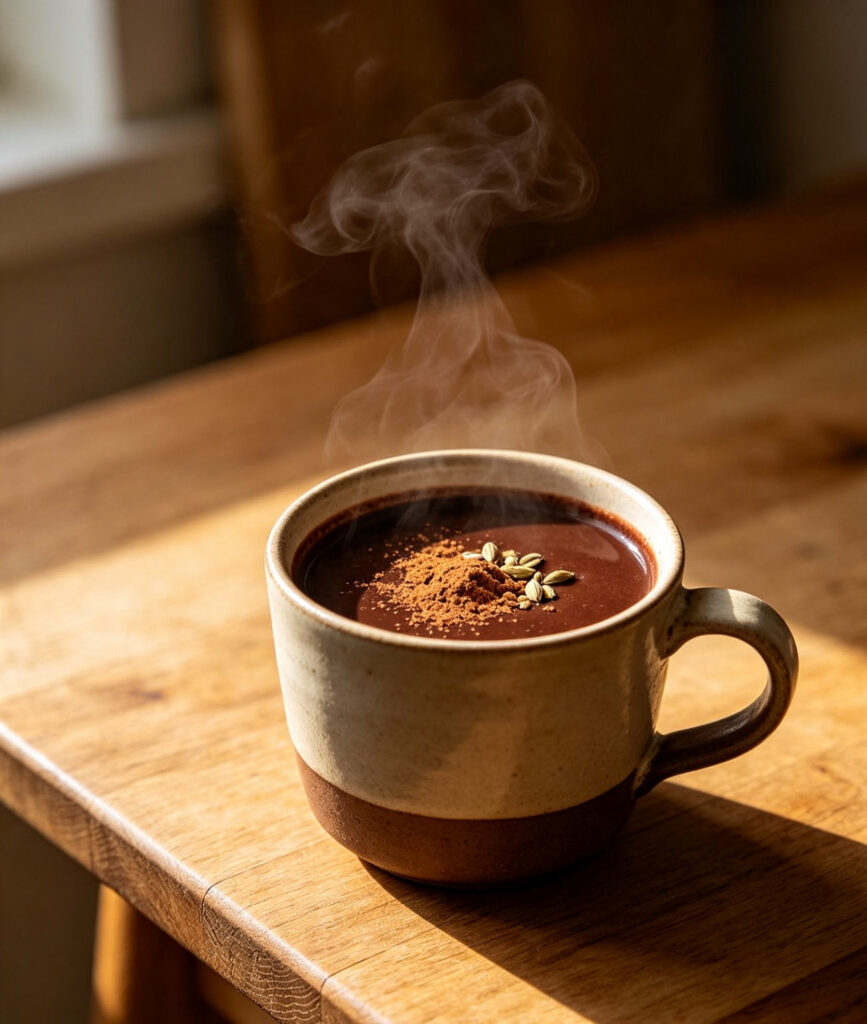
Spiced Hot Chocolate (Chocolate Quente com Especiarias)
sjfegan
Ingredients
- 960ml (4 cups) Milk
- 100g Dark chocolate or 1/3 cup cocoa powder
- 3 tbsp sugar
- 1 cinnamon stick
- 1/2 tsp ground cinnamon, to garnish
Method
- Heat the milk gently in a saucepan with the cinnamon stick.
- Once warm, whisk in the chocolate or cocoa powder and sugar until fully dissolved and smooth.
- Simmer gently for 5 minutes, whisking occasionally.
- Remove the cinnamon stick.
- Pour into cups and dust with ground cinnamon before serving hot.
Introduction: Rich drinking chocolate warmed with cinnamon, an early European interpretation of the Mesoamerican beverage that captivated Iberian tastes during this era.
Cultural Background: Chocolate arrived in Iberia through Spanish contact with the Aztec and Maya civilizations, and this warm, spiced drink represents an early stage in chocolate’s remarkable journey from a Mesoamerican ceremonial and social beverage to a beloved treat across Europe.
Tips: Whisk continuously to ensure the chocolate fully dissolves into a smooth drink. Warm gently rather than boiling, as this preserves the chocolate’s flavour.
Variations: Add a pinch of chilli powder for a version closer to the original Mesoamerican preparation. Adjust the sugar to taste.
Storage: Best made fresh; not suitable for storing.
Reheating: Reheat gently on the stovetop, whisking, without boiling.
Nutrition: Per serving (approx.): 260 kcal, 9 g protein, 12 g fat, 30 g carbohydrate.
FAQs:
Q: How did chocolate first reach Europe?
A: Spanish explorers and conquistadors encountered chocolate during their contact with Mesoamerican civilizations in the early 16th century, gradually bringing the beverage back to Iberia.
Q: Did early European chocolate resemble modern hot chocolate?
A: Not exactly — early preparations often incorporated spices and sometimes chilli, closer to Mesoamerican traditions, before European tastes shifted toward the sweeter versions more familiar today.
Please log in to leave a comment.