
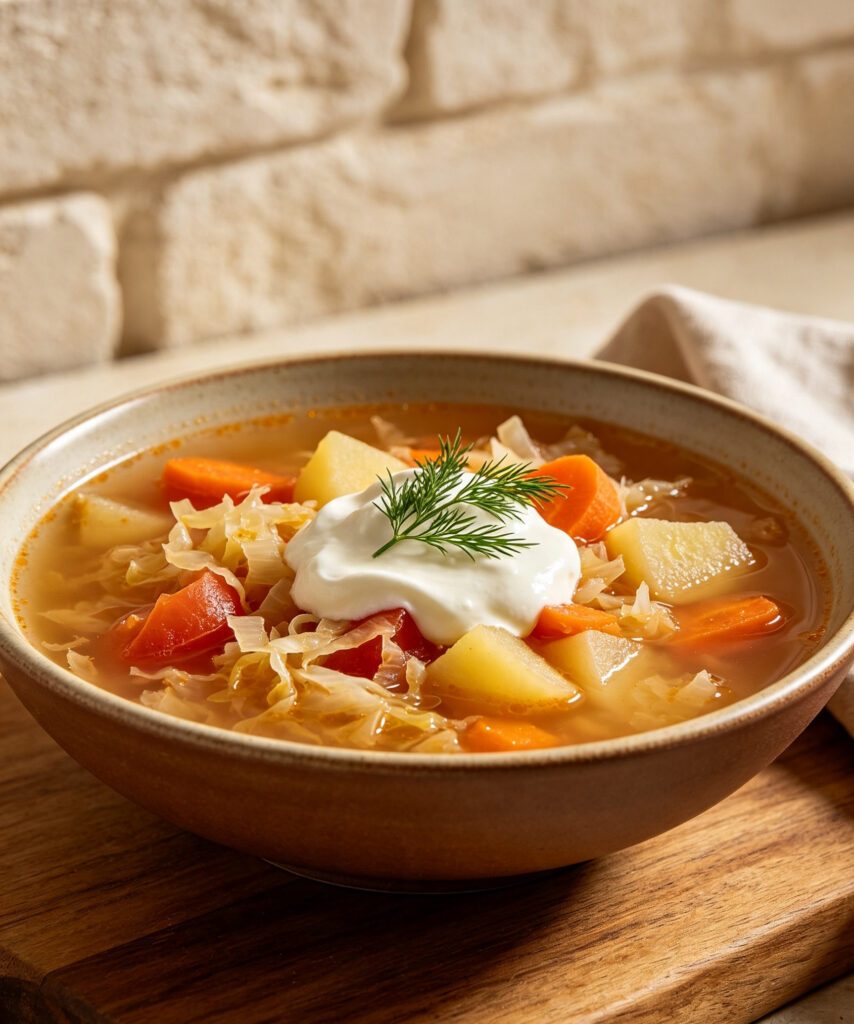
Shchi
The Quirky Foodster Team
Ingredients
- Beef, cubed — 500 g (1 lb 2 oz)
- Cabbage, shredded — 1/2 head (fresh or sauerkraut)
- Potatoes, cubed — 2
- Carrot, grated — 1
- Onion, chopped — 1
- Tomato paste — 2 tbsp
- Bay leaves — 2
- Oil — 2 tbsp
- Water — 1.9 L (64 fl oz)
- Salt and pepper — to taste
- Sour cream and chopped dill, to serve
Method
- Simmer the beef in the water for 1–1.5 hours until tender, skimming any foam.
- Add the potato and simmer for 10 minutes.
- Meanwhile, sauté the onion and carrot in the oil until softened, adding the tomato paste and cooking briefly.
- Add the sautéed vegetables and shredded cabbage to the pot, along with the bay leaves.
- Simmer for a further 20–25 minutes until all the vegetables are tender.
- Season with salt and pepper.
- Serve hot, topped with sour cream and chopped dill.
Introduction: A traditional cabbage soup with meat, one of Russia's oldest and most enduring dishes, a staple of the country's culinary heritage.
Cultural Background: Shchi has been a fundamental part of the Russian diet for centuries, its simple, hearty combination of cabbage and meat reflecting the practical, comforting cooking tradition found in households across the country.
Tips: Using sauerkraut instead of fresh cabbage gives a more traditional, tangy version called kislye shchi. Simmer the beef long enough to become properly tender before adding the vegetables.
Variations: Use sauerkraut for a tangier, more traditional version. Add a few crushed garlic cloves at the end for extra flavour.
Storage: Refrigerate in an airtight container for up to 4 days; the flavour often improves the next day.
Reheating: Reheat gently on the stovetop over medium heat until warmed through.
FAQs:
Q: How is shchi different from borscht?
A: Shchi is based on cabbage without beetroot, giving it a lighter colour and different flavour profile compared to the deep red, beetroot-forward borscht.
Q: Is shchi one of Russia's oldest dishes?
A: Yes, it has a documented history stretching back many centuries, reflecting its deep roots in Russian culinary tradition.
- Beef, cubed — 500 g (1 lb 2 oz)
- Cabbage, shredded — 1/2 head (fresh or sauerkraut)
- Potatoes, cubed — 2
- Carrot, grated — 1
- Onion, chopped — 1
- Tomato paste — 2 tbsp
- Bay leaves — 2
- Oil — 2 tbsp
- Water — 1.9 L (64 fl oz)
- Salt and pepper — to taste
- Sour cream and chopped dill, to serve
Please log in to leave a comment.