
Serbian Rakija
The Quirky Foodster Team
Ingredients
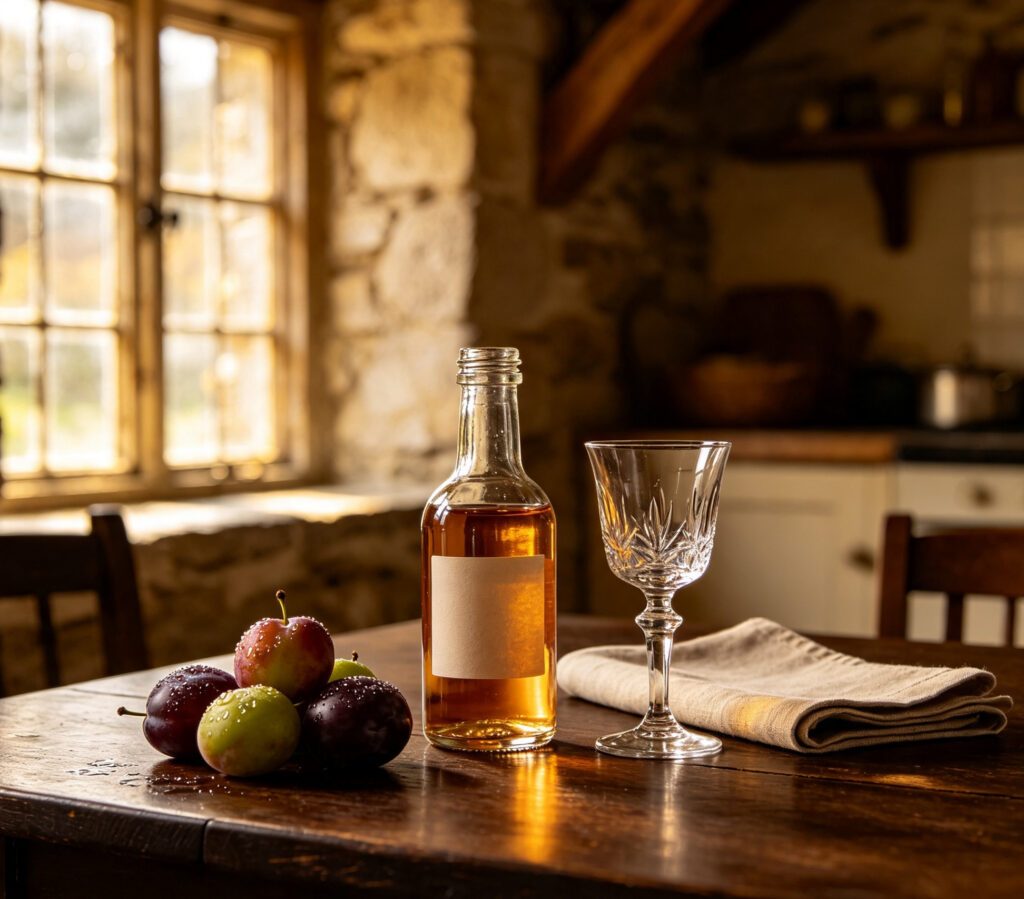
- Plum or other fruit rakija — 1 bottle
- Fresh fruit or honey, to garnish (optional)
Method
- Chill the rakija slightly, or serve at room temperature according to preference and season.
- Pour into small traditional shot glasses.
- Offer to guests as a gesture of welcome, often accompanied by a small snack or fruit.
- Sip slowly and savour, as rakija is traditionally enjoyed rather than downed quickly.
Introduction: A strong, aromatic fruit brandy, Serbia's beloved and deeply traditional spirit.
Cultural Background: Rakija, a potent fruit brandy typically distilled from plums, is deeply woven into Serbian hospitality and tradition, offered to guests as a warm welcome and central to countless celebrations and toasts.
Tips: Rakija is traditionally offered to guests immediately upon arrival as a sign of hospitality — always accept graciously if offered. Homemade rakija varies significantly in strength and flavour depending on the fruit and distillation method.
Variations: Serve with a twist of honey stirred in for a sweeter medovača-style variation; pair with dried fruit or a simple appetizer as is customary.
Storage: Store unopened bottles in a cool, dark place indefinitely, as rakija has a long shelf life.
Reheating: This drink is served at room temperature or slightly chilled and is not heated.
Nutrition: Approx. 65 kcal, 0 g protein, 0 g carbohydrate, 0 g fat per 30 ml shot.
FAQs:
Q: What fruit is traditionally used for rakija?
A: Plums (šljivovica) are the most classic and celebrated base, though rakija can be made from apricots, grapes, quince and other fruits.
Q: Is rakija always homemade?
A: Both homemade and commercially produced rakija are common; homemade versions, often made by families, are especially treasured.
- Plum or other fruit rakija — 1 bottle
- Fresh fruit or honey, to garnish (optional)
Please log in to leave a comment.